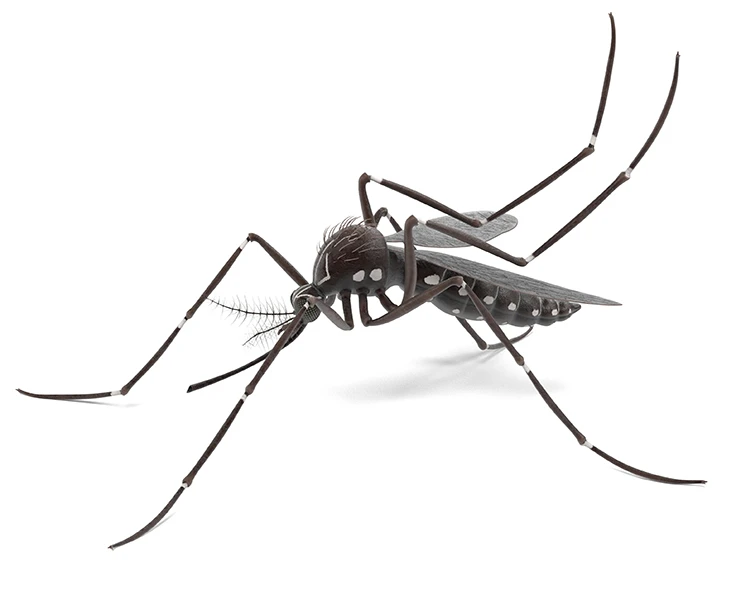
The first locally transmitted U.S. cases of Zika, a mosquito-spread virus, appeared in South Florida late last month. The virus is spread by the mosquito species Aedes aegypti, or the yellow fever mosquito. It thrives in tropical, urban environments — like the roughly one-mile area north of Miami, where people have tested positive for Zika.
Miami-Dade County mosquito control has the situation under control, says Dr. Jorge R. Rey, professor of wetlands and estuarine ecology and director of the University of Florida’s Florida Medical Entomology Laboratory. “They’re pulling all the stops to get the mosquito populations down to make sure that it doesn’t get much bigger,” he says. The county is also receiving help from institutions such as the Centers for Disease Control and Prevention and the University of Florida.
Although the threat of contracting Zika is small, Rey says golf course managers should take precautions such as wearing long sleeves and pants, applying repellant and checking repellant labels to see how long specific products last.
Only about one in five people affected by the Zika virus show symptoms, but experts are taking the threat seriously, says Robert Scott, global category development manager at Mosquito Magnet. “I think the seriousness of Zika lies with pregnant women, because of the microcephaly that it can cause with newborn children, as well as Guillain-Barré’s disease, which can be paralysis for people,” he says. “There have been very low reports of that being out there, but it has been associated with Zika.”
People who have been bit by Zika-infected mosquitoes, including many of those with Guillain-Barré Syndrome, experience a full recovery, Scott says. However, microcephaly is irreversible, which makes the virus especially harmful to expecting mothers.
Days after the CDC announced the appearance of the virus in Florida, the public health institute warned pregnant women and their partners against traveling to a neighborhood north of Miami where the virus is circulating. “There’s special groups of people – if it’s a female intending to get pregnant or a male whose spouse is intending to get pregnant, they should take special precautions,” Rey says.
Preventative treatments vary largely depending on which stage of mosquito development someone chooses to focus on, Scott says. Mosquito Magnet traps lure adult mosquitoes with carbon dioxide and other attractants, suck them into a net and dehydrate and kill them. The company has tested its mosquito traps on golf courses, and superintendents have responded positively to the Executive trap’s ability to monitor and share its performance on an LCD screen.
Superintendents should identify mosquito breeding grounds, such as coffee cups, tin cans and other artificial containers that hold water, says Dr. Stan Cope, director of entomology and regulatory services at Terminix. “They can go a long way toward reducing the risk by simply just making sure they don’t have the containers lying around,” he says. Terminix sells an Attractive Targeted Sugar Bait, which contains a mixture of fruit juices, date syrup and microencapsulated garlic oil.
The Zika virus only infects humans and higher primates, so it is unlikely to spread widely across the United States, Cope says. The infections in Florida appeared because people brought the virus back from foreign countries and infected local mosquitoes.
Countries with more sanitation issues than the United States, such as Brazil and Mexico, are more likely to have issues with the Zika virus, Cope says.
However, traveling Americans could be affected. The more than 100,000 cases in Brazil have prompted some of the world’s top golfers to drop out of this month’s Olympic Games in Rio de Janeiro.
No more results found. Miami-Dade County mosquito control has the situation under control, says Dr. Jorge R. Rey, professor of wetlands and estuarine ecology and director of the University of Florida’s Florida Medical Entomology Laboratory. “They’re pulling all the stops to get the mosquito populations down to make sure that it doesn’t get much bigger,” he says. The county is also receiving help from institutions such as the Centers for Disease Control and Prevention and the University of Florida.
Although the threat of contracting Zika is small, Rey says golf course managers should take precautions such as wearing long sleeves and pants, applying repellant and checking repellant labels to see how long specific products last.
Only about one in five people affected by the Zika virus show symptoms, but experts are taking the threat seriously, says Robert Scott, global category development manager at Mosquito Magnet. “I think the seriousness of Zika lies with pregnant women, because of the microcephaly that it can cause with newborn children, as well as Guillain-Barré’s disease, which can be paralysis for people,” he says. “There have been very low reports of that being out there, but it has been associated with Zika.”
People who have been bit by Zika-infected mosquitoes, including many of those with Guillain-Barré Syndrome, experience a full recovery, Scott says. However, microcephaly is irreversible, which makes the virus especially harmful to expecting mothers.
Days after the CDC announced the appearance of the virus in Florida, the public health institute warned pregnant women and their partners against traveling to a neighborhood north of Miami where the virus is circulating. “There’s special groups of people – if it’s a female intending to get pregnant or a male whose spouse is intending to get pregnant, they should take special precautions,” Rey says.
Preventative treatments vary largely depending on which stage of mosquito development someone chooses to focus on, Scott says. Mosquito Magnet traps lure adult mosquitoes with carbon dioxide and other attractants, suck them into a net and dehydrate and kill them. The company has tested its mosquito traps on golf courses, and superintendents have responded positively to the Executive trap’s ability to monitor and share its performance on an LCD screen.
Superintendents should identify mosquito breeding grounds, such as coffee cups, tin cans and other artificial containers that hold water, says Dr. Stan Cope, director of entomology and regulatory services at Terminix. “They can go a long way toward reducing the risk by simply just making sure they don’t have the containers lying around,” he says. Terminix sells an Attractive Targeted Sugar Bait, which contains a mixture of fruit juices, date syrup and microencapsulated garlic oil.
The Zika virus only infects humans and higher primates, so it is unlikely to spread widely across the United States, Cope says. The infections in Florida appeared because people brought the virus back from foreign countries and infected local mosquitoes.
Countries with more sanitation issues than the United States, such as Brazil and Mexico, are more likely to have issues with the Zika virus, Cope says.
However, traveling Americans could be affected. The more than 100,000 cases in Brazil have prompted some of the world’s top golfers to drop out of this month’s Olympic Games in Rio de Janeiro.