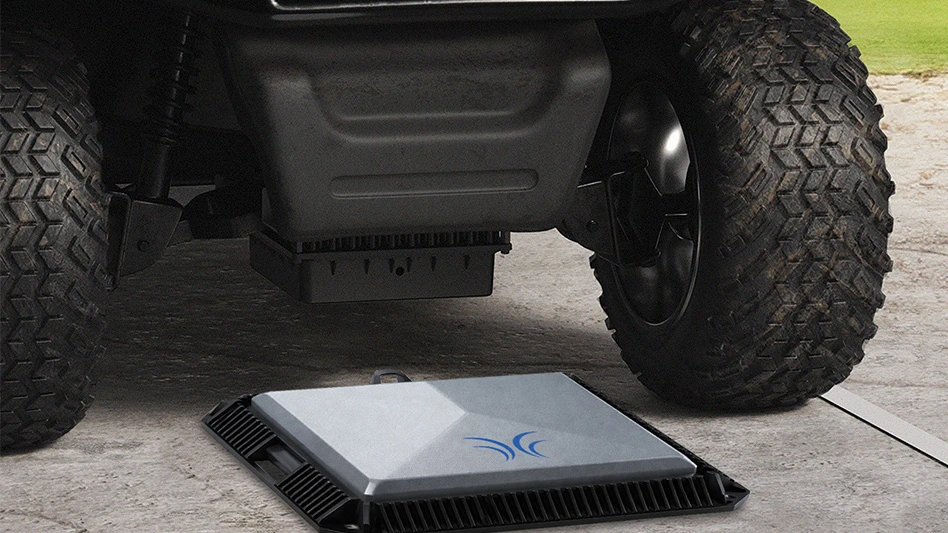
WiTricity AI Tech, LLC announced a major advancement in wireless power technology: its MR/1 charging platform can now support both lithium-ion and lead-acid batteries.
This development enables fleets, industrial operators, and recreational vehicle owners to adopt wireless charging without replacing existing vehicles or battery systems.
While most charging technologies are designed specifically for lithium-ion batteries, millions of vehicles worldwide – including golf carts, industrial equipment and fleet vehicles – still rely on lead-acid power systems. WiTricity’s expanded platform bridges that gap, enabling a single wireless charging solution that works across both legacy and modern battery technologies.
“After years of leading the EV wireless charging industry, we are excited to bring this technology to lead-acid batteries as well,” CEO Joe Benz said. “This milestone allows fleets to adopt wireless charging without replacing their vehicles or their batteries, dramatically lowering the barrier to electrification and automation.”
WiTricity’s magnetic resonance platform has been engineered to accommodate the unique charging characteristics of lead-acid batteries while continuing to support lithium-ion systems. The technology adapts to different battery chemistries, providing optimal charging profiles while maintaining the safety, efficiency, and reliability that wireless charging demands.
Key capabilities include:
- Support for both lithium-ion and lead-acid battery systems
- Wireless charging without plugs, cables or exposed connectors
- Compatibility with existing vehicle fleets through retrofit receiver modules
- Reduced maintenance and operational risks associated with wired charging
“Charging a variety of battery chemistry types wirelessly required thoughtful adaptations to our technology,” engineering vice president Ky Sealy said. “We focused on ensuring the system maintains high efficiency and safety across multiple battery chemistries so fleets can deploy it with confidence.”
Lead-acid batteries remain widely used across industries, including golf carts, industrial vehicles, material-handling equipment and light-duty fleets. By enabling wireless charging for both lithium and lead-acid batteries, WiTricity unlocks a practical path for organizations to modernize charging infrastructure without replacing existing assets.
This battery-agnostic approach significantly expands the potential market for wireless charging and strengthens WiTricity’s position as a leader in scalable, infrastructure-friendly EV charging solutions.
Latest from Golf Course Industry
- Course at Sewanee picks KemperSports for management
- Shining star
- SiteOne Landscape Supply acquires Reinders
- Talking Turf Weeds 17: Waking up your course after winter with Yusif Jaouni and Matt Herrmann
- From the publisher’s pen: Respect the side hustle
- Super-Scratch events to expand nationally
- Beyond the Page 78: Labor solutions, AI talk and mayhem
- Construction progresses at The River Club