Whistling Rock Country Club, a highly regarded course in Korea, has completed a refinement project.
Under the direction of Eric Iverson, vice president of Tom Doak’s Renaissance Golf Design of Traverse City, Mich., Whistling Rock received subtle but significant changes to enhance its strategic values and improve both variety and playability, particularly on and around the greens.
"The greens at Whistling Rock were really artfully done,” Iverson said, “but there are some that ended up being a little steep when matched with the superior turf conditions the club presents. Walking that fine line is something that we have a great deal of experience with, and I addressed this issue and added strategy and variety at the same time."
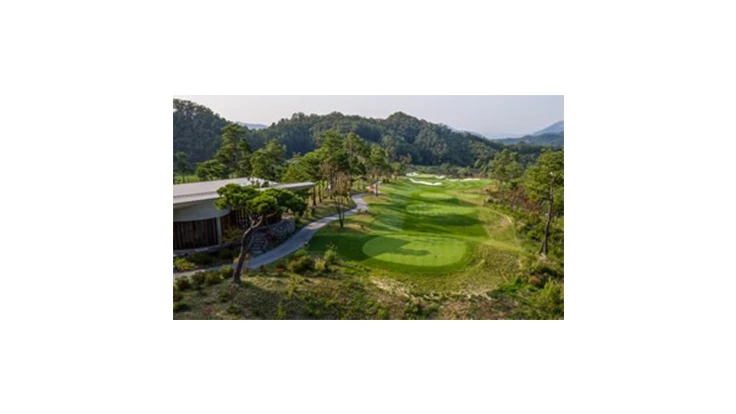
Whistling Rock Country Club, owned and operated by Taekwang Group, a large South Korean conglomerate with holdings in textiles, petrochemical, cable television, financial services, and leisure development; was originally designed by noted American architect Ted Robinson Jr. The 27-hole private club is located about one-hour northeast of Seoul in the foothills of the Gangwon Provincial mountains. The course, which opened in 2011, is known for its challenging layout, artful and naturalistic design, and unparalleled mountain environment.
Realizing the quality of the product that the design and construction teams had created, the club aspired to be even better, and accordingly, devised a long-term plan to maximize the potential of the property, the golf course, and the club. The process included a visit from American agronomist and GCI columnist Tim Moraghan (Aspire Golf) to evaluate the course conditioning, and concluded with an invitation to Iverson to review the golf.
“Eric evaluated the quality and quantity of ‘thinking’ that the golfer may face on each shot of each hole,” says David Fisher, vice President of Whistling Rock. “We have an amazing environment for golf and a solid routing, but the strategic element of the golf was where we needed and received a fresh perspective.”
Both Iverson and club management emphasized that while the original layout remains intact, the changes are very apparent and consistent with the club’s adopted mandate, “a harmony of art and nature.”
Under the direction of Eric Iverson, vice president of Tom Doak’s Renaissance Golf Design of Traverse City, Mich., Whistling Rock received subtle but significant changes to enhance its strategic values and improve both variety and playability, particularly on and around the greens.
"The greens at Whistling Rock were really artfully done,” Iverson said, “but there are some that ended up being a little steep when matched with the superior turf conditions the club presents. Walking that fine line is something that we have a great deal of experience with, and I addressed this issue and added strategy and variety at the same time."
Whistling Rock Country Club, owned and operated by Taekwang Group, a large South Korean conglomerate with holdings in textiles, petrochemical, cable television, financial services, and leisure development; was originally designed by noted American architect Ted Robinson Jr. The 27-hole private club is located about one-hour northeast of Seoul in the foothills of the Gangwon Provincial mountains. The course, which opened in 2011, is known for its challenging layout, artful and naturalistic design, and unparalleled mountain environment.
Realizing the quality of the product that the design and construction teams had created, the club aspired to be even better, and accordingly, devised a long-term plan to maximize the potential of the property, the golf course, and the club. The process included a visit from American agronomist and GCI columnist Tim Moraghan (Aspire Golf) to evaluate the course conditioning, and concluded with an invitation to Iverson to review the golf.
“Eric evaluated the quality and quantity of ‘thinking’ that the golfer may face on each shot of each hole,” says David Fisher, vice President of Whistling Rock. “We have an amazing environment for golf and a solid routing, but the strategic element of the golf was where we needed and received a fresh perspective.”
Both Iverson and club management emphasized that while the original layout remains intact, the changes are very apparent and consistent with the club’s adopted mandate, “a harmony of art and nature.”