Courtesy of USGA
The USGA presented Erin Hills superintendent and co-general manager Zach Reineking, CGCS, with the E.J. Marshall Platter after play concluded at the 80th U.S. Women’s Open Presented by Ally.
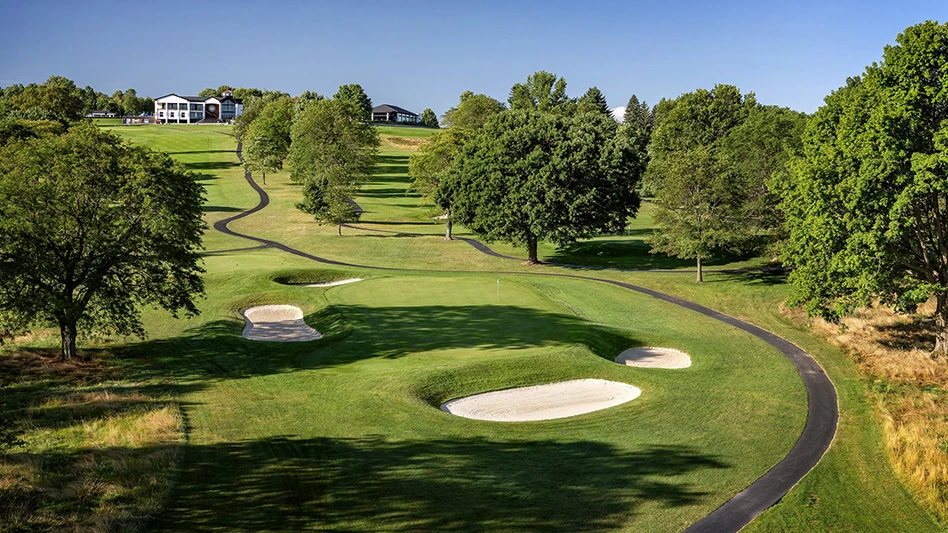
Now in his 19th year at Erin Hills, Reineking has been involved in five USGA championships at the 620-acre facility. A 22-year GCSAA member, Reineking and his Erin Hills team worked with USGA senior director of championship agronomy Darin Bevard to prepare the 6,835-yard, par-72 layout for championship play.
Created in 2022, the E.J. Marshall Platter celebrates quality in golf course management, and acknowledges golf course maintenance leaders who demonstrate dedication, expertise and seamless collaboration with the USGA ahead of a national championship. The recognition also extends to the entire Erin Hills golf course maintenance team for their vital contributions.
“This was the fifth USGA championship that we have prepared for and conducted with Zach and his team at Erin Hills,” Bevard said. “He has tremendous agronomic knowledge, strong organizational skills and a willingness to do whatever is necessary for the success of the championship. Zach has been a great partner.”
Erin Hills recently underwent a regrassing effort, led by Reineking, which saw the course’s fairways converted from fine fescue to a combination of 007 and Flagstick creeping bentgrass, and has allowed for more consistent playability. The course also renovated its 132 bunkers since the previous USGA championship at Erin Hills, the 2022 U.S. Mid-Amateur, with the goal of improving infiltration rates of the 2006 Michael Hurdzan/Dana Fry/Ron Whitten design.
Reineking initially studied landscape architecture at the University of Wisconsin-Madison before changing to a degree in horticulture and agricultural science. After graduating, the Sheboygan Falls, Wisconsin native completed an internship at Blackwolf Run in Kohler before landing at Erin Hills full-time.
The E.J. Marshall Platter’s namesake was the chair of the green committee at the Inverness Club in Toledo, Ohio, in 1920. After he approached the USGA and the U.S. Department of Agriculture for help at the course, the USGA formed the Green Section to provide course care expertise to golf facilities.
Latest from Golf Course Industry
- Tartan Talks 116: Doug Smith
- Audubon International adds 127 golf courses to Monarchs in the Rough
- USGA’s GAP preps for fourth year
- Protect your vehicles from rodent damage
- VIDEO: Fun with fairways
- From the publisher’s pen: Humble giving
- Syngenta adds two to western U.S. team
- The Aquatrols Company introduces soil surfactant for Canada