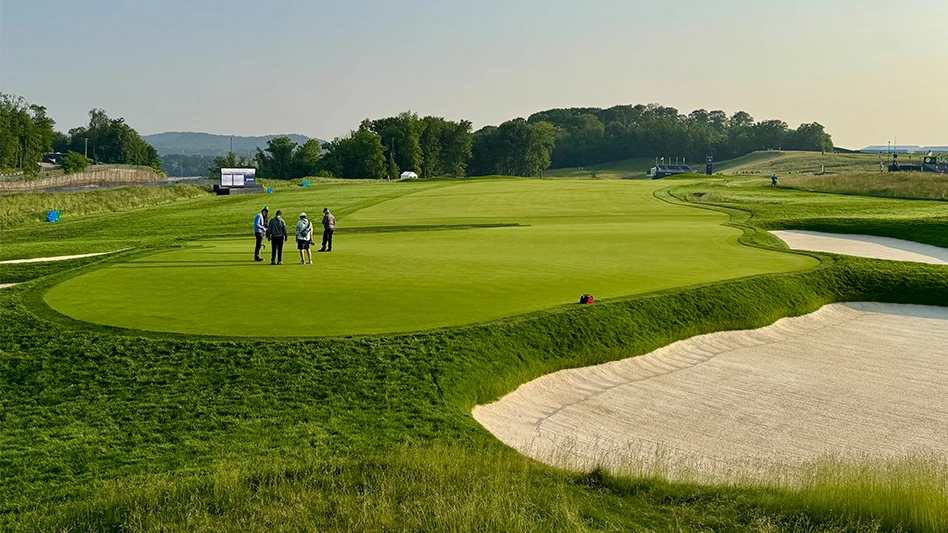
Not everything in golf must be easy to replicate for the masses. Inspirational outliers will always exist.
On the eve of the 125th U.S. Open, USGA Chief Championships Officer John Bodenhamer referred to playing Oakmont Country Club as a “relentless grind.” The club’s bold purpose extends to 1903 when iron and steel magnate W.C. Fownes unleashed a 6,408-yard course on severely sloping terrain near the Allegheny River northeast of Pittsburgh. The course was absurdly long and difficult from the start. Oakmont’s length no longer incites wonderment; its difficulty remains unparalleled.
From Pittsburgh plumbers and physicians to data-driven pro golfers, nearly everybody who plays Oakmont fails to equal scores they post elsewhere. Oakmont exhausts more golfers than it develops. Tough can be enchanting in measured doses.
Bodenhamer described why his organization relishes Oakmont while the golf course maintenance team and championship volunteers experienced their version of a “relentless grind.” The employee and volunteer center inside the maintenance area offers plentiful nourishment and comfort, including an activity area with padded chairs, games and a golf simulator. Generous industry companies funded the coordinated maintenance base.
As Bodenhamer, USGA President Fred Perpall and USGA CEO Mike Whan sat in an air-conditioned interview room for a pre-tournament news conference, members of the crew left their base for another rough mowing shift. Their midday grind involved pushing rotary units up and down terrain surrounding fairways, tees and greens.
Sun pelted the forest green rough as temperatures approached the mid-80s. Spectators and a few players halted their movement, bewildered by the sight of three dozen workers in gray shirts and khakis hustling to keep rough around the 5-inch height desired by the USGA. “I don’t want that job,” one spectator quipped to a friend as he watched the rough mowing Olympics occurring beneath the steep fourth tee.
The workers started their days hours before daylight. They labored into the night. They all signed up for this grind. They know they must exert their minds and bodies to produce a rigorous golf exam. The USGA boasts that a U.S. Open must test all 15 clubs: the 14 in a player’s bag and the one between their ears.
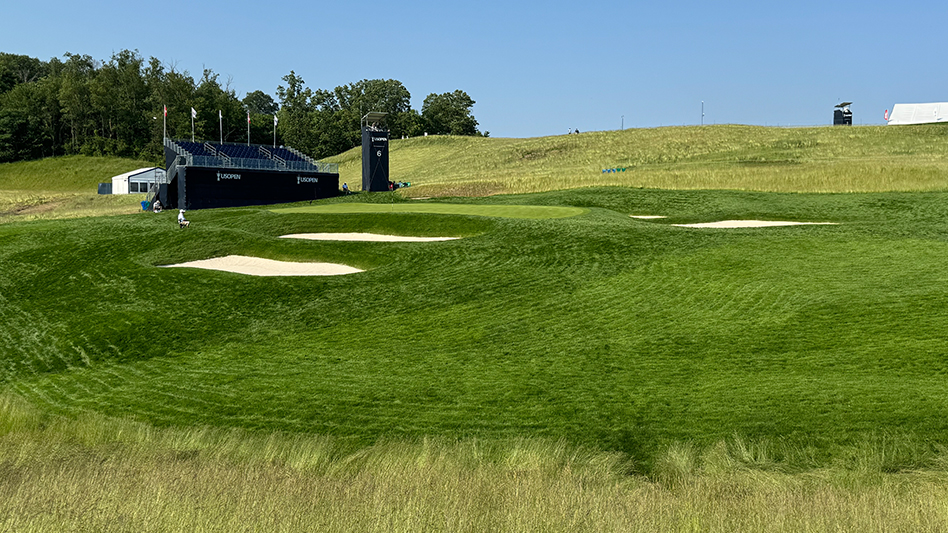
A test needs somebody to create the questions. Strategic bunker positioning, varied shot angles and multi-directional green contours aren’t enough to force professional golfers to openly grind. Somebody must cultivate greens slicker than steel and rough thicker than Shetland wool for a U.S. Open to maximize its competitive and commercial appeal.
The USGA openly admits the sprawling nature of Oakmont and its surrounding grounds boost the organization’s financial coffers enough to allow cozier places such as Shinnecock Hills and Pebble Beach to join Oakmont as U.S. Open anchor sites. According to What, around 40,000 spectators should be on the Oakmont grounds during U.S. Open Saturday and Sunday. A U.S. Open at Oakmont is among the easiest and most inexpensive major championship tickets to land.
The allure of the grind makes Oakmont one of the golf maintenance industry’s premiere talent incubators. Hundreds of clubs in western Pennsylvania and beyond attempt to emulate the test Oakmont presents before, during and after the U.S. Open, albeit with significantly fewer resources. Prolonging the Fownes legacy requires identifying and developing turf managers willing to make personal sacrifices to preserve the course and enhance their careers.
The grind permeates Oakmont. Walking the grounds on https://www.golfcourseindustry.com/article/anatomy-high-achieving-turf-team-oakmont/ a chilly, wind-whipped March day resulted in encounters with industry professionals hand plucking undesirable turfgrass species from approaches, digging ditches, and bouncing on and off machines to ensure no equipment idles. The departure of games, buffets and volunteers following the U.S. Open doesn’t conclude the grind. Excellence spans decades, not one scrutinized week.
Tough courses to play are even tougher places to maintain.
Try anything observed during U.S. Open week at your own peril. Oakmont must be viewed as the anchor of anchor sites.
It’s OK for some places to be unlike the others.
Guy Cipriano is Golf Course Industry’s publisher + editor-in-chief.