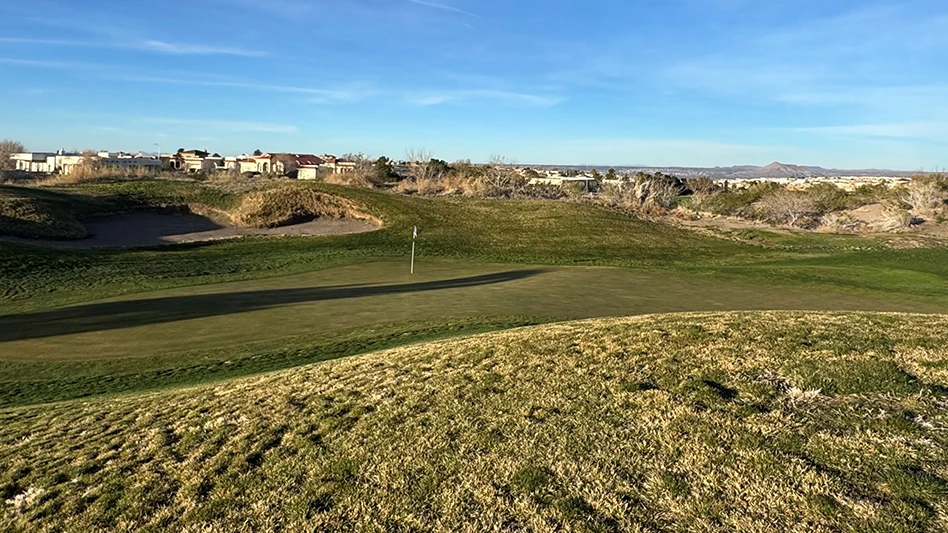
A recent article in the Wall Street Journal reported on plans for the redevelopment of a superfund site a short boat ride from Manhattan, New York into a world-class golf club. In Newport Beach, Calif., plans are under way to redevelop the Coyote Canyon Landfill into an upscale golf course. The approximately 300-acre landfill has been an operating solid waste disposal facility since 1963 and is presently classified as a Class III Solid Waste Sanitary Landfill.
To date, Coyote Canyon has been used for the disposal of approximately 60 million cubic yards of non-hazardous and inert refuse. The landfill was closed for general use on March 3, 1990. Small amounts of trash, approximately 750 to 1000 tons per day, were then accepted for slope trimming until the landfill was permanently closed on March 20, 1990. Coyote Canyon is one of numerous landfills in California slated to be redeveloped in the coming years.
These redevelopment activities demonstrate the growing interest in reclaiming real estate formerly occupied by municipal and other types of landfills. Regulatory programs are changing to offer both opportunities and new challenges for converting old landfills into productive real estate developments. One trend that continues to be popular is the redevelopment of landfills into golf courses.
Legal Issues
Redeveloping landfills into golf courses or other productive end uses can provide excellent potential commercial and/or community benefits. However, redeveloping old landfill sites poses various challenges. From the legal perspective, several concerns must be addressed when redeveloping a former landfill site for a productive use as a golf course. In particular, liability concerns regarding potential environmental claims under the Comprehensive Environmental Response, Compensation, and Liability Act (CERCLA, or Superfund) can dissuade private developers and their lenders.
Changes to CERCLA in 2002 offer some liability protection for those who can qualify as bona fide prospective purchasers of property where historical releases of hazardous substances may have occurred. Under Section 222 of the Small Business Liability Relief and Brownfields Revitalization Act, a bona fide prospective purchaser can receive liability protections if specific conditions are met:
Purchaser made "all appropriate inquiry" into past uses of the site;
Purchaser complies with any duties to report what is discovered and cooperates with the authorities;
Purchaser complies with deed restrictions and controls, such as maintaining or improving landfill cap; and
Purchaser exercises appropriate care regarding the site, including taking reasonable steps to limit threats to human health and the environment.
A prospective purchaser of a closed landfill site probably can meet these conditions, provided they are prepared to meet the technical challenges of landfill redevelopment, including providing for mitigating methane gas hazards and providing for proper foundations.
Technical Issues
As it ages, municipal solid waste in a landfill decomposes and consolidates. Active settlement can take place for many years, depending upon the depth of the trash fill, the types of wastes present (e.g., construction and demolition waste versus municipal solid waste), and the method of placement (e.g., trench versus area fill). Before buildings or other improvements can be constructed on a landfill site, estimates of expected settlement must be made based upon experience, empirical settlement observations, and numerical models.
Heavy loads will surcharge the waste mass and accelerate consolidation and settlement. Many site operators stockpile cover soils or excess waste, on portions of the landfill prior to final closure; such operating practices should be identified and considered when estimating settlement and differential settlement rates.
Although some buildings have been constructed using floating foundations (normally after replacing a few feet of the underlying trash with structural fill), most larger buildings and sensitive structures constructed over landfills utilize deep foundations (e.g., piles or caissons. A combination of the two approaches has been used over old shallow landfills, in which building walls are constructed on piles or caissons, while a floating slab is used for the building floor.
The result often is a stable building, surrounded by a settling ground surface as the underlying landfill consolidates. At one California landfill, a hinged slab was connected to a retail building on one side, and allowed to "float" with the land surface on the other side. If settlement causes the slab to sink too far on the floating side, it can be jacked up and the land surface regraded to create a proper entranceway to the building.
Where utilities enter natural ground or fixed structures supported on deep foundations, allowance must be made for differential settlement. Flexible utility connections have been developed for such applications. Pipe runs beneath buildings constructed on deep foundations should be hung from the overlying structural concrete slabs with non-corrosive hangers, and surrounded by non-cohesive backfill material. Otherwise, settlement of the underlying fill could cause the pipe to be pulled away from the building.
Incorporating Protective Measures
As solid waste decomposes, landfill gas (LFG), consisting primarily of methane and carbon dioxide, is produced. If allowed to accumulate within a confined area in the presence of an ignition source, methane can explode or present a fire hazard. Any improvements constructed on or near a landfill should incorporate appropriate LFG protection measures.
Several approaches are available to protect structures from LFG. Active control technologies include LFG extraction (normally followed by flaring, if gas production rates warrant treatment) to remove LFG before it reaches structures, and air injection or air curtain systems to create positive pressures, driving LFG away from structures.
Passive control technologies include use of membrane barriers and vents to prevent LFG from entering structures, and monitoring and alarm systems to warn of accumulating LFG. Passive systems are commonly used where the landfill is old, and most of the decomposition has occurred (i.e., LFG production rates are low). Passive systems also may be appropriate where the building will have limited usage, or is of open construction (e.g. open parking structures having six or more air changes per hour).
LFG control systems protecting higher occupancy buildings often have redundant systems (e.g., barriers, active extraction, and monitoring alarms), especially when the landfill is not old. Special care must be taken where utilities or other site features penetrate barrier systems; LFG will follow preferential flow paths along utility trenches and enter buildings at points of penetration unless properly sealed.
LFG protection systems require proper operation, monitoring, and maintenance. Monitoring alarm sensors can become "poisoned" by LFG constituents and rendered useless. LFG condensate and corrosive gas constituents can affect mechanical systems. As the closed landfill ages, LFG production patterns change, requiring adjustments in extraction system operation.
Case Study: Industry Hills
The Industry Hills Recreation and Conference Center is located on the same development as two of southern California's most prestigious golf courses. The development, located approximately 10 miles east of downtown Los Angeles, also contains a conference center, Olympic-sized swimming pool, a tennis complex, equestrian center, laundry facility, and 11-story hotel. The 617-acre site includes 155 acres formerly used for sanitary land filling purposes between 1951 and 1969. About 3.6 million tons of municipal waste were deposited into the landfill, which has an average refuse fill depth of approximately 35 feet.
The LFG management facilities at the project consist of two main systems, with the initial installation in February 1974. The first system prevents the accumulation of methane gas beneath on-site structures, and migration beyond property lines. Migrating LFG is collected and then destroyed at a blower/flare station capable of burning 500 cfm of LFG.
The second gas control system was designed for LFG energy recovery. While this system aids in LFG migration and surface emission control, it also supplies medium Btu fuel for convention center boilers and water heaters for the Olympic-size pool and laundry complex. The LFG process facility compresses and cools the gas to remove free liquids, and is capable of supplying approximately 2,100 MM Btu fuel each month. This saves the City of Industry approximately $10,000 to $15,000 each month in displacing natural gas demands.
Operation and maintenance of the gas system is regulated by strict guidelines from a number of different state and local enforcement agencies. In addition to these strict guidelines, the design engineers have developed numerous operating criteria that present unique challenges to the facility's operators.
Some of the major challenges are health and safety; coordination with numerous on-site personnel like security guards and ground maintenance crews; odor control; and maintenance repair and access.
Evidence of the success of Industry Hills Recreation and Conference Center is apparent in the project having received two separate prestigious awards. The facility was awarded the "ASCE Outstanding Civil Engineering Achievement Award" in 1981. In 1997, it received the "Solid Waste Association of North America Gold Award for Landfill Gas Projects."
The Future of "Greens" Redevelopment
The challenges inherent in redevelopment of a closed landfill are substantial. However, experience has shown that the technical challenges of long-term and differential settlement, unstable foundation conditions, LFG control and protection, and health and safety issues, are solvable in most cases. On the other hand, legal liability challenges continue to present impediments to landfill redevelopment.
Recent "brownfield" policy initiatives at the Federal and state levels, coupled with increasing experience on the part of national lending institutions, suggest that such impediments also can be overcome. With the proper planning mechanisms and resources in place, the redevelopment of brownfields into "greens" can continue to be successful.