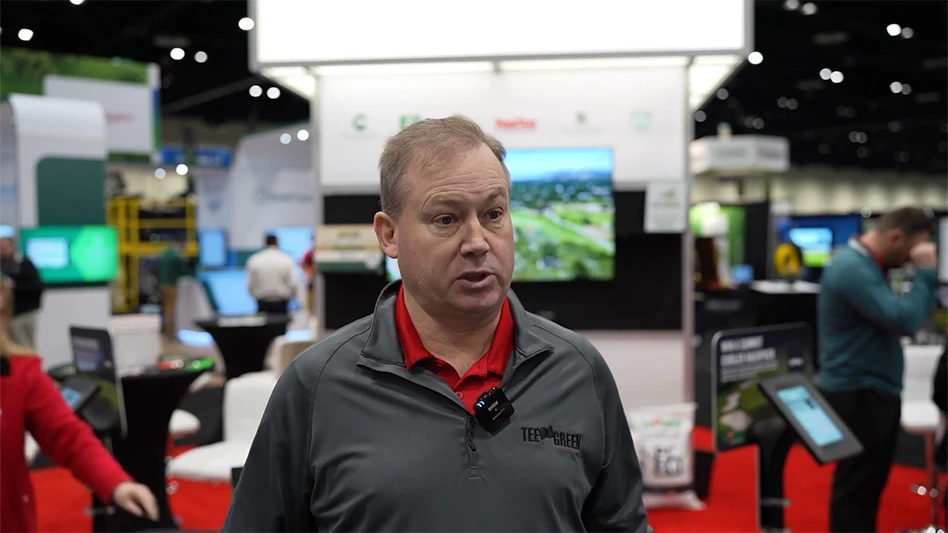
Dr. Jim Kerns is an assistant professor and extension specialist of turfgrass pathology at North Carolina State University. Golf Course Industry chatted with Dr. Kearns about the challenges Pythium blight and Pythium root rot post to golf courses and what can be to protect turf from these diseases.
How big a problem for golf courses is Pythium blight?
It depends on where you are and what grasses are grown. Perennial ryegrass and annual bluegrass are very susceptible to the disease, and it seems like ultradwarf Bermudagrass is as well. It is a disease that many superintendents spray for and it is warranted, because the disease can cause widespread damage quickly if left uncontrolled. Typically, I see Pythium blight on native soil fairways, roughs, and tees. I’ve only seen Pythium blight on putting greens when ultradwarf Bermudagrass is grown.
Do some areas of the country suffer from it more than others? Why is this?
Typically, Pythium blight is most severe in the Mid-Atlantic and South. This disease requires a lot of moisture and typically heat. However, Pythium blight can develop anywhere if the conditions are right.
Is Pythium root rot an ongoing concern? Where do you see winter conditions perhaps having an effect on outbreaks?
Pythium root rot is a perennial concern. I do not think winter conditions have much effect on outbreaks of diseases in the summer. What happens in spring and early summer dictate what the summer disease scene will look like.
Do these diseases affect certain grass strains over others?
No, Pythium species can affect all turfgrasses. Some are more prone to Pythium diseases, like perennial ryegrass and annual bluegrass. But if conditions are right all turfgrasses can succumb to Pythium infection.
What areas of the course are these diseases most seen and how can they affect the playing surface?
Pythium blight, in my experience, is more prevalent on cool-season grass fairways and ultradwarf Bermudagrass putting greens. Pythium root rot is primarily a putting green disease.
What can be done preventively and curatively to control or lessen damage from these two diseases? Is there anything superintendents need to be careful about when applying product?
The best way to manage these diseases is preventively. I advocate looking at average rainfall or humidity as a guide to scheduling Pythium materials. For example in North Carolina, we start Pythium root rot fungicide program in mid-May because that is when our rainfall picks up again and the temperatures also start rising. The only thing to be careful of is rotating products because fungicide resistance is a concern with Pythium diseases.
Are there new products in the pipeline to address the problems?
There are some new products in the pipeline, but unfortunately I cannot discuss them at this time. However, the ag-chemical companies do have some nice material coming.