Courtesy of Singapore Island Country Club (2)
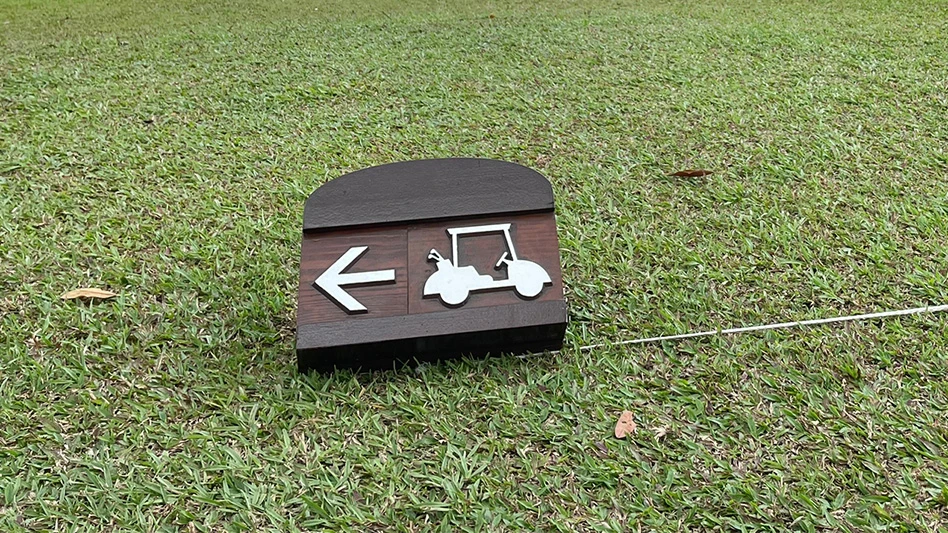
Singapore Island Country Club has started a new waste reduction effort initiative by recycling limbs and trunks of fallen trees into buggy exit signs, fairway distance markers and tee markers.
Beyond aesthetics, the strategy delivers environmental and economic benefits by eliminating the need for off-site disposal, reducing transport-related carbon emissions and decreasing reliance on synthetic or polyethylene-based course materials.
“Our approach reduces waste, lowers costs and supports Singapore’s national effort to extend the lifespan of Pulau Semakau — our only landfill,” said Tai Wae Meng, director of golf course management.
With more than 6,000 trees across three golf courses and 63 holes, SICC is one of the highest densities of mature trees and native species as the nation’s largest and most tree-rich golf club. “Some of these trees have stood for decades and hold deep historical and ecological value,” Tai added.
Only trees with a minimum girth of 12 inches are considered for repurposing. The club attempts to extend tree life through the installation of a lightning protection system, tilt sensors and tree bracing. Trees are only removed when they pose a hazard or affect playability.
SICC’s tree repurposing initiative was first introduced during the upgrade of Bukit Course in preparation for its 100th anniversary in 2024. Building on that foundation, the initiative has expanded as part of the redevelopment of The Island Course, slated to reopen in the last quarter of 2025. Sustainability remains central to the club’s approach with mature trees preserved wherever possible, and those that had to be removed transformed into tee markers, distance markers and buggy exit signs.
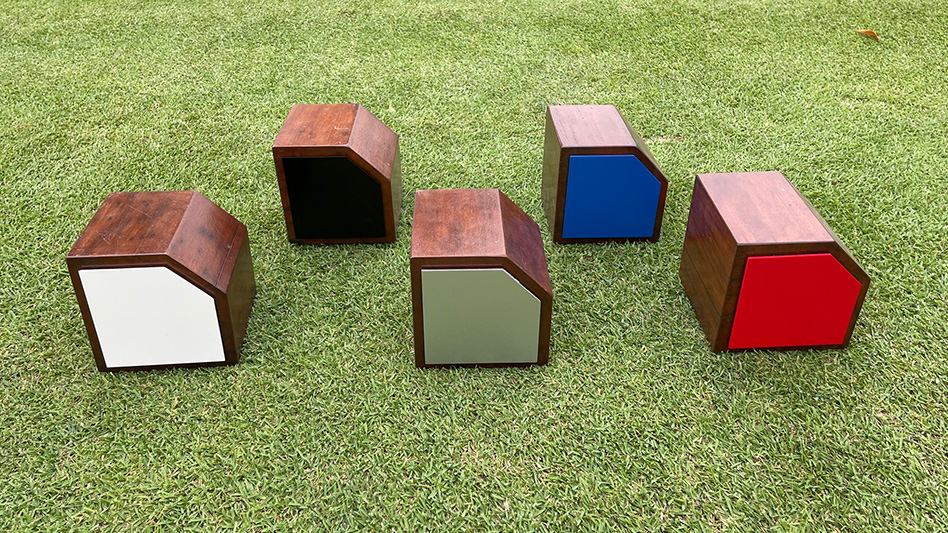
Once selected, tree trunks are carefully cut, air-dried and sent to a local vendor for processing. The wood is shaped, machine-engraved with course markings and hand-painted, preserving its natural grain and character. The result is a series of functional and beautifully crafted pieces that embody SICC’s purpose of reuse and sustainability.
Rather than displacing nature, SICC integrates conservation into its daily operations. Trees impacted by course redevelopment are often transplanted on-site.
The club’s sustainability practices have earned recognition from the Golf Environment Organization, and it is home to two National Parks-endorsed Heritage Trees located on The New Course.
“Golf courses are often seen at odds with nature,” said Ian Geoffrey Roberts, general manager of SICC. “Our work proves the opposite. Repurposing and replanting trees supports biodiversity, nutrient cycling and carbon storage, making a meaningful contribution to climate resilience.”
The club plans to explore additional tree reuse initiatives, including the crafting of furniture, signage and organic mulch.
Latest from Golf Course Industry
- Reel Turf Techs: TJ Vollmar
- Bernhard and Company names G.C. Duke as North American Distributor of the Year
- Course at Sewanee picks KemperSports for management
- WiTricity expands wireless charging technology
- Shining star
- SiteOne Landscape Supply acquires Reinders
- Talking Turf Weeds 17: Waking up your course after winter with Yusif Jaouni and Matt Herrmann
- From the publisher’s pen: Respect the side hustle