After a few shovelfuls, Mitch Stack bent down and scooped up a baby tortoise.
The reptile, no more than 3 years old, rested easily within Stack's palm - blinking from behind a small pinch of white sugary sand upon its head.
"He's just a couple years old," said co-worker Nancy Scott.
As Stack blew away the sand, the turtle tucked inside its shell.
The two environmental scientists from Tampa began relocating gopher tortoises Wednesday from Indian Hills Golf and Country Club, 1600 S. Third St.
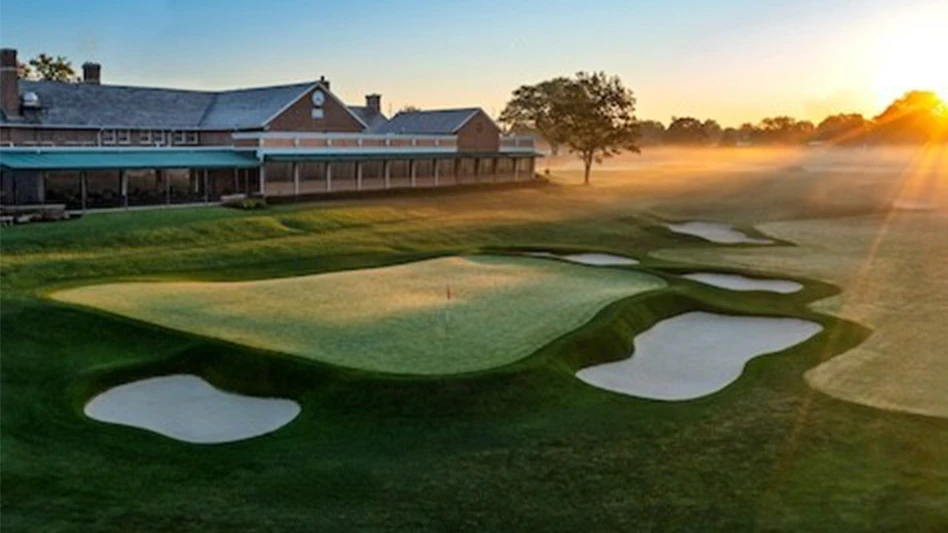
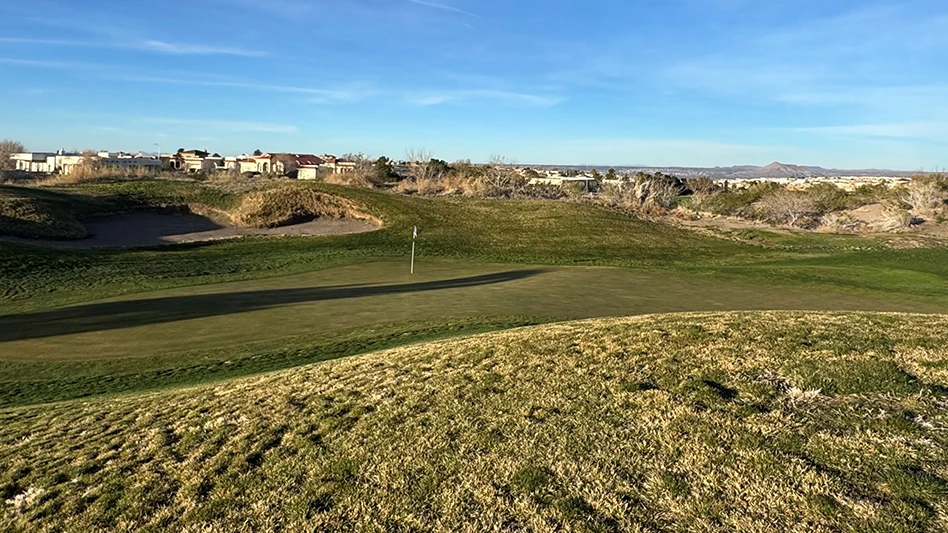
These little critters have been delaying a $2.6 million renovation of the 66-year-old course into a state-of-the-art facility with an updated irrigation system, a 300-yard driving range and new hole layout.
Design plans call for the tortoises' home in an undeveloped southeastern corner to become holes 4, 13, 14 and 15.
In February, Scott observed about 14 burrows, but many more have appeared since then. She has no idea how many tortoises might need to be moved.
"One tortoise can have two or three burrows at some stage of excavation at all times," she said. "We are going to dig every active one we see."
Scott and Stack found their first tortoise after spending nearly three hours digging five holes by backhoe and hand - some burrows stretching more than 6 feet deep under fine white sand.
"This is like digging in a pile of sugar. It just keeps caving in," said Stack.
Sometimes the subterranean tunnels can make erratic turns or sudden dips, Scott said.
"They do all kinds of crazy things," she said.
Another capture method involves concealing a bucket near the burrow's opening and letting a returning tortoise drop in.
But this takes much more time because tortoises sometimes don't leave their burrows for weeks, Scott said.
Although golf course construction began in May, workers haven't touched the protected tortoises' habitat. They've been waiting for a permit to relocate the tortoises across the street near the city's Public Works compound along the west side of a triangular-shaped lake.
The Florida Fish and Wildlife Conservation Commission classifies gopher tortoises as a "species of special concern" - meaning they cannot be killed, possessed, transported or sold without a permit.
Experts estimate there are 750,000 to 1 million gopher tortoises in Florida, but their numbers are dwindling rapidly from human encroachment, disease and extermination.
Many developers apply for "take permits," which sanctions the killing of tortoises - provided adequate reparations are made to ensure their survival, such as buying acreage for tortoise mitigation parks or setting aside nearby land as sanctuaries.
Florida has issued 1,583 such permits authorizing the killing of 62,899 tortoises and setting aside 104,690 acres for mitigation parks, according to figures from the Conservation Commission.
Golf Course Director Mary Beth Birsky refused to apply for a take permit, opting for a relocation permit. Fewer than a dozen were issued in Martin, St. Lucie and Indian River counties last year, records state.
Birsky estimates it would cost about $10,000 to move the tortoises safely to their new home.
Source: Fort Pierce Tribune (Fort Pierce, Fla.)