Guy Cipriano (3)
Observations from a quick pitstop in Indiana, a sneaky spectacular golf state with enviable stability among its superintendent ranks and industry support networks. Fortunately, we timed an Indiana trek before basketball season, so we didn’t hear too much bickering about the kings and queens of the state’s well-used courts.
“Hoosier Hospitality” is a thing
Indiana is known as The Hoosier State. Why? Even the Indiana Historical Bureau website struggles describing the definitive roots of the moniker. “As soon as our nickname came into general use, speculation began as to its origin. The speculation and argument have gone on ever since,” the middle of a website section titled What is a Hoosier? reads.
Golf Course Industry shuns speculation like savvy superintendents avoid overwatering turf. But we learned immediately in Indiana what “Hoosier Hospitality” means. Superintendent Randy Brehmer was standing by the pro-shop counter to warmly greet us upon our arrival at The Fort Golf Resort. We then shuffled to the stone starter’s hut to meet an affable volunteer retiree who pleasantly described what makes The Fort a pleasant place. Two conversations. Two reasons to be enthralled by The Fort and the Indiana golf scene before striking a shot.
We observed simple customer-service lessons at The Fort. Eye contact. Enthusiastic greetings. Casual questions to demonstrate the customer matters. Then, after cultivating a connection, slip in a few reminders about the 90-degree cart rule, course care and pace of play.
“Hoosier Hospitality” shouldn’t take much effort to duplicate. The mantra will undoubtedly work beyond the state’s borders.
Pete’s land
Twenty miles separate The Fort and The Club at Holliday Farms. The courses share a significant bond: Pete Dye. Their contrasts demonstrate the legendary architect’s brilliance.
The Fort meanders a woodsy 238-acre urban Indianapolis plot inside Fort Harison State Park. The 15th green and 16th tee, on the northeast corner of the property, represent the only spots where a golfer or worker feels the presence of Indianapolis, the state’s largest city. Brehmer and his team operate from a maintenance facility bordering the 16th hole, a slivering par 5 where Dye’s ability to create varied shot angles presents myriad playing options.
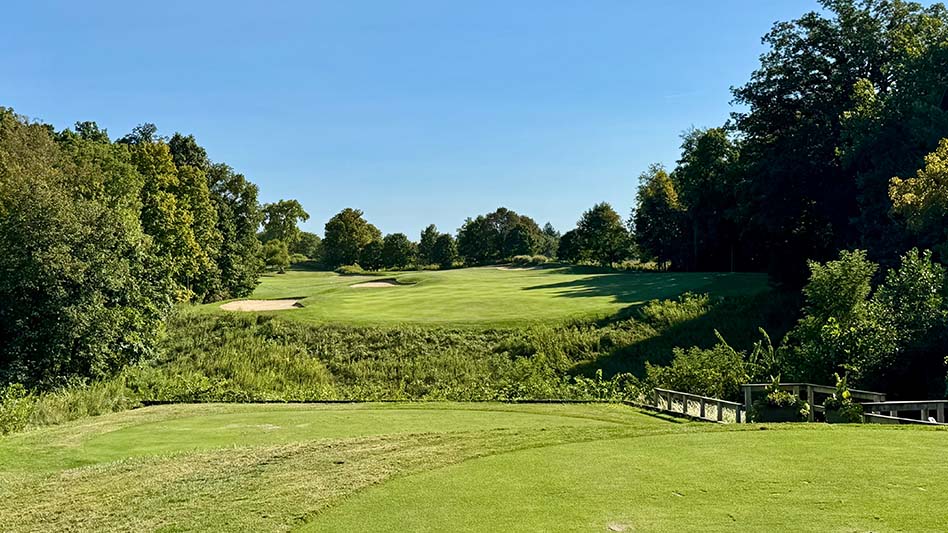 The 18th hole at The Fort Golf Resort in Indianapolis.
The golf and state park structures at the entrance of The Fort resemble buildings dotting a military site. Fort Benjamin Harrison served as a military learning and training center for most of the 21st century. The U.S. Department of the Interior approved the State of Indiana’s request to convert the post into a state park and nature preserve in 1995. Two years later, a course designed by Dye and associate Tim Liddy opened.
Brehmer collaborated with Dye and Liddy during construction before growing in a course incorporating beloved elements of a Dye design such as short grass around greens and sculpted grass bunker faces on surprisingly varied topography by central Indiana standards. The Fort offers a heavenly hideaway among the hustle of city life — and Brehemer, a lifelong Hoosier, has shaped the course’s entire serene existence.
Holliday Farms superintendent Nate Brown hails from an agricultural community in northern Indiana. He attended Purdue University, which years ago surpassed the once-mighty Indiana Hoosiers in basketball prowess. Brown was an assistant superintendent who helped grow in The Club at Chatham Hills, another Dye design in the expanding Indianapolis north suburbs. Brown then shifted to Holliday Farms, whose developers also own Chatham Hills, to lead the maintenance efforts of one of Dye’s final designs.
Gaudy houses line Holliday Farms, proving the real-estate golf concept still works in solid housing markets. Railroad ties splitting fairways, par-5 greens hugging ponds, and more than 200 bunkers of every imaginable shape and size border fairways, approaches and greens. Dye’s work provides escapism at The Fort; it helps sell real estate at Holliday Farms.
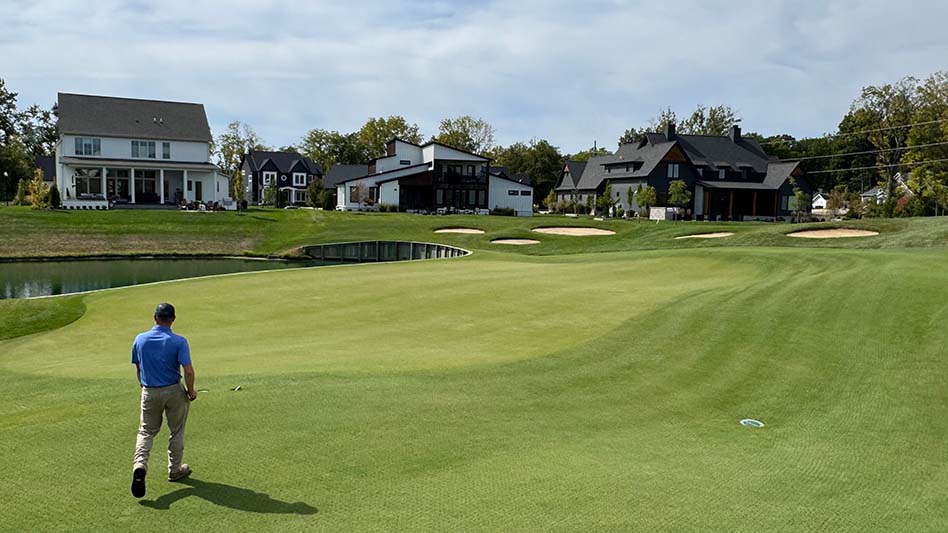 Holliday Farms in Zionsville, Indiana, is one of Pete Dye's final designs.
That versatility within one metro area demonstrates why Dye had few golf design and development peers. Brehmer and Brown are among a lucky group of superintendents who can share first-person Dye stories.
The modern maintenance program
Superintendents at new courses like Holliday Farms receive the rare opportunity to move their teams into a new maintenance facility. In many cases, maintenance facility construction starts after grow in and member play commences. Brown’s grow-in crew consisted of himself and two assistants working out of temporary structures. “Building a team from scratch is something that’s difficult to do,” he says.
Holliday Farms opened for play in 2021, two years before Brown’s team moved into its new digs. Brown thoroughly pondered efficiency when plotting the agronomy center. Modern practices and technology we spotted at Holliday Farms include:
- Large digital screens in the breakroom and equipment manager’s area, plus a projector in the breakroom to display staff assignments
- Chemical inductor system (Brown’s agricultural background sparked this purchase)
- Two GPS-guided sprayers
- Garage doors that open via the myQ app
- Four microwaves in the breakroom to limit waiting during lunches
- Crew management, budget tracking and hole location software/apps
- WhatsApp usage to connect team members
- Two irrigation computers
Brown also doesn’t overlook “Hoosier Hospitality” when leading his team. Holliday Farms employs three assistant superintendents with equal job titles. Unless key member events enter the calendar, assistants work just one weekend each per month.
More “Hoosier Hospitality” permeating the golf industry wouldn’t be a bad thing.
Guy Cipriano is Golf Course Industry’s publisher + editor-in-chief. He attended college in Indiana a long time ago at a school he refuses to mention in conversations with people in the turf industry.
Latest from Golf Course Industry
- Reel Turf Techs: TJ Vollmar
- Bernhard and Company names G.C. Duke as North American Distributor of the Year
- Course at Sewanee picks KemperSports for management
- WiTricity expands wireless charging technology
- Shining star
- SiteOne Landscape Supply acquires Reinders
- Talking Turf Weeds 17: Waking up your course after winter with Yusif Jaouni and Matt Herrmann
- From the publisher’s pen: Respect the side hustle