Adobe Stock
March and April included stops at courses in five states: Rhode Island, Pennsylvania, North Carolina, Georgia and Ohio. The late winter and early spring geographic dispersion satisfied our need to visit a myriad of courses to effectively cover the industry.
Observing managers, employees and golfers at facilities in different regions, with varying budgets, induces broad thoughts about the intersection of turf maintenance and technology:
- What facilities will benefit the most from adopting technology?
- How many app subscriptions will a course be willing to purchase?
- How many different apps and platforms does a superintendent need?
- What’s the tolerance for apps that don’t integrate with other apps?
- Which companies will be winners in the turf techstakes?
- What types of tech-focused content do Golf Course Industry readers, followers and listeners seek to consume?
A recent article in The Economist (April 3: China and America are racing to develop the best AI. But who is ahead in using it?) introduced differences between technological diffusion and technological innovation, and how the contrasts apply to international business competition involving AI. Diffusion refers to how nations, organizations and citizens adopt and implement technology. At the moment, according to the article, America outpaces China in diffusion. But the article implies global dynamics change fast.
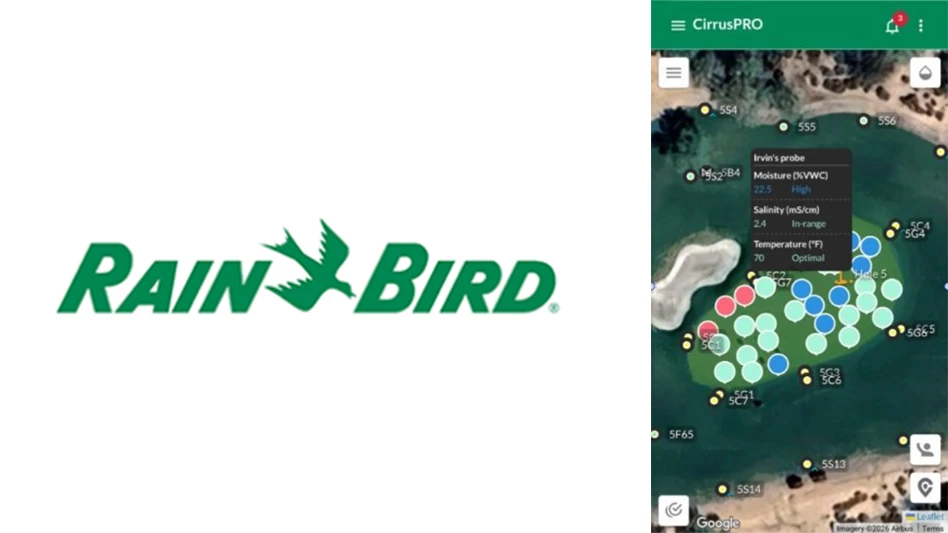
As it relates to the golf maintenance industry, diffusion will determine what facilities benefit greatly from integrating AI into agronomic and overall operations. The industry is becoming inundated with AI-infused platforms that can predict pest pressure, forecast short- and long-term weather, determine mowing and rolling schedules, make yay-or-nay irrigation decisions, and enhance communication with stakeholders. Hopefully an app anticipating golfer behavior and complaints drops soon!
Our early 2025 travels and conversations suggest diffusion will likely occur at scale among mid-level golf facilities. Let’s explore why the industry hierarchy supports this thinking.
Mega-budget facilities employ dozens of highly trained agronomists and operators. Enormous expectations, funded by exorbitant initiations, dues and fees, help keep positions on payrolls. There’s less incentive to deploy AI and automation when financiers provide enough hands to accomplish tasks by hand. A manager at an esteemed club recently told us: “Technology advances, GPS, robotic mowers … I don’t see a world where that stuff is highly prevalent at a place of this status and this standard. There’s no better way than a skilled, trained set of eyes.”
During recent walks around two world-renowned courses, our trained journalist eyes spotted zero autonomous mowers and dozens of operators handling tasks via pushing, pulling, tugging and walking. Savvy grit isn’t going away at the upper levels of the business.
Facilities with flimsy finances will also be slow to implement and adopt technology. First, a $1,500 subscription can shatter some budgets. Second, a budget might be so meager that employing somebody with the training to integrate technology into an operation is unrealistic.
The remaining 80 percent of the industry is where anybody curious about technological adoption in golf maintenance should direct their focus. Saving a few sprays, mows, rolls, water cycles and a block of tee times will justify upfront expenses for subscriptions, sensors, drones, mobile devices and satellite-guided equipment.
Even in a modestly paying industry such as golf, using technology will become cheaper than labor. Diffusion will accelerate, first out of curiosity among strategy-driven facilities, then out of emulation and necessity by reactive operators. Current adoption rates seem slow, but expect a new category of influential courses, at least from an operational perspective, to emerge.
We’re confident we’ll begin identifying those courses. We’re confident many of them will be facilities most of the industry will be learning about for the first time.
Tech-themed podcast debuts
Technology is the focus of a new podcast series debuting on Superintendent Radio Network this week: Smart Greens: Digital tools for superintendents. The first episode features a discussion with Syngenta Digital Platforms marketing manager Scott White, a former superintendent and second-generation turf professional.
You can find the conversation on the Superintendent Radio Network page of popular podcast distribution platforms.
Guy Cipriano is Golf Course Industry’s publisher + editor-in-chief. Contact him at gcipriano@gie.net to share stories about your course’s technological journey.
Latest from Golf Course Industry
- Tartan Talks 116: Doug Smith
- Audubon International adds 127 golf courses to Monarchs in the Rough
- USGA’s GAP preps for fourth year
- Protect your vehicles from rodent damage
- VIDEO: Fun with fairways
- From the publisher’s pen: Humble giving
- Syngenta adds two to western U.S. team
- The Aquatrols Company introduces soil surfactant for Canada