Editor’s note: The June issue of GCI will feature comprehensive coverage of GCI Tech and visit golfcourseindustry.com for video coverage of the conference.
The message emerging from the inaugural GCI Technology Conference mirrored its surroundings: timeless qualities and new technologies will create opportunities for success in 2026.
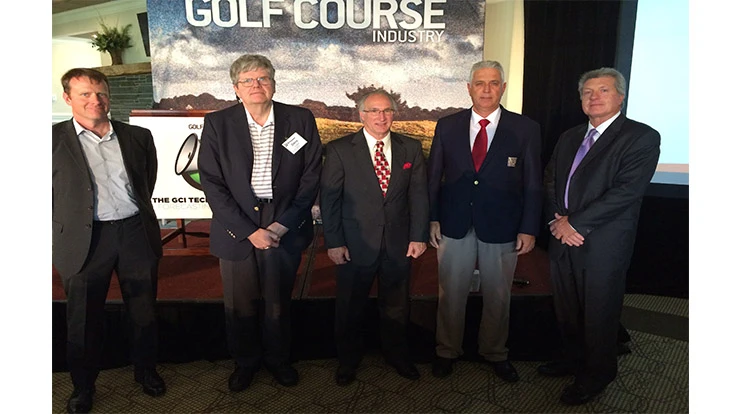
The conference, sponsored by Syngenta, Toro and Smith Turf & Irrigation and supported by the Carolinas GCSA, was held at Carolina Golf Club, a Donald Ross-designed course with views of Charlotte’s gleaming skyline. Superintendent Matthew Wharton and the CGC team also hosted a golf outing benefitting the Wee One Foundation. The serenity of the golf outing proceeded a serious discussion led by presenters who acknowledged skills applicable in any era must be mixed with data-driven mentalities to ensure longevity in a leaner golf industry.
Retired Atlanta Athletic Club superintendent Ken Mangum and The Club at Mediterra director of agronomy Tim Hiers both handled prosperous and turbulent periods by connecting with people. Perhaps, most important, they accomplished career goals without sacrificing fulfilling moments away from the course. Neither agronomist envisions things changing in 2026.
“If I see a superintendent as a way of life working 70 hours each week, they are either a workaholic or not good at what they do,” Hiers says. A baseball fan, Hiers served as the event’s closer, providing a succession of anecdotes from his career to emphasize why superintendents must stay open to new ideas and seek guidance from others.
People also represented a theme of Mangum’s presentation. A year removed from a 27-year tenure at AAC, Mangum views managing four key groups – those above, even and below you, and your family – as a proven route to industry success. “If you work at a club for a long, long time, you have to have relationships,” he says.
ASPIRE Golf principal and GCI columnist Tim Moraghan presented ways to future-proof a career, and he says extended golf industry careers aren’t for the meek. “I don’t know where we go,” he says, “but it’s a tough business for all of us.”
The plant protection side of the business faces a major conundrum, according to Syngenta’s Dr. Lane Tredway, because the size of the industry compared to other markets means fewer resources are being devoted to understanding turf diseases and pathogens. “If we are not careful, we can be left behind in the turfgrass industry,” Tredway says.
Toro’s Dana Lonn has a similar view of the industry’s place in the technology race. “We as an industry are not very far,” he says. “In some ways, we are farther behind.” Lonn advocates for using science instead of art as a way to move the golf industry forward, and themes of his presentation included maximizing existing water supplies, implementing data into maintenance practices and advances in autonomous technologies.
Global Golf Advisors principal Henry DeLozier examined factors shaping golf’s future. DeLozier, who also authors a monthly GCI column, warned attendees of a looming economic slowdown in 2018-19, yet he believes golf will be a healthy consumer option in 2026. “Am I bullish for golf?” he says. “I’m very bullish about the future of golf.” Women are easily the biggest growth area, according to DeLozier.
Attendees didn’t need to look beyond their immediate surroundings to understand what can happen when a facility and its leaders make smart decisions. Carolina Golf Club recently preserved its early 20th century charm while positioning itself for the 21st century. The club is regarded as one of the strongest golf facilities in the Charlotte area.
The setting represented the perfect spot to begin pondering the next decade.
Guy Cipriano is GCI’s assistant editor.