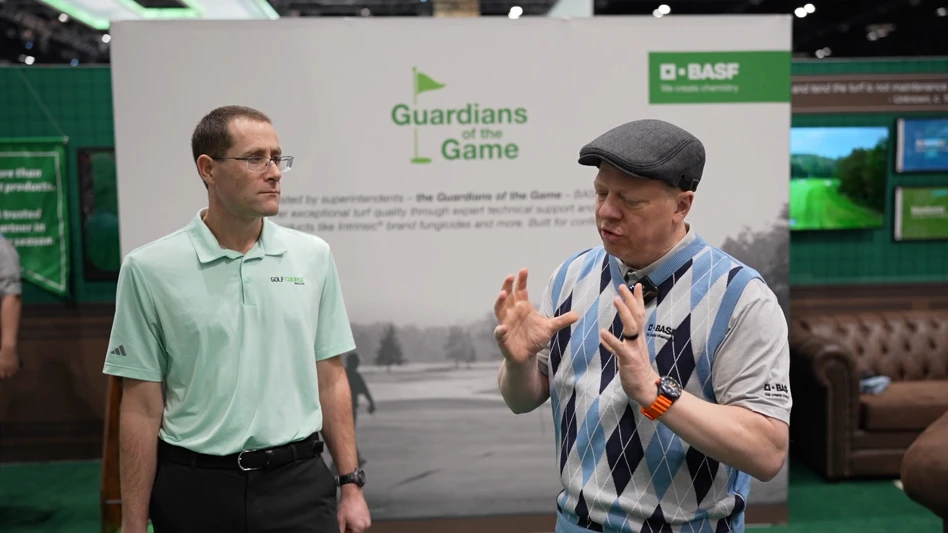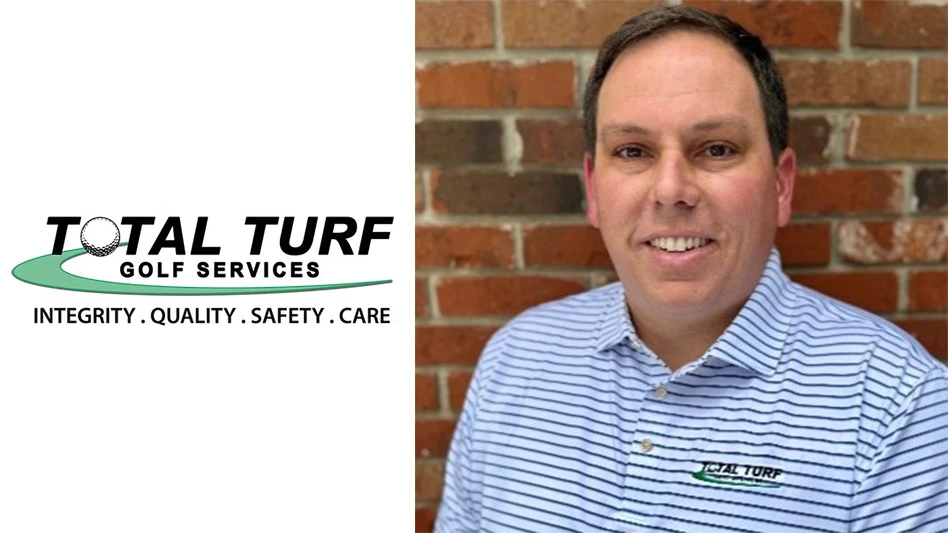
Superintendents have to deal with the public every day on the course, and also sometimes greens committees and directors even beyond that. But not many have to look into a camera and talk about the course the way Ken Mangum, CGCS, has done for the tournaments at the Atlanta Athletic Club and in his history with the GCSAA.
For Mangum, knowing how to approach public speaking is a requirement of taking care of a course, whether you’re on TV or not.
“When you think about our jobs, whether it’s representing the club at an educational session, whether it’s with the news media, or as I had to do with the PGA championship and at the upcoming U.S. Amateur – it’s important to be able to get your ideas across or your project approved,” says Mangum. “And to do that clearly you’ve got to be able to make a presentation.”
Whether it’s new equipment, a renovation or changing turf types, the ability to give a strong presentation gives the superintendent the best shot of showing the course at its best – and what it could be. But public speaking comes naturally to some more than others, and Mangum started out in the latter group, he says.
“Early in my career, I remember like it was yesterday, they wanted me to do a public service presentation they would air for this brand-new golf course and softball complex for the city. I had to stand in front of a camera and look right into it from about a foot away. That was terrifying,” he says. “I had to practice and practice and practice. I just knew it was something I had to do.”
Though Mangum continued to get up in front of the public for local chapters and conferences, he’s never lost that bit of anxiety before walking on stage. “I’m always nervous beforehand, but once I get on stage and get up to talk, I’m fine. But I always have that anxiety beforehand. I hope I never lose it because I think it’s good in a way. It keeps you focused.”
When Mangum became a board member for the GCSAA, he was teamed up with Mike Jousan, communication expert at Clear Communications to hone his speaking ability. Jousan had him speak into a camera and then critiqued Mangum’s effort honestly. That honesty helped sharpen his presentation skills, and he’s kept in touch with Jousan to help prep for his own big presentations. A reliable listener who will be honest with you even when it hurts a little bit is invaluable before getting up in front of a larger audience, he says.
It’s useful to put a lot of effort into the execution of the presentation, but Mangum prefers a Power Point with slides with a few bullet points on them rather than a full script. The combination of photos that convey the message and quick, informational slides can go a long way in creating an effective presentation.
Before getting up in front of a crowd or even your listener, speak through your presentation in front of a mirror, taking note of your hand placement. Make sure there’s no change in your pockets. Be conscious of how often you use spacer words and phrases like “um” and “you know” and don’t be afraid to pause for a moment to gather your thoughts instead.
“You’ve got to practice,” says Mangum. “Some people have the gift of gab and others struggle with it. You’ve got to find a way to get comfortable. How you get comfortable on your feet in front of people is to get on your feet in front of people.”
That responsibility is even more important in improving any part of a golf course, says Mangum. Part of the superintendent’s job is telling the golf course’s story, and no one knows that story like a course’s superintendent.
“Somebody’s got to be the champion,” he says. “Somebody has to prepare the presentation and bring it forward. I’d never depend on the board member or the committee member to do that. Our job is simple: Take care of it and show them how they can improve it. You’re not going to get everything, but if you don’t put something forward you won’t get anything.”
But the most important thing a superintendent can do with a presentation is help somebody, whether they’re a part of the local chapter, a committee member or one of the players, he says.
“I enjoy helping people, and I hope that some little thing I say will help somebody,” says Mangum. “Hopefully they’ll go away a better person or have a new way of doing things or something they can take away professionally or personally. I think that puts you in a little different frame of mind.”