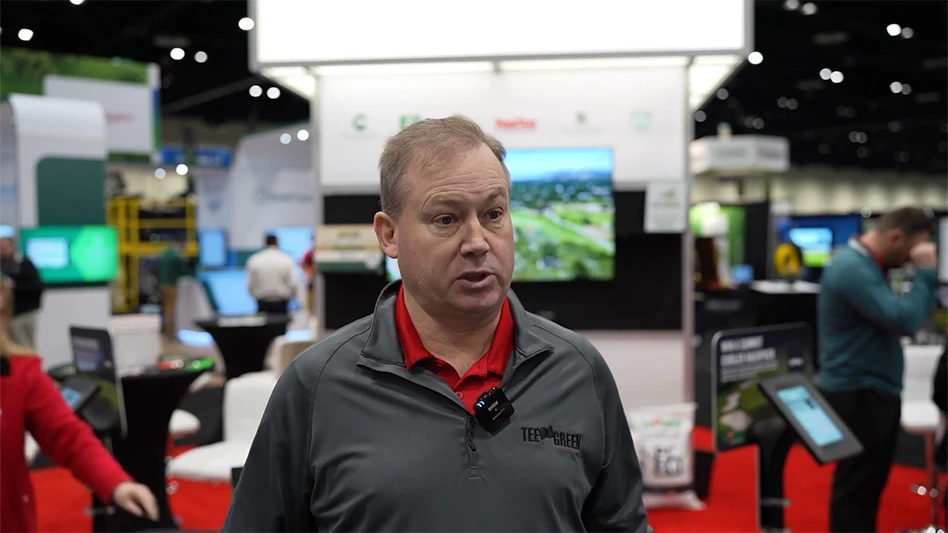
Erik Christiansan, president of EC Design Group, Ltd., is an independent irrigation consultant who helps golf courses choose the right irrigation solutions to keep their properties vital. As a former course superintendent, he also knows what it’s like to be on the inside, asking board members and committees to make investments. We asked him to share hints for gaining board support, based on his combined experiences.
What’s the most important element in a presentation to convince a board of a project’s necessity?
The key is to get your facts right. When you’re looking to make irrigation improvements, it can get quite confusing for a club member. Too many times, members focus on how much it’s going to cost. Before you get to the dollar figure, you need facts. You wouldn’t go out and buy something for your car without considering why you need it. A plan has to be accompanied by facts people can use to make good business decisions.
What are some of the most common errors or traps that can sabotage support for a project?
As a consultant, I get involved in projects where members want a briefing before we’ve gathered all the information for our site study or master plan. That can only result in misinformation. When it circulates within a club or municipality, it can start a rumor mill and detract from issues that are germane to the decision. I also tell superintendents, “Let me deliver the message.” They usually want to do it themselves. I can deliver it as an unbiased consultant, and because of that, members address me a little differently.
How can superintendents make a persuasive case for investing in course improvements?
Most members or park boards would rather do a new pool or a new clubhouse than replace an irrigation system, and truthfully, I would too, if I were in their shoes. The clubs that choose the right investments and keep their courses in good shape are the ones that are going to succeed. We had a client that thought they might lose 50 members when they made a renovation. Instead, they gained 25. When members see a course decline, they’ll eventually gravitate toward a club that provides that good experience. Many agronomic and disease issues are tied to poor irrigation, so you have to prove that an irrigation system has reached its useful life. On an 18-hole operation, a new system can cost $1.5 to $2 million. It’s a cost of doing business that lasts 20 to 25 years. Members are convinced by a consistent message about what the best investments are for their courses—whether that’s a Lexis, a Cadillac, a Chevy or a rebuilt engine.
What advice do you have for course superintendents who are debating about when to ask for a big improvement?
As a superintendent, your job is to be a good steward for the club. Every club has politics. You have to figure out who, in your club, is going to be an asset, and get them on board as soon as possible. You’ll know who they are. You need to rally those people, and educate them so they can help you deliver good communication. It’s never too early to start. The biggest mistake I see people make is waiting to start until they’re sure a project has enough support.