For many superintendents, taking care of the turf is the easy part – it’s communicating with everyone else that makes the job difficult sometimes. Getting people to notice your work for sustainable and environmental practices can be even more difficult. Joellen Lampman, associate director of environmental programs, and Katie Hopkins, outreach and communications coordinator, both of Audubon International, show how to get the word out.
What can a superintendent do to get the message out about sustainable practices?
Joellen: A lot of that’s going to depend on the superintendent himself. It probably doesn’t come as a big shock that a lot of superintendents are introverts and are not very comfortable with public speaking. We talk a lot about passive storytelling as well as active storytelling, with the active storytelling being along the lines of inviting people to the golf course and giving them a tour, and actually talking about what’s going on. That can be done one on one or it can be done as a more organized group. It can be led by a birding expert, but the superintendent will be there to chime in about different ways that the golf course is being managed to provide habitat for the different birds. They don’t have to lead in the tour but they can be there to provide some ideas as they’re going along. There’s also the opportunity to do presentations, and we particularly encourage them to attend green committee meetings, management meetings - that will allow them to talk about not only environmental aspects of what’s going on in the golf course but what’s going on in a turf management standpoint. You cannot over-communicate such an important message.
Also hosting events - we really encourage superintendents to open up the maintenance facility and let people come in and look at the different pieces of equipment, and really learn about how the course is being managed. There are so many people out there that think that it’s just cutting grass and it’s so much more involved than that. It involves so much more science, and people don’t know that until they get the opportunity to sit down and hear what the superintendent is thinking about as they’re going throughout their day making their management decisions.
Most of our superintendents are much more comfortable with passive storytelling. Signs are a pretty easy way of getting the message across, though it’s a static message, so you want to be very careful with your messaging. Displays are another way to show information. What I like about displays is that displays are changeable, so you can change them as often as you want to. If this is a project that’s coming up, you can do a writeup about it, and you can have before and after pictures. Having that malleable display can be a really powerful communication tool.
How would a super go about setting up a presentation?
Joellen: Probably a really good way to get their feet wet is to attend greens committee meetings. If they don’t have those, the clubs might have garden groups, or men’s and ladies’ groups they can go and speak to.
They can reach out to the leaders of those groups or committees and talk about their desire to address them and get fit into the schedule. If it’s going to be more of an open-ended tour on a public course and they want to invite people to come to see the maintenance facility, then something like putting an ad in the paper could be a really good way to get attention.
Katie: I would suggest they send out press releases for any event they’re having, and I would suggest that people develop relationships with their local media, radio station and newspaper. Just sit down with them and talk with them about what their goal is, that they’re trying to work more environmentally friendly and they want people to know about it and be involved in it. So when they do have an event come up or they put in a new irrigation system, they can go to their local media contact and work with them to get that story out in the community. But the idea is trying to form partnerships with as many people as they can, with schools, organizations and neighbors. Anytime they have something going on, they can reach out to those places and those organizations can distribute the message to their members.
One thing I think is lacking is most of these golf courses have their own websites and I usually do not see anything about their environmental efforts there. I think they’re missing a huge opportunity. Even if someone just goes to the website to check tee times, there could be photos or a brief description of what they’re doing in that space. It can be a marketing tool as well - they can brag about what they’re doing.
How does a superintendent start the conversation about sustainability?
Joellen: We address this within the program with Outreach and Education. The outreach part is to reach out golfers, to staff and to the community to find people who can help them do something they might not be able to do on their own such as a wildlife inventory, or choosing native plants for a butterfly garden. That opens up the opportunity for conversation.
One of the nice things about the Audubon certification is they have to document for the process. so they’re out there taking pictures, they’re conducting wildlife inventories. This gives them some material they can use those as communication tools. We’re huge fans of recycling: We always tell people if you use something once, you should use it 17 different times. So as they go through the certification process they’re collecting those pictures and things they can then use for blogs.
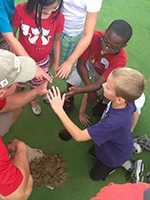
We have golf courses that are bringing school groups out as part of an environmental lesson. I have been working a lot myself for the past few years with The First Tee; and we’ve received a grant from Toro to do course improvement projects so we’ve had about 100 kids who have come out. They go through six stations: so they’ve been planting grasses, they’ve been planting trees and shrubs, we’ve been putting in rain gardens. Just a wide variety in a three-hour period, and fun is had by all.
Katie: You need to get buy-in from your whole staff, and develop those ethics with your crew. Before you go out into your community, you have to have that already established at your golf course. That way, it can show through and get everybody on board.