Guy Cipriano (3)
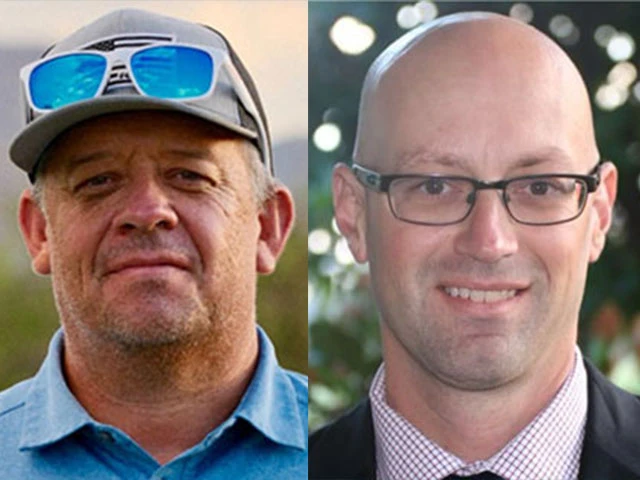
Brian Abels became the superintendent at his hometown 9-holer, Meadowbrook Golf Course in Wellsburg, Iowa, at 19 years old.
“I jumped right into the superintendent role, so I had to be a leader at a young age,” says Abels, a 25-year industry veteran preparing to enter this third season as the superintendent at Ames Golf & Country Club.
After finding golf course maintenance as a second career, Patrick Tuttle took a ladder-like route to becoming a superintendent. Tuttle worked at a trio of Northern California private clubs before landing the superintendent job at Baylands Golf Links in early 2024. The past two seasons at the busy municipal facility confirmed to Tuttle what Abels discovered as a teenager.
“I always think along the lines of managing and leading,” he says. “Leadership involves a lot of inspiring and motivating, versus managing, where you’re just guiding.”
Abels and Tuttle were among the 25 superintendents from 21 states who participated in the 17th annual Syngenta Business Institute. The event attracted superintendents from diverse backgrounds to The Graylyn Estate in Winston-Salem, North Carolina. With 55 acres of rolling Piedmont Triad terrain dotted by distinguished brick structures featuring elegant turrets, sharp angles and intricate masonry, Graylyn represents a fitting venue for reinforcing timeless lessons to motivated professionals.
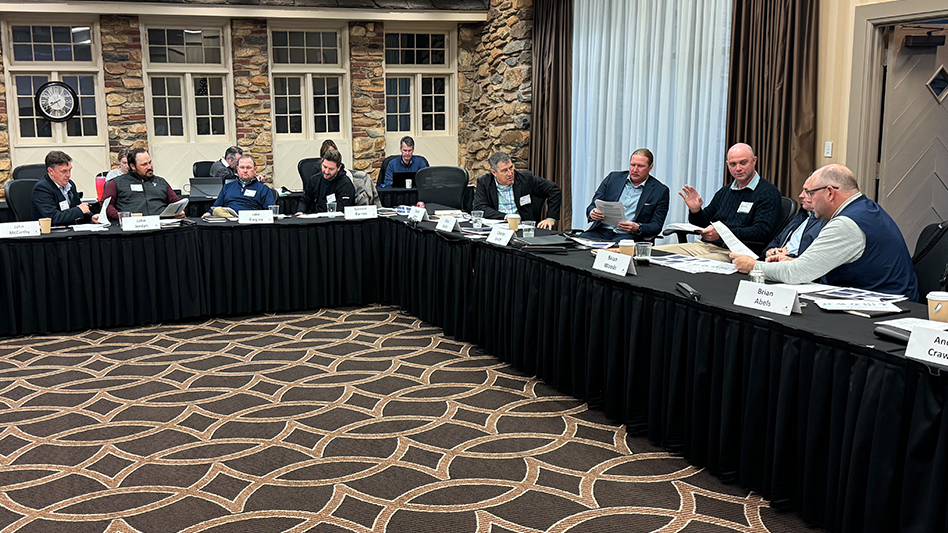
Syngenta Business Institute has evolved into a golf maintenance industry version of executive leadership and management training. Wake Forest University School of Business faculty guided five extended classroom sessions plus Thursday evening roundtable discussions. Only one session directly addressed finances.
The program offers the most intense non-turf academic training many attendees will receive. Topics covered included executive decision making, managing individuals and teams, influencing and negotiating, leading across cultures and generations, and work-life balance. Superintendents experience revelations at different points of their respective careers that skills and philosophies like the ones addressed at Syngenta Business Institute dictate success and longevity in their roles.
“I started working on a golf course at 15 years old and I started quickly realizing what it really took, what it involved and all the different components,” Mariner Sands Country Club director of agronomy Michael Cauley says. “You’re not just growing grass. There’s a lot of different components to it.”
Mariner Sands Country Club is a 36-hole private facility in a 720-acre Southeast Florida community with homes, condos, villas and myriad non-golf amenities. Holding a director of agronomy position in Southeast Florida means leading at scale. Cauley guides a team of 50 employees. He relishes the turf-focused parts of the job, but his initial 2½ years as a director demonstrate he must delegate many of the tasks that attracted him to golf course maintenance. Trusting others is a powerful form of leadership.
“Being a director for the first time, you feel like you have everything on your plate and all the decisions come to you,” Cauley says. “But I now have two really good superintendents underneath me. A lot of those decisions are being passed to them so I can really focus on big-picture stuff rather than looking at every detail of the golf course.”
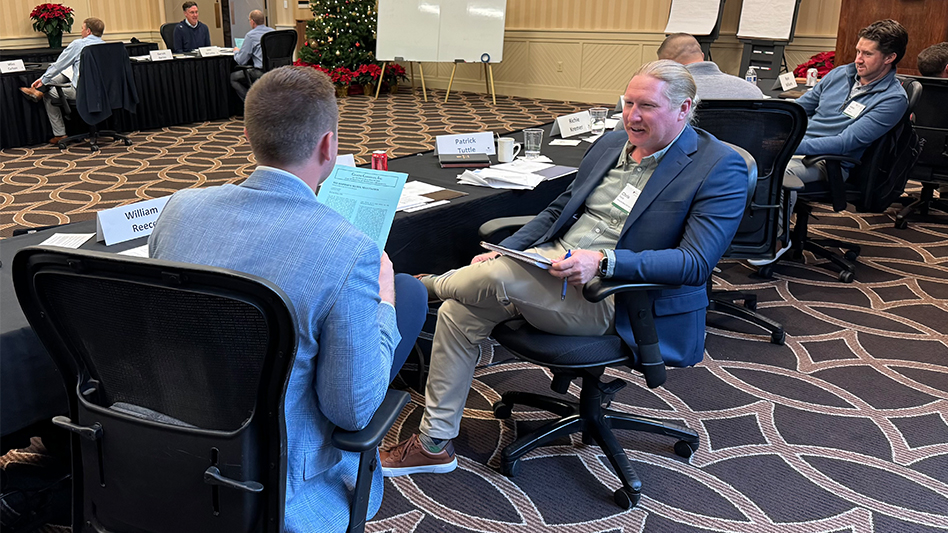
Syngenta Business Institute discussions prove delegating isn’t a symbol of weakness. Instead, it’s an acquired practice implemented by savvy leaders. That doesn’t mean it’s always easy for somebody like Abels who came of turf age working on Iowa’s 9-holers.
“How I came up is different than a lot of people in this room,” he says. “I didn’t have a superintendent to look up to. I had to learn on my own. I wasn’t afraid to tackle anything. I had to figure it out myself. If I didn’t, it didn’t get done. I tend to do stuff myself and not necessarily rely on others.”
At Ames Golf & Country Club, Abels works at a full-service private facility alongside other department heads. Syngenta Business Institute presented another intriguing opportunity to evolve as a professional. “There’s enough agronomy information out there,” Abels says, “but there’s no personal development, so this has been great.”
The process of absorbing what occurred at Graylyn started on flights home. But the best leadership lessons involve gradual implementation.
“I always come back from these events inspired,” Tuttle says. “I just need to make a conscious effort to review everything that I learned over the next three weeks, six weeks, three months, six months, … even a year down the road. I need to remind myself of being conscientious of being a leader.”
Guy Cipriano is Golf Course Industry’s publisher + editor-in-chief.
Latest from Golf Course Industry
- Reel Turf Techs: TJ Vollmar
- Bernhard and Company names G.C. Duke as North American Distributor of the Year
- Course at Sewanee picks KemperSports for management
- WiTricity expands wireless charging technology
- Shining star
- SiteOne Landscape Supply acquires Reinders
- Talking Turf Weeds 17: Waking up your course after winter with Yusif Jaouni and Matt Herrmann
- From the publisher’s pen: Respect the side hustle