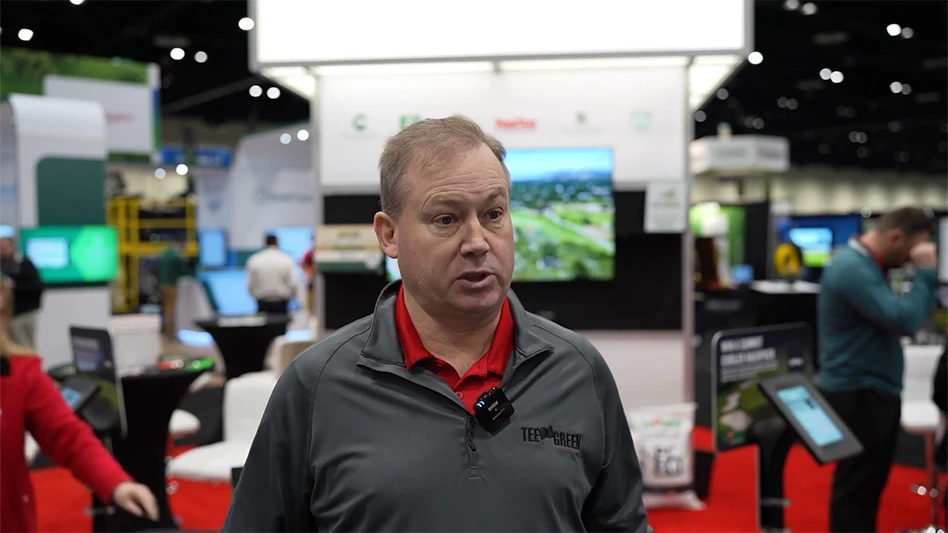
With consistent reports of decreasing rounds, golf is just one industry that’s hurting during the nation’s current economic troubles. To protect the future of the industry and continue to grow the game, it’s up to superintendents and other industry members to get the message out about the major contributions golf makes to the U.S. economy. So said Bob Farren, director of grounds and golf course management for Pinehurst Resort and Country Club, to 54 assistant golf course superintendents at Green Start Academy. The third annual event was hosted earlier this month by John Deere Golf and Bayer Environmental Science in the Raleigh, N.C., area.
|
|

Farren cited a number of statistics from Golf 20/20 about the industry’s ecomonic impact. For example, the golf industry generated $76 billion in direct economic impact in 2005 and it generates more than $3.5 billion annually for charities across the country.
“If we, the leaders in the golf industry, don’t talk about it, then we can’t expect anyone else to,” Farren said.
Farren also shared with the up-and-comers what he called, “some random thoughts.”
1. He encouraged them to position the maintenance department as a revenue-generating part of the course, despite the common assumption that maintenance is merely an expense. Studies show that course conditions are golfers’ No. 1 priority.
“The maintenance department is very much a revenue-generating part of the course,” Farren said. He encouraged the assistants to remember that and communicate it to facility management during this time of almost certain budget cuts.
“Don’t be defensive, but defend yourself,” Farren said.
2. “Develop and manage relationships,” Farren said. Though “networking” is a business cliché, Farren said it’s better to think about it in terms of relationships and camaraderie for both professional and personal development. Some of these activities, such as coaching or other community activities also can help workplace relationships by allowing club members and green committee members to view you as a peer, Farren said.
3. “Practice public speaking,” Farren said. “Whether it’s teaching Sunday school or giving tours of the course, take on challenges.”
4. “Water – learn about it,” Farren said. “Being in North Carolina, I never thought it would be a problem for us, but it has been over the last few years.” Golf course superintendents in all regions should start cluing in to what their peers in the South and West Coast are doing and should pay attention to local water politics.
5. “Become the go-to person at your course.” Farren said being the resource for knowledge or background information and the person who says “Whatever you need, I’ll help you do it,” will eventually pay off. He cites a quote: “It’s always nice to be important, but it’s always important to be nice.”
From last week: Bruce Williams, director of golf and grounds management for Los Angeles Country Club, emphasized the importance of the non-technical side of golf.