Doug Meyer says you're only as good as the last day you worked, and nowhere is that more true than in the life of a golf-course superintendent.
"It can be a thankless job at times," said Meyer, the man responsible for getting the Beaconsfield Golf Club in top shape for this week's Canadian Amateur Championship. "You're always trying to bring out what you feel is the best in a course and at the same time, you have to try to keep the members happy. Sometimes your efforts aren't appreciated.
"But the members at Beaconsfield have been very patient with me," he added.
"They had very high expectations when they hired me (four years ago) and things have been easy because I have their support. They've allowed me, while listening to their suggestions, to take the reins and change this course."
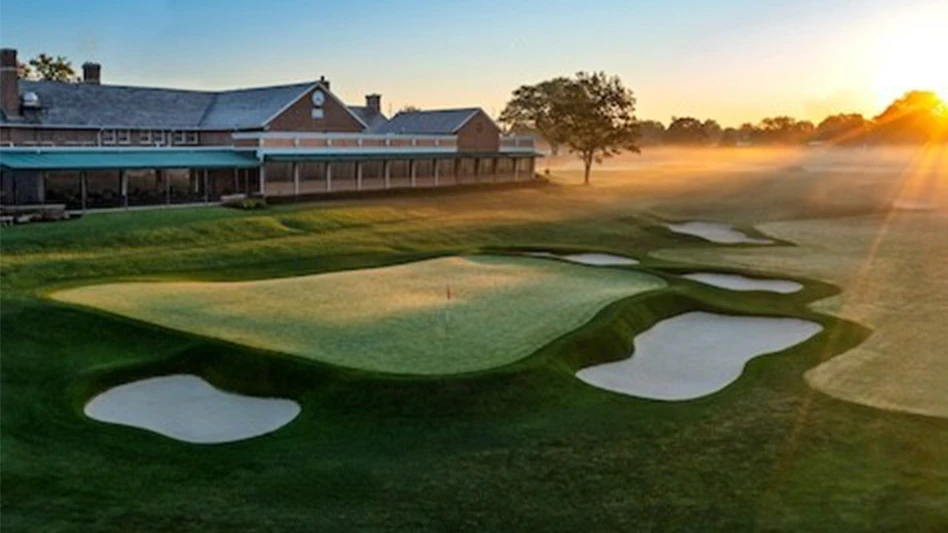
The changes at Beaconsfield have been showcased all week as the Pointe Claire club marks its centennial by hosting the national amateur tournament. Beaconsfield last held the event in 1920 and this marks the first time a major championship has been held at the club since the LPGA Tour's du Maurier Classic in 1995.
A number of improvements have been made to the course for this week's tournament, which has attracted players from Canada, the United States, Mexico and as far away as Australia.
They are being tested under U.S. Open-like conditions, with greens running at 121/2 on the Stimpmeter instead of the normal 10 and penalizing rough that is 6 to 8 inches high instead of the normal 21/2 for members defining the perfectly manicured fairways.
It's a traditional layout, which through the efforts of Meyer and his staff, proves that old courses can stand the test of time and be made better without being tricked up or subjected to total re-design because of the technological advance in golf equipment.
"Some members are talking about having (the rough) stay a little bit longer, shaggier and more traditional after the championship," Meyer said. "The longer rough really defines the fairways. It really brings back the straight-shot golfers and takes the driver out of the hands of a lot of the long-ball hitters.
"It's the only way this course can protect itself," Meyer said of the 6,512-yard, par-71 layout, which is playing as a par-70 this week.
Meyer, 53, a Kirkland resident, is a graduate in turf-grass science from the University of Guelph and has been a golf-course superintendent for 32 years. He has a staff of 22, which includes assistant Mark Lane and a number of turf-grass science students from his alma mater - among them his son, David. Meyer also relied on several fellow superintendents from the Montreal area in preparing the course for the Amateur.
Together, with their experience, knowledge, dedication and hard work, they've almost miraculously transformed a course that has had its share of problems in the past into a championship-calibre layout.
"I give all the credit to my staff for preparing this course, not only for this championship, but for what this course has been like all season and for what I hope it will continue to be," said Meyer, who previously worked at Cedarbrook (now Val des Lacs), Le Maitre Tremblant and Le Manitou. "The staff here performs at a high level. They're running the whole time they're out there."
Meyer, who along with his crew is on the course every morning before 5:30, says the most difficult part for any superintendent is maintaining superior conditions in a region that suffers such extreme changes in climate throughout the year, especially in winter. Studies show Quebec is the most difficult province in which to grow grass and the Montreal area suffers the worst because of the amount of ice buildup and cold temperatures during winter.
"Each course is unique, so it comes down to trial and error and knowing your property and what's best for it," Meyer said. "What works at Beaconsfield might not work at another course. My recipe might not be what's right for somewhere else."
Meyer, who was recently named superintendent of the year by the Canadian Golf Superintendents Association, says the hardest part of his job is trying to keep things in peak shape.
"When a golf course is in poor shape, you can make it better," he explained. "But when you already have peak conditions, as we have this week, the reality is that at some point you're going to slip back.
"This business is more demanding than ever before," he added. "We have less time in the day than we had 10 years ago. There's more demand from the membership and there's a lot of competition out there. Green speed is a big issue. The thinking is the faster your greens are, the better your course. But there's a lot more that goes into maintaining a good golf course."
The great designers Willie Park Jr. and Stanley Thompson were instrumental in laying the foundation for what Beaconsfield is today, but Meyer would like to see further changes to the course. A couple of holes are expected to be lengthened slightly and more Thompson-style and sod-walled bunkers will be added, as well as the return of the stone wall that ran perpendicular to the fairway on the
par-4 second hole, for which the hole was named The Gap.
"I came to Beaconsfield to be able to restore the traditional look," Meyer said. "I didn't come here to mow grass. Anybody can do that."
Source: The Gazette (Montreal)