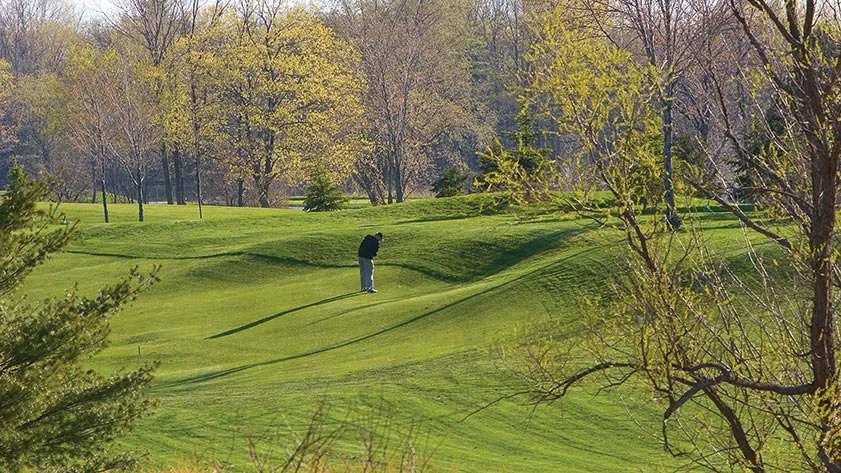
What are some of the key agronomic challenges you face in the spring? While the calendar hasn’t officially welcomed Spring, the weather has been spring-like in many parts of the country. If it hasn’t yet in your area, it won’t be long. Here are some tips to help you identify and get ahead of the curve when it comes to spring challenges.
What survived winter
Get out there and take a close look, especially in suspected problem areas. Keep in mind that your course has conditions different than others in your area. Tree lines, elevations, drainage, types of grass and other factors will affect survival. If you can’t tell with simple observation, do some testing.
Dr. Jim Kerns, turfgrass pathologist at North Carolina State University, suggests taking a few plugs of turf from different areas into the shop and incubate them in the warmth and light. He cautions, “Be sure to place them in an area away from the vent.” Dr. John Sorochan, associate professor of Turfgrass Science and Management at University of Tennessee, says, “Whatever your findings, be sure that you communicate them to your owner and/or greens committee as soon as possible.”
They don’t like surprises. Ed Nangle, senior director of turfgrass programs for the Chicago District Golf Association (CDGA), says, “Knowing whether or not grass has come through winter and having the patience to allow for natural recovery which reduces the need to tear up surfaces and create another set of problems is a wise strategy.”
Consider disease pressures
One concern is pink snow mold. It develops when temperatures elevate to 45 degrees and there is residual soil moisture. A fungicide application is warranted as soon as the manager can get out there, Kerns says.
“With an extremely warm December, diseases may be rampant this spring. Not because of survival, but due to loss of fungicide residual," he says. "The key here is to actively scout as soon as possible and be prepared to spray a fungicide earlier than normal if disease develops. This is always a difficult question because if the remainder of the spring is dry then diseases will not be an issue, but if moisture is present, diseases will be an issue earlier than in previous years.”
Nangle adds, “Culturally, keeping surfaces dry will help keep disease pressures down.”
Don't rush
There is still plenty of time for freezing temperatures and possible snow. Golfers are going to want to get out on the course whenever the temperatures are comfortable for them. Without good communications, they are going to expect the grass to be as ready as they are. Let them know what you are doing, not doing, and why. If warm weather is unaccompanied by rainfall, you may have to start the irrigation system. Be aware that you may have to re-winterize it or come up with other protection if extended deep cold spells are predicted. When the grass plants have started to actively grow, it is time to start cultural practices such as topdressing, fertilization and even aerification.
Kerns states, “Even if core aerification is not allowed, a needle tining would be warranted.”
Covers
As Nangle says, “These are going to be labor and budget dependent.” Sorochan says covers could be especially important as bermuda creeps out of dormancy. “Warm days might speed up the return, but we could still get some 24 degree nights. You need to be prepared with covers.” Covers can also be used to speed up the recovery of damaged greens.
According to Kevin Frank, turfgrass specialist at Michigan State, “Covers will increase temperatures, especially on warm sunny days, and speed up the recovery process. Cotton grow covers can be cut into smaller pieces and used on greens that have small damaged areas allowing the green to remain in play.”
Fertilization
Be ready when active growth starts, but again, don’t rush it. Sorochan says, “Monitor the nutrition needs, both the macro and the micro, based on soil tests and tissue tests. Start planning and be prepared to hit that as it comes into play with weather changes.” Keep in mind that cool-season grasses should receive the bulk of their nitrogen needs in the fall and limited amounts in the spring. Warm-season grasses like to be fed nitrogen as the spring growth starts and into the early summer. You can spoon feed as needed with liquid or granular products; whichever best fits your overall program.
Seeding or sodding
If you have to replace areas with new grass, the first decision is whether to sod, sprig or seed. Larger areas are going to be playable much quicker with sod. If you do sod, be sure that the soil profile of the sod to be used is as close a match as possible to areas where sod is to be laid. Also, check with your sod supplier as early as possible to insure sufficient supply is available. If seeding, be sure that the ground is warm enough for germination and that the water is turned on for irrigation. Another thing to consider is what grass varieties do you want to use in these areas. This may be a great time to start introducing new cold tolerant grasses into your course.
Check the NTEP trials, your local seed, sprig or sod sources and your extension service or university research programs to determine what grasses might be best for you and what would fit in with what is already established.
Steve Trusty is a golf writer based in Council Bluffs, Iowa, and a frequent GCI contributor.