|
|

Designed by Donald Ross in 1925, the Biltmore Golf Course served the Miami area for decades as both stellar municipal track and playground to a parade of sporting celebrities, from Babe Ruth to Bobby Jones to Johnny Weismuller to Tiger Woods.
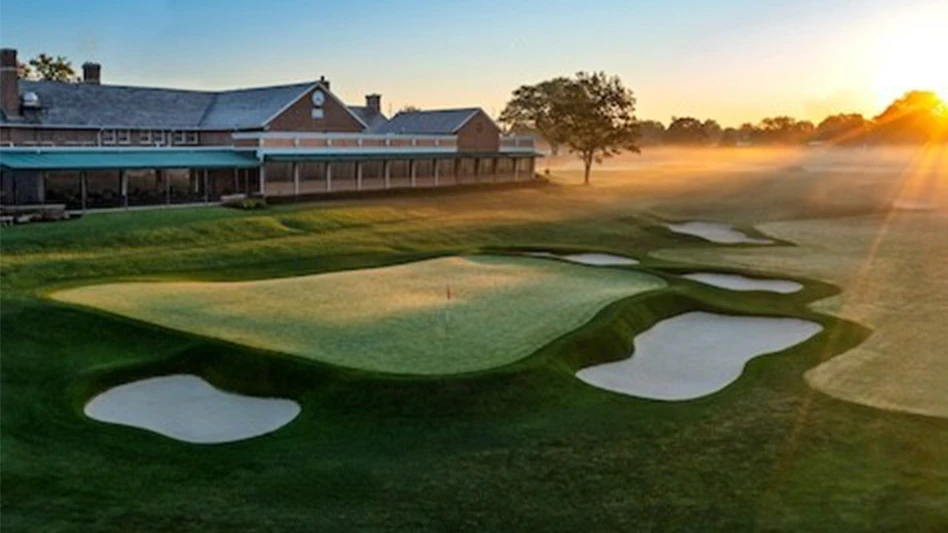
The course fell into disrepair late in the 20th century. In this case, however, it was better to have been neglected than irretrievably altered. Thanks to architect Brian Silva, whose comprehensive restoration of the course was unveiled this winter, the Biltmore GC has again joined the ranks of America’s resort tracks.
“That’s the irony: If the Biltmore were a private club, the course would surely have been changed dramatically through the years — and probably not for the better,” said Silva, whose extensive Ross-restoration portfolio includes Minnesota’s Interlachen CC, site of June’s U.S. Women’s Open. “As it happened, the Biltmore was treated as any other underfunded muni would have been treated in tough times — it was simply left alone. This neglect was a blessing because the property was not planted with a forest of intrusive trees, and some of the most spectacular fairway bunkering Donald Ross ever created was merely allowed to grass over.
“The restoration of those bunkers was straightforward and critical to our restoration plans. When you combine them with 18 fully refurbished greens complexes and state-of-the-art turf conditions, the Biltmore has never looked or played so well.”
Today the Biltmore GC is operated not by the city, but by the Biltmore Hotel itself, opened in 1926 as part of the renowned Biltmore chain by visionary hotelier George Merrick. The towering Schultze and Weaver-designed hotel remains a National Historic Landmark.
Recent restoration of the hotel was closely followed by that of the golf course, under Silva’s direction. Only the original fairway corridors have been retained; all the greens, tees and bunkers have been reconstructed and grassed to state-of-the-art standards. The par-71 layout has also been stretched to 6,742 yards.
“Resuscitating George Merrick’s original vision for this entire property has been our goal all along. It’s reason we’ve spent so much time and money on restoration,” explained Dennis Doucette, general manager of the Biltmore Hotel. “This is the only historic landmark hotel in the state of Florida. Everything we’ve done here is related to bringing back the historic nature of the property. What Brian Silva brought back was the Donald Ross authenticity. Thanks to Brian, the golf course now has the same historical integrity the hotel property has.”
Silva, principal of Dover, N.H.-based Brian Silva Design (www.bsilvadesign.com), has spent years interpreting vintage course design. His Ross portfolio includes Augusta Country Club, neighbor to Augusta National; fabled Seminole Golf Club, just up the Florida coast from Coral Gables in North Palm Beach; Brookside Country Club in Canton, Ohio, named Golf Digest’s Best New Remodel in 2006; and Biltmore Forest Country Club in Asheville, N.C., which Silva prepared for the 1999 U.S. Women’s Amateur.
“The course was terribly rundown when I first visited, but the bones were still there,” Silva explained. “These fairway bunkers were a real find. The berms that Ross created behind them were still there — and they are extraordinarily high, meaning 1) these fairway bunkers we’ve refurbished provide for very deep and menacing hazards; and 2) because this is Florida, they also provide dramatic relief on the landscape.
“This sort of design touch doesn’t usually survive," he adds. "Because Biltmore had been a muni, it did.”