Alexander Findlay designed and developed a golf course using natural Nebraska features more than a century before modern minimalistic philosophies reached the Cornhusker State. He recruited and placed talented people in golf management jobs before the commissioning of high-powered search firms. He convinced the game’s biggest names to travel to unfamiliar places before the rise of super agents.
Who was Findlay? And why do golf insiders — including this writer — know little about him?
Thankfully, somebody who grew up playing a Findlay-designed course devoted years to exploring these questions.
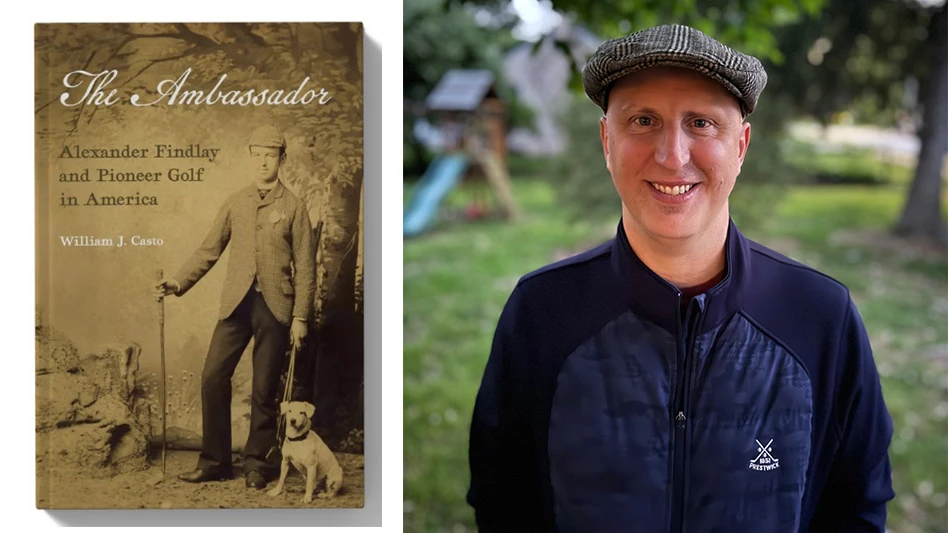
William J. Casto, who lives in suburban Philadelphia, plays out of Coatesville Country Club, studies golf history and holds an IT job, authored the most fascinating golf book of 2025 about one of the most influential figures in golf history. “The Ambassador” is Casto’s tribute to Findlay, who deserves as much credit as anybody for helping golf become a mainstream activity in America.
A native of Montrose, Scotland, an early golf hotbed, Findlay emigrated to the United States in 1887 and moved to childhood golf friend E.C. Millar’s ranch in Fullerton, Nebraska, an agrarian community 125 miles west of Omaha. Findlay and Millar needed a place to play, so they designed a six-hole layout at Merchiston Ranch. According to Casto’s research, Findlay moved to Nebraska for two reasons: to learn farming and avoid becoming a golf professional in his native country.
Throughout his career, Findlay, who gained legendary playing status by shooting a 72 at an early age using a gutta percha ball, stretched the limits of becoming a professional, to a point where the USGA rescinded his amateur status. Findlay remained steadfast about remaining an amateur and the USGA reinstated the status in 1910 after his playing prowess declined.
By that time, Findlay was living in Philadelphia, where he held a job with John Wanamaker’s department stores. An unyielding golf proponent and promoter, Findlay played a comparable role to William Flynn, A.W. Tillinghast, Hugh Wilson, George Crump, George Thomas and other Golden Age titans in Philadelphia’s rise as a private-golf mecca. Some of best remaining examples of his design work, including Llanerch Country Club and Reading Country Club, sit on soothing golf land outside Philadelphia. Perhaps Findlay’s greatest lost creation, Tredyffrin Country Club might have rivaled Merion, Aronimink and Philadelphia’s other juggernauts had it endured the Great Recession and World War II.
Findlay made two residential stops before arriving in Philadelphia. He landed a department store job and helped introduce golf in Omaha. He then moved to Boston to work in the golf department for sporting goods retailer Wright & Ditson. Growing golf helped Wright & Ditson expand its business, and Findlay used overseas connections and fierce recruiting to bring superstar Harry Vardon to the United States for a 1900 tour. Seeing Vardon in person and reading about the tour in newspapers left an indelible impression on millions of Americans unfamiliar with golf. Findlay managed and promoted the tour, while playing 13 matches against Vardon in 1900. More than three decades later, Findlay helped bring another British great, Joyce Wethered, to America.
Findlay also used overseas connections to recruit talent to work as professionals for American clubs he was advising. Those professionals taught golf to novices and helped train what morphed into a homegrown golf workforce. American golf wouldn’t have become a mega industry without teachers, course designers, turfgrass growers, merchandisers and promoters. Findlay died in 1942. Like anybody with enduring impact on an industry, how they reached people represents their greatest legacy. Findlay’s work and relationships sparked the modern golf industry.
Casto ends “The Ambassador” by making a case for Findlay’s inclusion in the World Golf Hall of Fame. His ability to educate the masses about Findlay through exhaustive research and clear writing should make the case an easy sell.
Guy Cipriano is Golf Course Industry’s publisher + editor-in-chief.
Latest from Golf Course Industry
- VIDEO: 'It's their livelihood'
- Reel Turf Techs: TJ Vollmar
- Bernhard and Company names G.C. Duke as North American Distributor of the Year
- Course at Sewanee picks KemperSports for management
- WiTricity expands wireless charging technology
- Shining star
- SiteOne Landscape Supply acquires Reinders
- Talking Turf Weeds 17: Waking up your course after winter with Yusif Jaouni and Matt Herrmann