Adobe Stock
Significant scientific advances have been made toward understanding how roots extract water and nutrients from the soil by the biophysical properties of the rhizosphere, as well as root exudates and mucilage, soil particle connectivity and porosity, and microbial interactions, in the past five years. This has led to further insight gained into the importance of the rhizosphere in maintaining plant function and performance under abiotic stress such as drought.
Here’s a primer on these recent advances and their implications for sustainable turf management practices in a changing environment.
In the intricate underground world beneath every golf green and sports field, a complex drama unfolds that determines plant survival and performance.
Recent scientific breakthroughs are revealing how plant roots interact with soil in ways far more sophisticated than previously understood, offering groundbreaking insights into drought tolerance and ecosystem resilience.
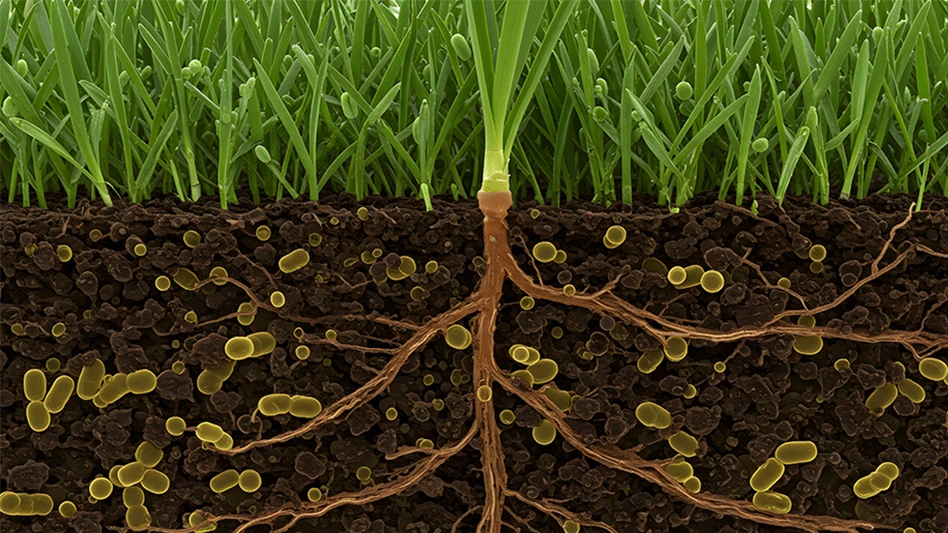
The rhizosphere — a microscopic (not truly microscopic, it’s really a few sand grains thick) zone surrounding plant roots — emerges as a critical battleground where plants negotiate survival through intricate chemical and biological interactions.
This zone can be seen as a kind of “communication hub” where roots actively manipulate their environment to enhance water and nutrient uptake. Central to these interactions are root exudates and mucilage, sticky substances secreted by roots that serve multiple functions. Think of mucilage as a biological glue — it maintains hydraulic connectivity, attracts beneficial microbes and helps soil particles stick together.
These substances create what we now call a “rhizosheath” — a thin layer of soil particles adhering closely to root surfaces. The rhizosheath’s importance cannot be overstated. Research shows plants with robust rhizosheaths can explore larger soil volumes, sustain greater root growth under drought stress and maintain better water content around delicate root tips.
In practical terms, this means more resilient turf that can withstand challenging environmental conditions.
Microscopic imaging has revolutionized our understanding of these processes. Advanced techniques like electron microscopy reveal dramatic changes in root structure during water stress. Root hairs — tiny cellular extensions critical for water and nutrient absorption — can completely collapse when soil moisture drops, effectively shutting down the plant’s ability to extract resources.
Microbial interactions play an equally crucial role. Plant growth-promoting bacteria and mycorrhizal fungi form symbiotic relationships with roots, extending their reach into soil and enhancing nutrient uptake. These microorganisms aren’t passive passengers but active participants in creating a favorable root environment.
Roots are essentially trying to create their ideal neighborhood. They exude specific compounds to attract beneficial microbes and create a conducive habitat. This selective recruitment helps plants maintain function under stress by improving soil aggregation, nutrient cycling and water retention.
Practical implications for turf management are significant. Traditional approaches focused on surface-level treatments are giving way to more holistic strategies that prioritize root zone health.
Experimental treatments demonstrating improved soil connectivity and water delivery suggest promising management techniques.
Key strategies emerging from this research include:
- Multiple, carefully timed applications of soil amendments
- Using plant growth-promoting bacteria
- Maintaining consistent soil moisture
- Minimizing mechanical stress through careful mowing practices
The research also challenges existing paradigms about soil water repellency and drought stress. What was once considered a problem of surface hydrophobicity now appears more complex, involving intricate root-soil interactions at microscopic scales.
Climate change adds urgency to these investigations. As environmental stresses increase, understanding how plants maintain function becomes critical. Turfgrass ecosystems, often overlooked, play significant ecological roles in carbon sequestration and environmental resilience.
We’re not just talking about creating perfect putting surfaces — we’re exploring how plants fundamentally survive and thrive under challenging conditions. For turf managers, groundskeepers and agricultural professionals, these insights offer a new perspective. Successful plant management is no longer about treating symptoms but understanding and supporting the complex underground ecosystem.
The future of sustainable turf management lies in recognizing roots not as passive structures, but as dynamic, intelligent systems constantly negotiating survival. By supporting root health through sophisticated, science-driven approaches, we can create more resilient, adaptive landscapes. As research continues, one thing becomes clear: the most critical plant processes happen out of sight, in the intricate, dynamic world beneath our feet.
Dr. Stan Kostka, a visiting scholar at Penn State, is a leader in the development of compounds and products to modify the rhizosphere and enhance soil-plant-water relations. Dr. Mike Fidanza is a professor of plant and soil science at Penn State Berks. This article first appeared in Greenkeeper International.
Latest from Golf Course Industry
- Tartan Talks 116: Doug Smith
- Audubon International adds 127 golf courses to Monarchs in the Rough
- USGA’s GAP preps for fourth year
- Protect your vehicles from rodent damage
- VIDEO: Fun with fairways
- From the publisher’s pen: Humble giving
- Syngenta adds two to western U.S. team
- The Aquatrols Company introduces soil surfactant for Canada