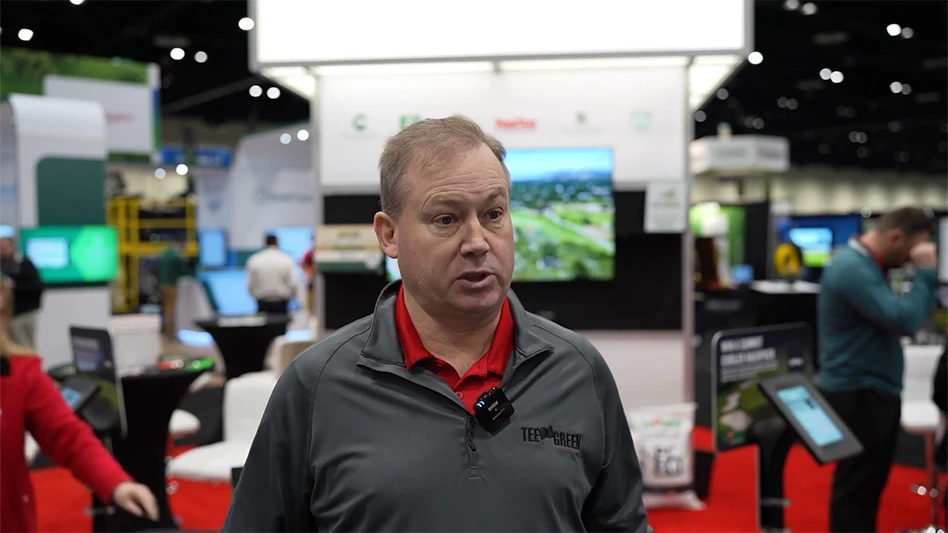
Dr. Fred Yelverton is a professor in the North Carolina State University Department of Crop Science. Golf Course Industry Magazine caught up with Yelverton recently for a chat about how plant growth regulators can affect the control and management of rough and other difficult-to-maintain areas of the golf course.
How can plant growth regulators be used to cut back on growth in hard-to-maintain and rough areas on a golf course?
Research has shown that plant growth regulators can reduce vegetative growth by up to 50 percent. This translates directly to the mowing requirement. A 50 percent growth reduction leads to approximately a 50 percent mowing reduction. This is one of the most valuable uses of PGRs on golf courses.
Are there any potential negative effects from using PGRs in these areas?
You can sometimes get discoloration of plant growth regulators that reduce vegetative growth. Usually this occurs on the first application, with repeat applications being less of a concern. Discoloration is usually transient but it should be noted as a concern. Also, products that reduce seed head production will obviously reduce mowing but seed heads may be desired in naturalized areas.
Should the climate and weather be taken into consideration? How about the time of the year when it is best to apply PGRs?
PGRs should always be applied during periods of active growth. The longer the growing season for any particular turfgrass species for your area, the more PGR repeat applications will need to be made. For instance, in tropical climates (i.e. Hawaii) where warm-season grasses grow year-round, applications can be made in all 12 months. In North Carolina, where warm-season grasses exhibit maximum growth from about June 1 through early September, usually three to four applications are sufficient. Application during periods of inactive growth can cause turfgrass injury and should be avoided.
Is there anything a superintendent needs to know before using PGRs in these areas?
Reducing growth and reducing mowing have some very positive environmental impacts that I think we do not talk about enough. It includes less use of fossil fuels, less wear and tear on equipment, and it helps free up the maintenance staff to do other tasks. I think they are excellent turf management tools, but you have to know how and when to use them.