Source: Rochester Democrat and Chronicle (N.Y.)
New York owes its green landscape to more than farmers and foresters. Count in the experts who maintain lawns.
That was the message in Rochester on Tuesday from Bernadette Castro, commissioner of the New York State Office of Parks, Recreation and Historic Preservation.
She delivered the keynote address at a statewide conference on turfgrass, which is here through Thursday.
She praised lawn experts for their "sister effort" in maintaining New York's greenery. About 10 percent of the state's land area - 3.4 million acres - is covered with turfgrass.
"There's a lot of greenspace to take care of," said Castro, including the 300,000 acres of turfgrass, 27 golf courses and 168 parks in her own domain.
The three-day "turf and grounds exposition" at the Riverside Convention Center is sponsored by the New York State Turfgrass Association. On hand are 1,700 members of a trade that statewide employs 43,000 and adds over $5 billion a year to the economy.
Castro focused on the 860 private and public golf courses in New York. (There are 57 courses in the Rochester region.)
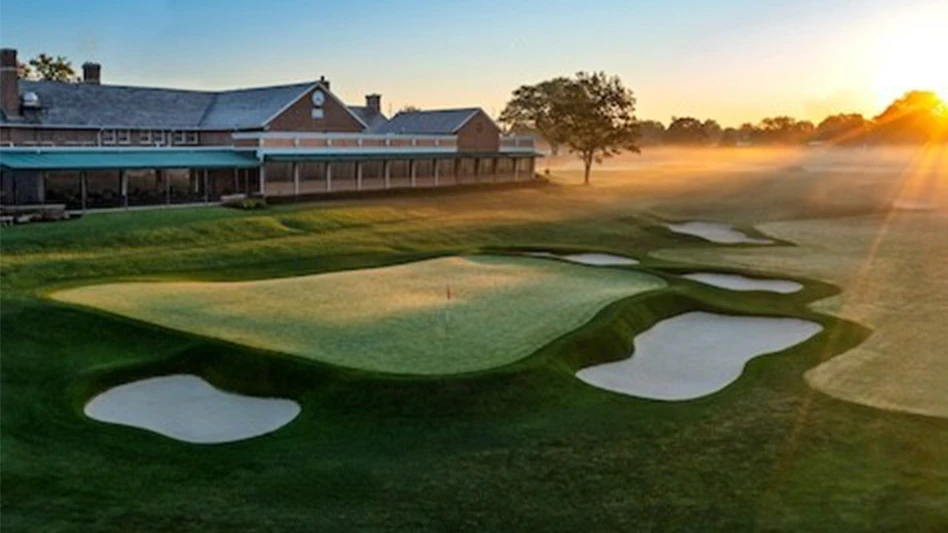
She explained her role in getting the 2002 U.S. Open to state-owned Bethpage Black, one of five golf courses in Bethpage Park on Long Island. It was the first time the Open was played on a public course in New York; a reprise is scheduled for 2009.
Cornell University turfgrass researchers are using Bethpage Green, another state golf course on Long Island, for a longtime study on pesticide use.
Since 2001, with $30,000 a year from the U.S. Golf Association, they have compared three strategies: using pesticides conventionally, using fewer and using none.
It's the first such study on a working golf course, and could influence chemical use on the nation's 18,362 courses.
Integrated pest management (calculated and timed dosing) reduces pesticide use by 30 percent to 60 percent compared with conventional techniques, said researcher Jennifer A. Grant.
Using no chemicals, so far, just kills golf greens. "We concede we can't keep quality," she said. "But we haven't given up."
Other events at the exposition Tuesday: credit-bearing classes that touched on pollution control, weed identification, tree care and math for landscapers.