California-American Water Co. has asked the state for an emergency rate hike for its customers in the Peninsula water conservation district, an increase that would hit several area golf courses particularly hard.
Cal-Am is asking for a tripling of water rates for the golf courses that use its potable water, most of which are in Pebble Beach and have shown record water consumption this spring.
The company is trying to reduce water use so it can avoid potentially huge fines from the state for exceeding the state-mandated limit on the amount of water the company can draw from the Carmel River.
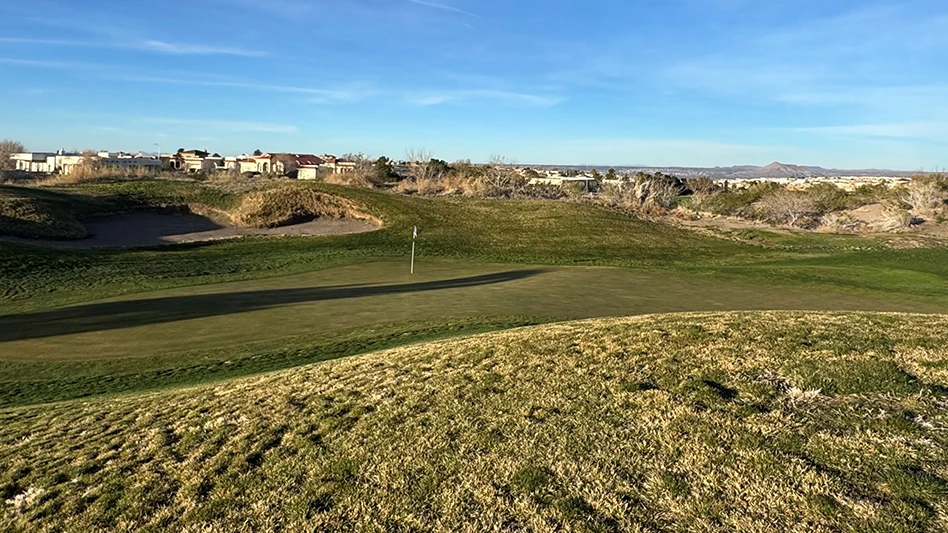
Not surprisingly, the list of top water users on the Peninsula is topped by its golf courses. According to figures released by the Carmel Wastewater Reclamation Project, the golf courses and open-space users in the Del Monte Forest used drastically more potable water in the month of May than ever in the history of the project, which was built to provide reclaimed water for the golf courses in the forest.
In May, the golf courses drew 113 acre-feet of potable water from the Cal-Am system, in addition to the 97 acre-feet of reclaimed water delivered by the project. In the same month in 2003, those ratepayers consumed 42 acre-feet of potable water and 82 acre-feet of reclaimed water.
The average consumption of potable water for the month of May since the project went online in 1994 has been just under 46 acre-feet.
A spokeswoman at the Pebble Beach Co., which runs most of the golf courses in the forest, said no company officials were available for comment Friday regarding water use and the proposed rate hike.
Also facing higher water prices will be the city of Monterey's Old Del Monte course, but most other area golf courses have their own wells and won't be affected.
Mike Nikkum, district engineer for the Pebble Beach Community Services District, which operates the reclamation project with the Carmel Area Wastewater District, said Mother Nature was to blame for the high usage of potable water. An unusually hot, dry spring spiked demand at the very time when the project's reclaimed water production was at its seasonal low.
"The primary reason for the high demand is weather-related," he said. "The demand from golf courses is one of highest we ever had."
The Pebble Beach reclamation project depends on effluent that can be treated and recycled. In the winter, when sewer flow is at its highest, water demand on the golf courses is at its lowest. When it stops raining, effluent decreases at the same time water demand goes up.
In the case of the Pebble Beach golf courses, the demand goes way up because the project's reclaimed water is too salty for the golf courses and must be flushed with potable water or it will kill the greens.
The Monterey Peninsula Water Management District Board of Directors recently approved a plan by the Pebble Beach Co. to sell a number of water credits at market rate to raise $22 million to fix the system with a new desalination plant and restore the Forest Lake Reservoir so that surplus reclaimed water produced in the winter can be stored for hot-season usage.
In the meantime, the golf courses will likely be looking at some hefty water bills. Cal-Am asked the state Public Utilities Commission on Thursday for permission to raise its rates from $3.05 per cubic foot of water, or unit, to $9.15. If approved, the rates could go into effect early next month, just as the courses face the hottest months of the year.
Golf courses are only one of the targets of the rate-hike request, said Cal-Am General Manager Steve Leonard. All major users would see rate increases under the plan, which affects most Cal-Am customers except those in Ryan Ranch, Laguna Seca, and the Pasadera and Hidden Hills areas, who do not use water from the Carmel River.
Cal-Am is under order from the state Water Resources Control Agency to limit its draw from the river to 11,280 acre-feet per year. At its current rate, it will exceed that limit at the end of the water year, Sept. 30, and face fines of up to $3 million. Next week, Cal-Am will ask the utilities commission to allow it to pass any fines on to its ratepayers.
The only ratepayers in the official conservation area that would not be affected by the rate increases are average residential users who are not exceeding monthly allotments. Those whose bills do not indicate they have moved to the fourth or fifth tiers of water rates would not be affected.
Those whose bills place them in the fourth tier would see their rates go from $6.10 to $12.21 per unit for the amount of water that places them in the fourth tier. Rates for large irrigators whose usage puts them in the fifth tier also would double, from $12.21 to $24.42 per unit of "fifth-tier" water.
Public authority customers, such as the city of Monterey with its expanse of lawn at Window on the Bay park, would see their flat rates double from $3.05 to $6.10 per unit.
Fran Farina, general manager of the Peninsula water district, said she is hopeful the rates will help spark conservation. Even after a Cal-Am-financed media campaign calling for conservation, she said, use continues to exceed daily targets.
For the first 16 days in June, she said, Cal-Am users came in under target on just six days.
On June 1, Cal-Am had exceeded its year-to-date target by 98.7 acre-feet. By June 16, it was over by 106.6 acre-feet.
"We're going in the wrong direction. We need to be bringing it down," Farina said. "And remember, if we get our heat wave in September, three or four days when the temperature gets over 100 degrees in this community, and if you get it over a holiday when the tourists are in town, that will blow any budget."
Source: Monterey County Herald