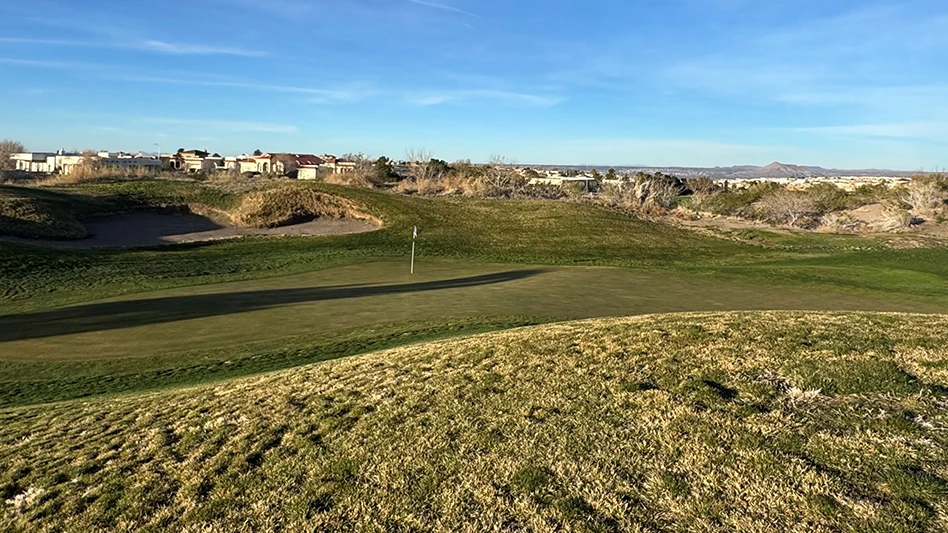
Rolling hills lined with native hardwood trees, grasses spotted with pink and yellow wildflowers, and views of natural corridors and the Tellico Lake will welcome golf enthusiasts as they step onto Rarity Pointe's golf course.
But even without the aesthetic assets, this course, which is under construction in Vonore, Tenn., isn't going to be any average golf course.
Tentatively set for completion in October 2005, Rarity Pointe will be Tennessee's only course designated by Audubon International as a "Signature Course," and the relationship between Rarity Pointe and Audubon will help increase the preservation and conservation of the area.
The course will:
* Cut fertilizer use and use safer pesticides.
* Lessen water consumption.
* Introduce native plants that need less care.
* Filter storm water before putting it into other bodies of water.
"We are keeping the course as playable as possible and as environmentally friendly as possible," said Cory Blair, golf course superintendent for Rarity Pointe. "It's such a beautiful piece of property. I'm really excited to be involved with this project."
Rarity Pointe, which is nestled beside Tellico Lake, is joining the list of 66 golf courses nationwide that are under construction and going through the process to receive the Signature status.
Forty-seven courses have already achieved the full status.
"It's a very serious level of commitment, and it's an ongoing commitment," Blair said. "It's basically being environmentally friendly from the start."
Part of that commitment for Blair and for others involved with the project is meeting certain guidelines to help protect the environment, such as limiting the amount of acres of irrigated turf and meeting tougher requirements for drainage systems.
Courses must pay initial fees and membership fees to receive Signature status, and there are different levels, depending on the scope of the project and the extensiveness of the environmental plan.
Rarity Pointe will be a silver-level member of the Audubon International Signature Cooperative Sanctuary Program.
Natalie Archambault, project administrator for Audubon International, said the fees for a silver Audubon course start at $35,000 and can reach more than $100,000 for gold-level courses.
"A lot of people are distressed about us charging a fee, but it will pay itself back in three years," Archambault said.
Golf courses will save money while also preserving the environment through the program by cutting fertilizer use, lessening water consumption and introducing native plants that need less care, Archambault said.
Blair said that while the fees can be expensive, the partnership is good for Rarity Pointe because it is in an environmentally sensitive area: the Tellico watershed.
Through the partnership, courses like Rarity Pointe have access to Audubon's biologists and specialists, who can advise the courses on natural and wildlife resource management.
Courses involved with the Signature program are audited each year, and the relationship between the course and Audubon is a continual one that must start before concepts and construction of the course begin.
Other courses in the state partner with Audubon in certified sanctuary programs, which are available for courses that are already built. Other courses in Tennessee, though not a part of the Audubon partnerships, also incorporate native areas and diversity.
One such course, The Honors Course in Ooltewah, Tenn., uses native shrubs like sumac, has less manicured grass areas than traditional courses and is home to more than 50 different species of birds.
"We choose from the start to have a lot of natural areas between holes that provide corridors for birds and animals," said David Stone, the course's superintendent. "We really have a diversity of habitats here."
Blair said that courses throughout the state are increasingly trying to incorporate environmental practices in course management.
"The impression out there is we (people involved with golf courses) are bad environmental citizens," he said. "We actually do try to be as environmentally friendly as we can."
Rarity Pointe, unlike many other golf courses, must filter its storm water before putting it into other bodies of water, mainly, the Tellico Lake.
"Essentially, you've got clean water going into the reservoir," Blair said.
Rarity Pointe will mainly use vegetation as filters, and the water quality will also be monitored for pollution at the course.
Two main causes for water pollution on golf courses -- pesticides and fertilizers -- will also be reduced.
Slow release fertilizers will be used to lessen the amount needed, which will eliminate some soil contamination and runoff. Blair said many of the fertilizers used would be organics.
Rarity Pointe and other courses are also beginning to use safer pesticides that don't run as much when used and that aren't as lethal to insects, amphibians and fish.
"One of the biggest advances in the golf industry in the last couple of years has been the pesticides," Blair said.
Hay bails that slow water and silt fences that catch soil will help the course with erosion, and those working with the course will enlist the help of natural combatants for pests, such as high grasses around lakes to dissuade geese from coming to the course.
All 18 holes have been cleared and construction on one hole has begun. During this time of construction, those working with the site have left natural areas and practiced selective clearing, which makes the remaining trees healthier and stronger, Blair said.
"We're going to try to have a lot of native areas with wildflowers," Blair said.
Bermuda grasses will be used throughout the course, and bent grass will be the only nonnative grass used, Blair said.
But perhaps one of the most impressive plans for the new course is its pinpoint irrigation system.
The system will have separate irrigation zones that require different levels of water and will monitor rain amounts so that only the needed amount of water is applied.
Rarity Pointe's golf course, which is being designed by award-winning course architect Bob Cupp, will be a private course, and it will be in the roughly 780-acre Rarity Pointe community, an upscale resort with spas, restaurants and workout centers.
"The Knoxville area, the entire area, will benefit," Blair said. "We're showing that you can build a golf course that's environmentally friendly."
Source: Knoxville News-Sentinel (Tennessee)