The sunburned brigade of fairway mowers and bunker rakers at the Pelham-Split Rock public golf courses in the Bronx is still puzzled by the solitary nature of the new chief groundskeeper, Michael Arat.
When they spot Mr. Arat cruising around on his army-green maintenance cart, they wave hello.Their tall, 30-yearold boss in wraparound shades blindly speeds past, too consumed by the course and its ailments to offer so much as a nod.
"He's weird," one groundskeeper said.
"He's strict," said another.
"The man is all business," said Jim Rodriquez, who coordinates tee times. "There's a lot of superintendents" - the title golf enthusiasts use for the chief groundskeeper - "that will come to work and tell other people what to do, but Mike spends more time out there than his crew. He actually whacks the weeds and all that."
Mr. Arat has meaty, chapped hands and grass-stained pants, and his monkish devotion to the century-old courses has worked to turn Pelham-Split Rock into two of the more prim public courses in the city.
"You have to have vision," he said.
Mr. Arat is a transplant from the exclusive Winged Foot Country Club in Mamaroneck where, as assistant superintendent, he trimmed putting greens.
Only nine months into his new position in the Bronx, the superintendent is starting to get some celebrity recognition from the regular city duffers who are boasting that their once mangled public courses are playing the way they should.
"The Bronx is starting to become the city's best kept secret: good golf, and right in your own backyard," said John Woodeshick, the regional supervisor for American Golf, one of the country's largest golf management companies.
This January, American Golf inked a 20-year contract with the city Parks Department to rent and improve six of the city's 13 public courses. In rent alone, the city expects to earn more than $136 million.The contract also calls for nearly $27 million in capital improvements to the Pelham-Split Rock courses to roll out over the next few years.
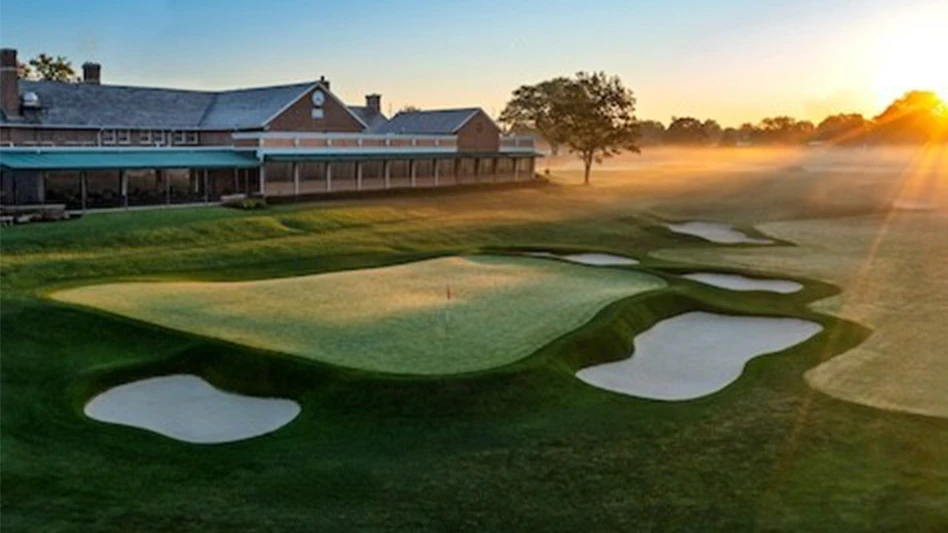
New tee boxes,bunkers,and a renovation to the historic art deco clubhouse are all planned. American Golf has also retained the renowned golf course architect Robert Trent Jones II to redesign Split Rock into a tournament-worthy course with bent grass greens and Kentucky-style blue grass fairways.
"This deal is hard not to like," said the commissioner of the Parks Department, Adrian Benepe."Before our courses were crappy and the city was losing about $2 million a year. Now we're making nearly double than what've made before."
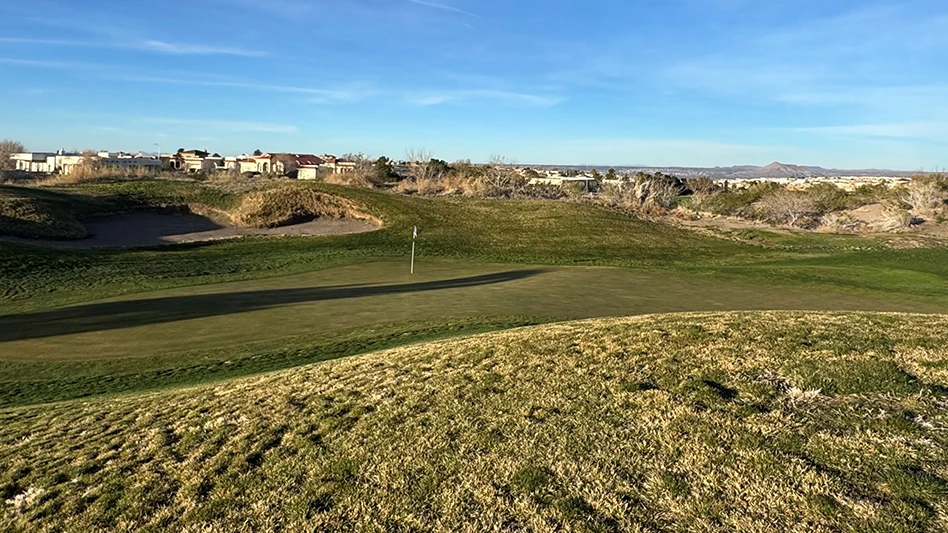
Gone are the rounds filled with barren brown spots and bald putting greens and rough so thick and unmanageable that a solid drive off the tee - one that might only dribble off the fairway - could result in a lost ball.
In years past, there were also reports of cars marooned off fairways, corpses turning up in sand traps, and rival gangs settling disputes on the courses.
Some of the trees here are rumored to still hold the round bullets left over from the Revolutionary War's Battle of Pell's Point, where 758 colonialists fended off a battalion of about 4,000 British troops, allowing General George Washington and his regiments to march safely to White Plains.
Nowadays most of the people marching through these woods can be seen wearing alligator-skin spikes and hightech goggles designed by nuclear engineers to find errant balls that have been shanked foul.
The fairways are looking sharp and mowed with vivid, zebra-like patterns. The putting greens are looking lush,too.
Joe Pagliuca, 28, is a regular at the Pelham-Split Rock courses, playing there up to four times a week over the past few years. Over time, he'd gotten used to the frustration of putts lined up to roll left that spontaneously hooked right, and right when they should have hooked left, and all the other times when they simply didn't break at all.
Now he says his putts are beginning to travel down the paths they're supposed to."The place is really starting to come along," he said.
To hear Lou Fuciletti tell it, the Bronx public courses are playing about as good as they get. He should know. Mr. Fuciletti, 90, started to play here as a caddy in the 1920s and won a few caddy championships.While he also boxed as a lightweight in the 1930s and played professional-level billiards in the 1940s, Fuciletti has only one sporting passion left.
"I dream golf," he said.
He works at the courses as a volunteer, which entitles him and others to free rounds and a 50% discount on food and beer. He can't remember a time when Pelham Bay-Split Rock was in finer shape this early in the season.
"It's starting to look private,"he said.
The goal for American Golf is to marry the well-manicured feel of the private courses that surround the city with the affordability of a municipal course. The number of golfers in the United States has more than doubled to 27.4 million in 2003 from 11.2 million in 1970, according to the National Golfing Foundation.
But the number of rounds played at Pelham-Split Rock has been falling in recent years, dropping to 68,973 last year from around 100,000 in 2002 - due to an unusually rainy season.
Executives at American Golf are hoping a better product and reasonable prices will lure players from both 589 1329 676 1341the city and the suburbs. Public golf courses upstate can charge nonresidents upward of $50 a round, and golf junkies are known to spend Friday nights camping out in the backseats of their cars to squeeze onto tee time at sunrise.
That's not the case at Pelham-Split Rock,where on weekdays there tends to be little wait on the first holes; tee times can also be made atnycteetimes.com. Greens fees for the public courses - including Van Cortlandt,the country's oldest municipal course - come at a bargain: $29 on weekdays and $35 on weekends for city residents.
If you arrive after 3:30 p.m. or at 5 a.m., what's called "twilight hours," the cost is $15 a round.And if you arrive before dawn, through the early-morning dew and inky fog of 4:30 a.m., you will most likely see Mr. Arat's car, the only one in the clubhouse parking lot.
"That's the best time of day," Mr. Arat said. "It's just you and the course. You're all alone."
He does have some company: wild turkeys, egrets, ibis, hawks and raccoons. Some mornings Mr. Arat can hear the wail of a coyote through the screeching hum of rush-hour traffic.
This time of the morning reminds him that his job is to make a marsh into a paradise, one that most golfers might overlook. It's also at this time of the morning when Mr. Arat realizes there is a lot of daylight ahead of him, and that his one, perennial wish will never come true.
"I wish the grass wouldn't grow," he said.
Source: The New York Sun