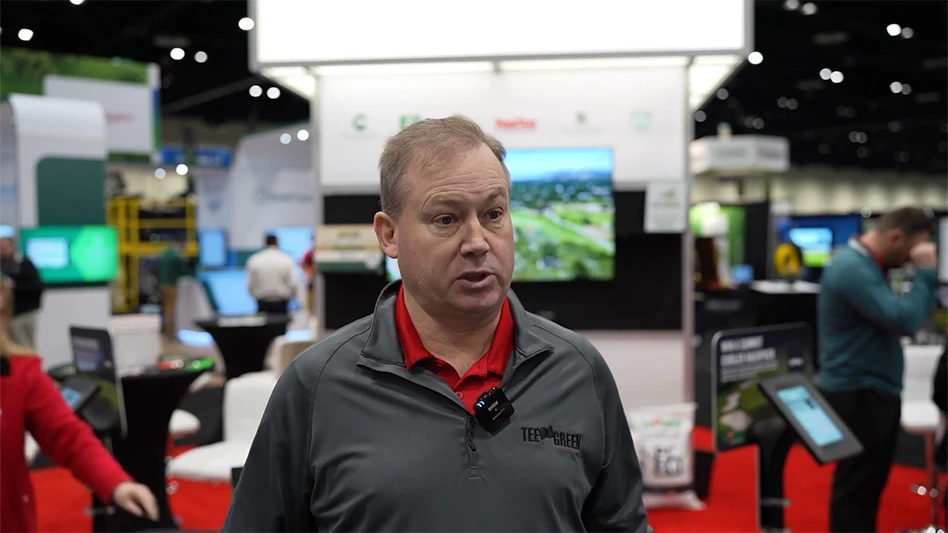
A to-be-announced disease control product was introduced to the golf market Dec. 8. Petro Canada, which officially will launch the product at the Golf Industry Show in February, hosted a webcast presented by University of Guelph researcher Thomas Hsiang, Ph.d., and Frank Rossi, Ph.d., associate professor of turfgrass science at Cornell University.
What’s different about the new product is its active ingredient is a mixture of food-grade emulsifiers and food-grade isoparaffins, Hsiang says. The name of the active ingredient has not yet been released; Petro Canada refers to it as PC1.
The product doesn’t have a strong direct effect on the fungi, which is how most fungicides work; rather, it reduces the severity of turf diseases like brown patch, dollar spot and snow mold by inducing disease resistance in the plants. One benefit is a very low risk of resistance because the fungicide acts on the plant, not the disease.
“It’s very unlikely you would have pathogens that would develop resistance to the product,” Hsiang says.
Rossi, who studied the practical application of PC1, says his research shows the product will be effective in transitional strategies to reduce pesticide use. In some trials, PC1 reduced traditional pesticide use by as much as 50 percent.
“We combined it with Daconil, Banner, Emerald and Endorse and we didn’t see any incompatibility,” Rossi says. “We think it will fit in with most of your traditional chemicals.”
In addition, the product proved to have some turf quality benefits, which may allow for reducing nitrogen rates, especially on fairways. It also controlled anthracnose surprising well, Rossi says, noting he plans to continue researching the product.
To view the introductory webcast, which includes charts and statistics from Rossi’s trials, visit www.agreenercourse.com.