Guy Cipriano
Two noble characteristics define revered golf maintenance professionals.
First, they’re intrinsically humble. Weather and managing people from divergent backgrounds diminishes — and in my cases eliminates — ego. Golf course maintenance represents an antithesis to influencer culture. Self-serving jabronis last as long as unirrigated sod. Annoying today. Gone tomorrow.
Patriarchs of the profession also relish imparting knowledge onto others. Demonstrating curiosity and commitment around an industry icon is winning the career lottery. The people with seemingly the least amount of time to help others become the industry’s most giving when approached by fully invested individuals.
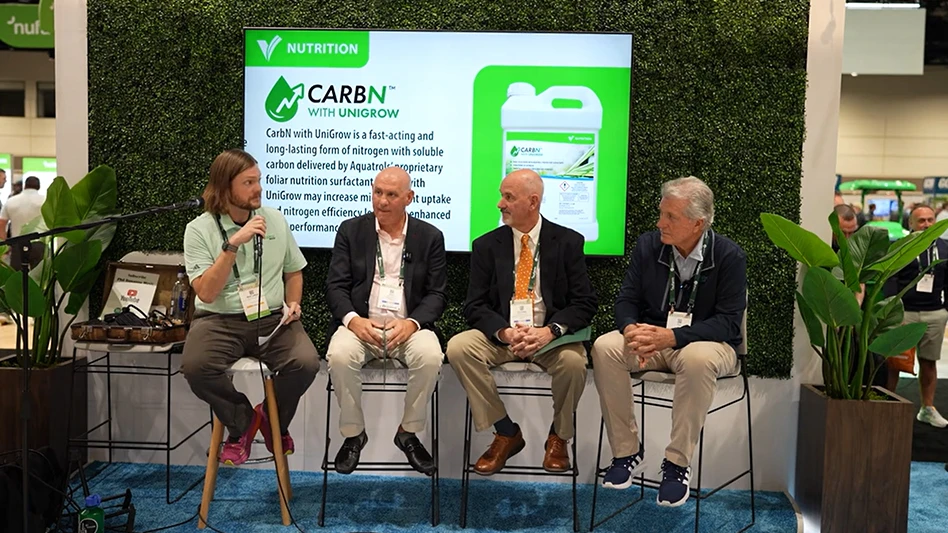
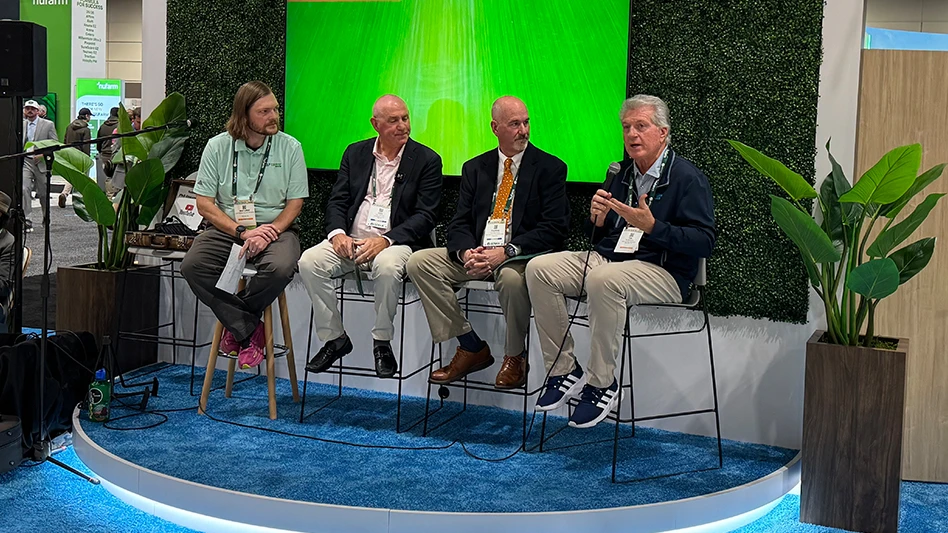
When sages such as Aspire Golf’s Tim Moraghan, Ansley Golf Club’s Courtney Young and Inverness Club’s John Zimmers start sharing, like they did during the 2026 Excellence in Mentorship Awards panel discussion at the GCSAA Conference and Trade Show, it’s best to stop and intently listen. Young and Zimmers joined TPC Network’s Collier Miller, The Alotian Club’s Justin Sims, Bryn Mawr Country Club’s Brian Bossert and the late Clemson University turfgrass pathologist Dr. Bruce Martin in the first class of Excellence in Mentorship Awards nominees.
Video of the entire Excellence in Mentorship Awards panel discussion hosted by senior editor Matt LaWell and sponsored by The Aquatrols Company can be viewed on our website. If you prefer the written word, here’s career-boosting guidance from the memorable session.
What makes a great mentor?
Moraghan: I think being a mentor, for me, was someone who could calm me down, put things in perspective, show me what’s important, not only in life, but in our occupation, and be there when I had a question, or did something foolish, or wanted to go in a different direction. It’s somebody who gives you a non-partisan, non-passionate review of your personality and your abilities.
Young: I’m just kind of a bridge. I had a great mentor, and I have had great people who have followed me who are more talented than me. I’m just the in-between. I just pass on what David Stone told me, and I just love the guys that work for me. That’s part of mentorship, just loving those guys and passing things along. I get to be their cheerleader.
Zimmers: That’s a pretty easy one for me. I’m sitting here looking at Paul B. [Latshaw], and his dad [Paul R. Latshaw] was a huge influence on my life. My grandfather was pretty special as well. It’s not only about having great conversations when you’re working, but it’s the tough conversations somebody has with you, too. It can be work-related or a personal thing. We all need that.
What have you learned about yourself from mentoring others?
Zimmers: I learned patience with a lot of them. You learn you have to adjust to certain people’s different skills. As you get more comfortable and learn and grow, you learn you have to adjust things to be successful.
Young: You start recognizing the talent in all the people who come through your program and the different ways they go about doing things. We have that similar companionship to leave everything better than you found it.
Moraghan: I would say mentoring and giving back are the same things, and so many people have given back to me. With young people, I would ask them to understand people who are older than you have gone through life. And LIFE stands for Life Isn’t Freakin’ Easy, so remember that. If I can help somebody, I see potential, but they might have an issue, they just need a little direction, a little push, I think that’s what trying to be a true mentor is. If people are willing to take the advice — and sometimes they don’t — they will come around.
How does somebody who might be hesitant to find a mentor identify a mentor?
Young: You just have to jump into the pool. It happens pretty naturally, especially in this industry. Everybody is willing to help everybody else. You just find those natural avenues and meet people.
Moraghan: It can happen out of the blue. For somebody coming to a show like this, there are so many random happenings and random encounters. You will never ever understand how you will meet somebody. It’s directed, but there’s a reason for it. I have bumped into somebody and had a conversation with somebody on an airplane who can be a mentor and somebody who can help you. Be a wide-open book. Don’t be afraid to ask questions of anybody, because you never know where it will take you.
What does it mean to be a mentor to the people who nominated you for an Excellence in Mentorship Award?
Zimmers: It’s a real honor when you know somebody took time in the world we live in to sit down and do that. We all need advice. So many times people get caught up in how the weather is and how healthy the grass is, and it’s well beyond that. A mentor is there for you at times when maybe you’re going through a very difficult time, whether it’s a relationship or a work matter, whatever it might be. So many people had an effect on me personally, and I’m happy I can give back somewhere.
What should everybody be doing between now and next year to recognize mentors?
Zimmers: That’s a pretty easy answer. Start jotting things down along the way. We all need to do that to remember the year as it goes along or to remember things in the past. Being here with friends, there are some stories we can tell on mic, and some we can’t. The friendships and relationships you develop in this business are remarkable.
Young: I’ve been coming to these things for over 40 years, and it always kicks off an initiative. You see things that inspire you, and every time, when I go back to the golf course, it’s like the week I get back is the start of the year for me. If you’re inspired listening to this, then go back and start right away on mentoring yourself or taking the time to start mentoring somebody.
EDITOR’S NOTE: The nomination period for the 2027 Excellence in Mentorship Awards is open. Email details about your mentor to Guy Cipriano (gcipriano@gie.net), Matt LaWell (mlawell@gie.net) or Kelsie Horner (khorner@gie.net). The nomination deadline is Oct. 30.