Superintendents who don’t receive the fungicide performance they expect should reconsider their strategy before chalking up a product as ineffective.
“The tendency is to always blame the product, but in the vast majority of cases, it’s not the product’s fault,” said Lane Tredway, extension specialist in turfgrass pathology at North Carolina State University.
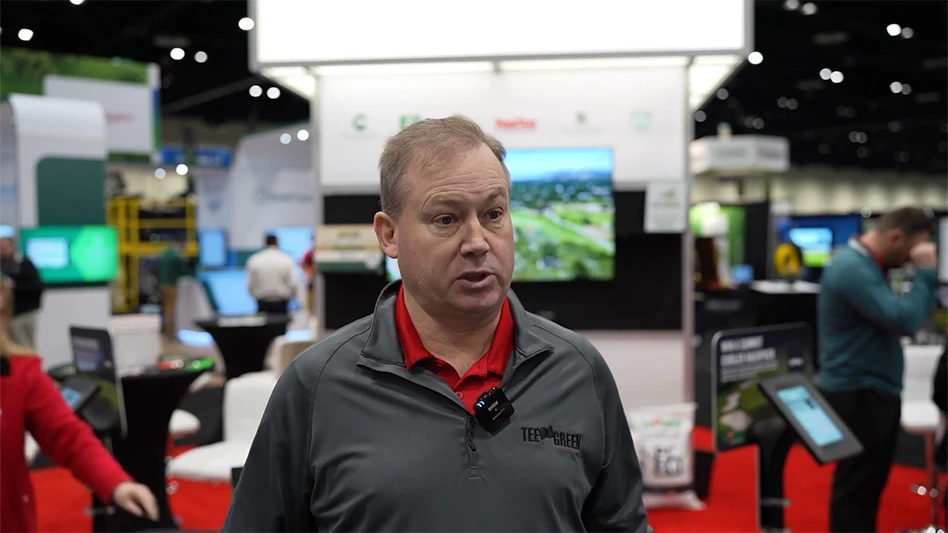
Tredway presented “Maximizing Fungicide Performance in Golf Course Turf,” at the Ohio Turfgrass Conference & Show Dec. 10 in Columbus, Ohio.
A number of factors could be to blame when a fungicide performs poorly, including:
- Product selection;
- Tank mix components;
- Application rate;
- Weather conditions;
- Turf health;
- Nozzle pressure/type; and
- Carrier volume.
Tredway offers the following advice for superintendents seeking to optimize their disease management programs:
Use proper turf management practices to maintain turf health. “If the turf is stressed, it’s not going to grow out of the symptoms, no matter how many applications you make,” he said.
Select a product that can deliver desired results. “This is more difficult today because the products are very specific, and some are labeled for things they don’t necessarily control well.”
Use preventive applications when possible. “It’s more effective and less expensive in the long run, and there are more products to chose from.”
Time applications based on weather not calendar. “Fungi don’t have calendars. They’re driven by temperature and moisture.”
Deliver the active ingredient to the site of the pathogen. “If it’s a foliar pathogen, a systemic product may not be the best choice.”