Courtesy of Martis Camp (3)
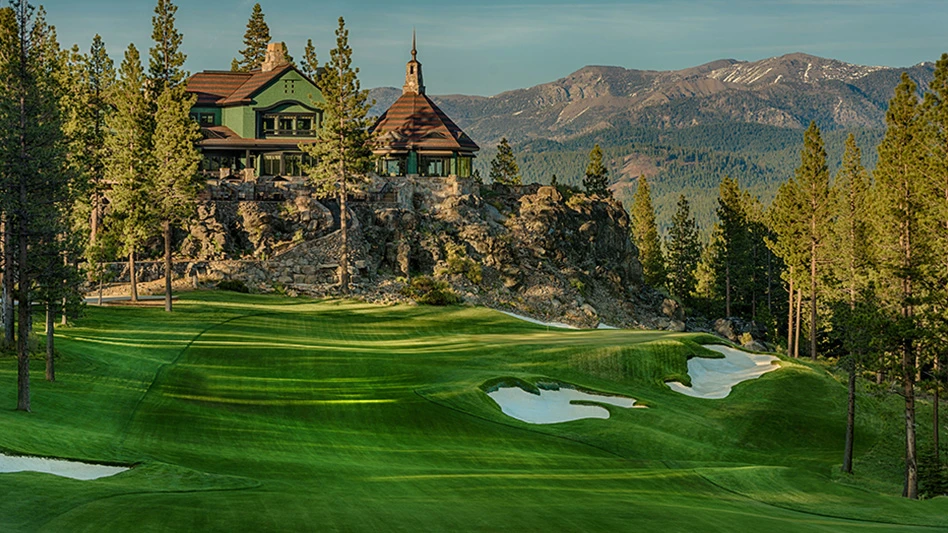
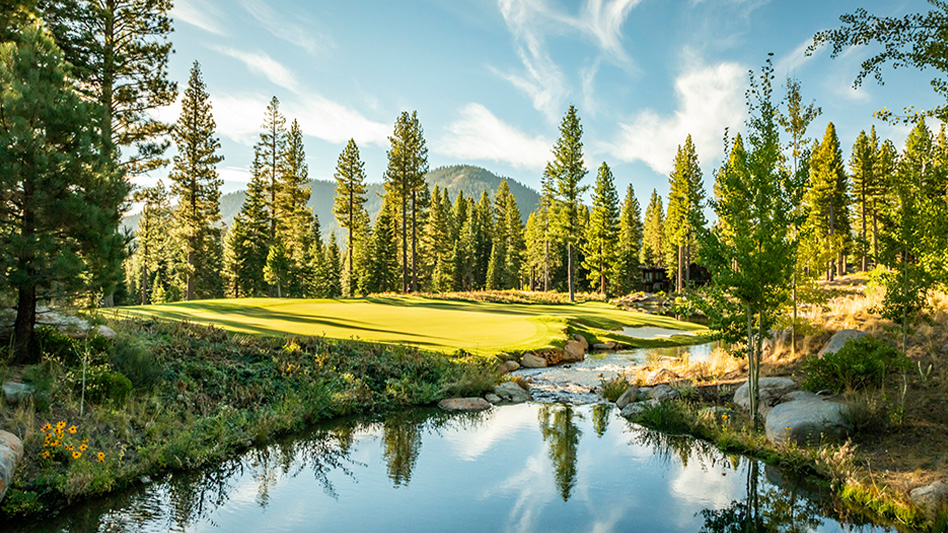
Next to the Sierra Nevadas, Martis Camp, an expansive Tom Fazio-designed course lined with Jeffrey pine and camphor trees, must endure all four seasons in preparation for a condensed golf calendar.
An elevated location means grounds superintendent Jonathan Moulton and his team must endure preparing a course for play amid more than 50 feet of snow.
Although Truckee, California, didn’t experience a lot of snowfall this past winter, Moulton says climate change plays a role in the severity of its winters, producing colder temperatures.
Truckee is located in northern California bordering Nevada with an elevation of 6,125 feet and an extreme ultraviolet intensity, resulting in either “bluebird days,” when the sky is clear and blue, or extreme weather.
“When you’re on the edge like that, any kind of climate change is really noticeable, so we’re getting more extreme,” Moulton says. “This season it was cold, and the snow line was above the golf course.”
Growing up in Maine with a passion for skiing, Moulton and his wife — who was then his girlfriend — moved to Truckee, to live near ski lodges. He began his career at Martis Camp as a part of the agronomy team and returned to the course in 2022 as the grounds superintendent.
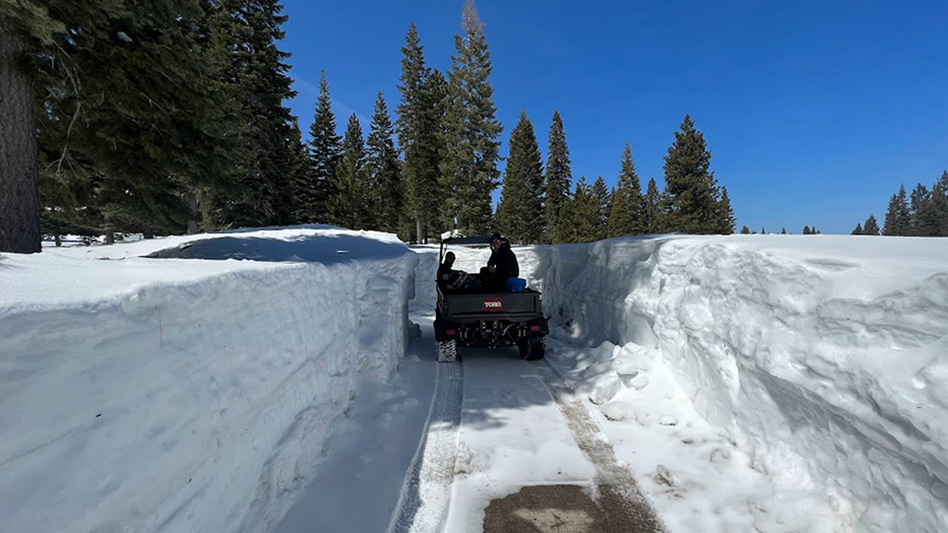
The colder weather does not faze Moulton, yet the thought of allowing the snow and ice to melt on their own concerns him.
“We worry, that’s what we do in the winter,” he says. “It’s hard because doing nothing is an option, which is hard as a superintendent because we’re paid to do things, and sometimes it’s best to not clear snow, not to clear ice.”
Moulton adds clearing ice can break the semi-dormancy or dormancy of the turfgrass plant, waking the grass plant up and causing crown rehydration or desiccation.
The process of preparing the course for the spring can be broken down into five steps.
Before starting the five-step process, in the fall, Moulton and his staff, which consists of individuals from the H-2B program, complete their agronomics, aerification, topdressing and heavy verticuttings of the course.
“Then we basically pick the place back up again like you would at a course that’s just been dormant for six months, and we have 100 days to try to impress our members,” he says.
With the snow line above the golf course, there was a good amount of ice, which Moulton describes as “the killer of grass.”
“We have about 90 to 120 days, so we’re trying to mitigate ice all season, and it was … kudos to the guys, because it really paid off,” he says. “We’re actually the first course to open in North Tahoe, and I think a lot of it had to do with how hard the guys worked this winter.”
The first step of preparing the course is melting the snow and ice using black sand and dark colored organic compost from a vendor in Reno, Nevada. “[The compost] will actually hold heat throughout the night as well and will keep the snow from either turning to ice or hard ice … it just keeps the melting process going longer,” Moulton says.
Once the 3 to 30 feet of snow Martis Camp receives melts, ensuring proper water flow channels becomes important.
“We’re always putting in drainage, even after 17 years,” Moulton says. “Water likes to move, especially in the mountain between the rocks and the soil. You can put a drain in, and next year the water literally moves 6 inches away from the drain.”
Moulton and his staff remove debris and start mowing playing surfaces after the course dries.
During storms, Truckee experiences wind speeds of more than 60 mph, while the mountain tops experiences 120 to 130 mph winds speeds, causing debris to accumulate on the course, he says.
“Basically, Category 3, Category 4 hurricanes on top of the mountains, and that translates to about 40, 50, 60 [mph winds] down here, so there’s quite a bit of debris,” Moulton says.
Since south- and west-facing green exposures will grow faster than the others, Moulton says mowers at different heights and cuts are needed to keep the greens at even levels.
“That’s a whole kind of balance. I joke it’s like a symphony or ballet where it’s like, you know, you’re pushing over here to do this with that mower, going over here to do that,” he says.
The last step of preparing the course for private play is polishing it. The course opens as cart path only to protect turf exiting dormancy. Understanding members and a dedicated staff help Moulton handle the four-season challenges.
“I’m very grateful to have a membership and leadership team that supports us through these times and understands the battle that we face every year, pretty much opening a new golf course every year,” he says.
Adriana Gasiewski is a Kent State University senior and Golf Course Industry’s summer editorial assistant.
Latest from Golf Course Industry
- Tartan Talks 116: Doug Smith
- Audubon International adds 127 golf courses to Monarchs in the Rough
- USGA’s GAP preps for fourth year
- Protect your vehicles from rodent damage
- VIDEO: Fun with fairways
- From the publisher’s pen: Humble giving
- Syngenta adds two to western U.S. team
- The Aquatrols Company introduces soil surfactant for Canada