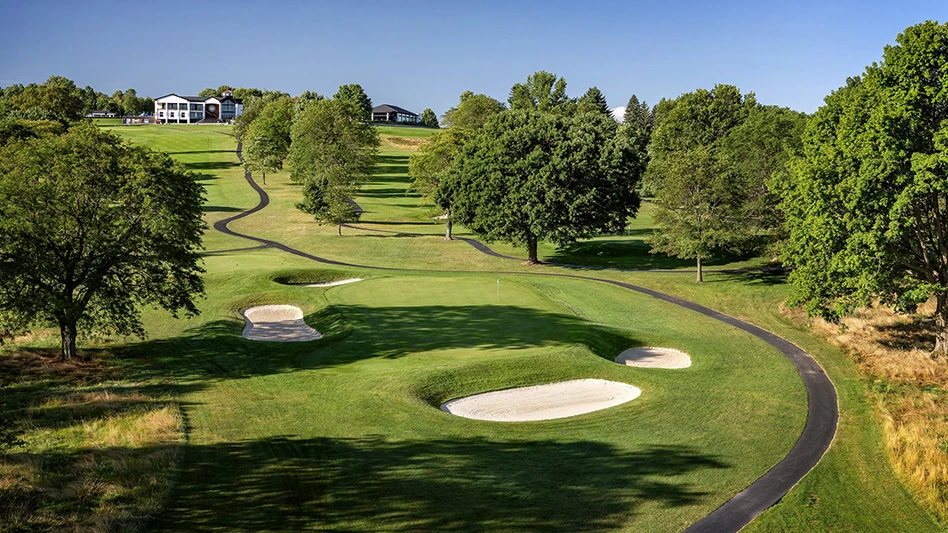
Ecological restoration work on Maplewood’s Keller Golf Course earned Project of the Year honors from the Minnesota Association of Watershed Districts at the organization’s annual meeting held Dec. 1 in Alexandria. Staff from the Ramsey-Washington Metro Watershed District and course superintendent Paul Diegnau accepted the award, recognizing a 15-year partnership that has created substantial urban wildlife habitat while protecting local waters from runoff.
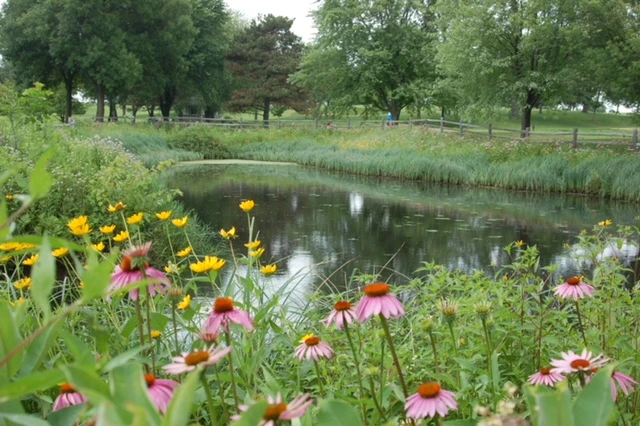
RWMWD first began working with Diegnau in 2003 by providing technical and financial support to install a natural vegetative buffer around a water hazard, an innovative practice at the time. In 2012, the course underwent a $12 million dollar renovation and was closed for two years while fairways and greens were being worked on. This provided an opportunity for a large-scale $250,000 ecological restoration project funded by RWMWD, Ramsey County and the Minnesota Board of Water and Soil Resources.
“Paul took a chance in transforming the course and making it possibly the most environmentally friendly course in Minnesota,” said Bill Bartodziej, RWMWD natural resource specialist.
Today, the course boasts 26 acres of high-quality restored natural areas, the most of any golf course in the Twin Cities. It is a nationally certified Audubon Cooperative Sanctuary, and more than 110 bird species have been identified on its grounds. A mix of native prairie, wetland and woodland habitat also provides home to deer, foxes, pollinators and other wildlife.
Water conservation is a top priority at Keller Golf Course. Over 75 percent of the course runoff is directed into a large infiltration basin, which reduces nutrient loading into the nearby Phalen Chain of Lakes. An on-site weather station and in-ground moisture sensors help to formulate dynamic watering plans for each day, which saves millions of gallons of water and reduces runoff.
The community came together to take part in the restoration. The Ramsey County Correctional Facility brought inmate work crews to prepare the site. Next, Master Gardeners helped teach and direct 350 students from four schools in planting the buffer and prairie areas. Interpretive signage explains the conservation benefits to course patrons, and staff give tours each year to university classes, professional organizations and civic groups.
“From my perspective, Keller Golf Course is setting an example for others to follow,” Diegnau said. “By exposing golfers to our natural areas and incredible pollinator habitat, I hope they see how well the game of golf can co-exist with the environment – and that opportunities abound for landscape improvements, both big and small.”
RWMWD first began working with Diegnau in 2003 by providing technical and financial support to install a natural vegetative buffer around a water hazard, an innovative practice at the time. In 2012, the course underwent a $12 million dollar renovation and was closed for two years while fairways and greens were being worked on. This provided an opportunity for a large-scale $250,000 ecological restoration project funded by RWMWD, Ramsey County and the Minnesota Board of Water and Soil Resources.
“Paul took a chance in transforming the course and making it possibly the most environmentally friendly course in Minnesota,” said Bill Bartodziej, RWMWD natural resource specialist.
Today, the course boasts 26 acres of high-quality restored natural areas, the most of any golf course in the Twin Cities. It is a nationally certified Audubon Cooperative Sanctuary, and more than 110 bird species have been identified on its grounds. A mix of native prairie, wetland and woodland habitat also provides home to deer, foxes, pollinators and other wildlife.
Water conservation is a top priority at Keller Golf Course. Over 75 percent of the course runoff is directed into a large infiltration basin, which reduces nutrient loading into the nearby Phalen Chain of Lakes. An on-site weather station and in-ground moisture sensors help to formulate dynamic watering plans for each day, which saves millions of gallons of water and reduces runoff.
The community came together to take part in the restoration. The Ramsey County Correctional Facility brought inmate work crews to prepare the site. Next, Master Gardeners helped teach and direct 350 students from four schools in planting the buffer and prairie areas. Interpretive signage explains the conservation benefits to course patrons, and staff give tours each year to university classes, professional organizations and civic groups.
“From my perspective, Keller Golf Course is setting an example for others to follow,” Diegnau said. “By exposing golfers to our natural areas and incredible pollinator habitat, I hope they see how well the game of golf can co-exist with the environment – and that opportunities abound for landscape improvements, both big and small.”
Latest from Golf Course Industry
- Tartan Talks 116: Doug Smith
- Audubon International adds 127 golf courses to Monarchs in the Rough
- USGA’s GAP preps for fourth year
- Protect your vehicles from rodent damage
- VIDEO: Fun with fairways
- From the publisher’s pen: Humble giving
- Syngenta adds two to western U.S. team
- The Aquatrols Company introduces soil surfactant for Canada