Once you've hired a golf course architect, how do you maximize the relationship? First of all, start emphasizing the importance of keeping your golf course architect central to the overall development process. Golf course development is becoming more complicated, and the architect is the logical person to serve as the hub around which different spokes revolve.
Although many consultants are required for a successful project, the golf course architect is in the best position to blend the various elements that go into a design such as playability, maintenance, aesthetics, and budgetary aspects.
When other consultants on the project are elevated to the prime position, the overall focus of the golf course may become narrow. For example, accountants may tend to focus on the balance sheet as the prime consideration. But the golf course architect thinks more holistically, focusing on the final product as the driving force behind a successful project.
As a central figure in the overall development process, there are a number of specific areas in which a golf course architect can assist, including:
* Feasibility planning
* Environmental permitting
* Budget establishment
* Golf course planning
* Construction observation
* Using natural elements
* Using trees to your advantage
* Planting
* Grow-in
* Clubhouse planning
Feasibility Planning
Independent feasibility study consultants should work together to accurately assess the potential of a project. An architect familiar with the conditions in the proposed area should be retained to assist in determining construction costs.
The architect should also understand the type of golf course necessary to be competitive in the market. Recently, I reviewed a feasibility study by a consultant who did not address irrigation water quality as a major concern that would impact the overall viability of the project. The consultant was from out of state, and chose to rely on "average cost" numbers, which in this case proved to be inaccurate.
A leading financial consultant told me recently that this reliance on average figures is one of the most serious problems in the industry today. Pro formas that show a need for an upscale golf course, but which provide unrealistically low construction cost estimates, can doom a project to failure.
Without realistic estimates, it may be impossible to attain your club's play and revenue goals if the golf course is in fact budgeted to be built and maintained to a lower standard.
Environmental Permits
The golf course architect should be involved from the outset in obtaining environmental approvals. Compared to many developments, golf courses are very flexible and can often incorporate archeological sites, wetlands, and other ecologically sensitive areas into the design without affecting the playability of the golf course.
With the golf course architect's involvement it is possible to use the land more effectively, minimize public relations pitfalls, and provide an environmentally safe golf course that will benefit the community for years to come.
More detailed information on how this might be accomplished is available in the American Society of Golf Course Architects' publication, An Environmental Approach to Golf Course Development, which details how environmental sensitivity has recently been successfully designed into numerous golf courses.
Establishing Budgets
The golf course architect should be involved in both the initial and any revised budget projections. He or she has the experience to gauge how much your golf course will cost quite early in the design process based on the quality level projected by the owner.
Your golf course architect should be able to take you on a tour of comparable golf courses so that you can visually compare what an established dollar amount produces. The golf course architect will do a careful analysis to ensure that your site does not have any unusual factors that would impact the budget dramatically. Elements such as a creek crossing, subsurface rock, and heavy clearing can significantly alter the budget.
Golf Course Planning
Each golf course should be planned to meet the unique needs of its individual market place. Don't be afraid to communicate your ideas, your vision, and the philosophy of golf course management with your architect.
Golf course architects typically work over the wide spectrum of golf course types. The design features to be included vary primarily with the style of course envisioned by the owner and the target market that it will serve. All of these goals are manifested in the manipulation of the various features of the golf course to produce a course suitable for its intended clientele.
A qualified architect will develop a detailed set of blueprints for the construction of your project. Although not always obvious, this investment in preplanning often yields major savings in construction.
Construction Observation
It's a mistake to believe that you can buy a set of plans from an architect and exclude him from the construction phase. Most architects attempt to draw the very best set of plans possible. But inevitably, field conditions offer opportunities to improve the design. The architect's trained eye is best at accomplishing this.
Moreover, a carefully thought out set of plans can be completely altered by seemingly innocent minor changes. In locating the greens, tees, and fairway hazards, the golf course architect has not only thought out the playability of the hole and the aesthetics, but also other details such as cart paths and walking circulation, maintenance time, costs, drainage, and other factors.
Using Natural Elements
Golf courses are highly aesthetic by nature. The use of natural elements and visual aesthetics in the golf course contribute in large part to the enjoyment of golf. It's axiomatic in golf course architecture--whether designing a new course or renovating an existing course the course must be as visually pleasing as possible to meet new market challenges.
The term "aesthetically pleasing" is somewhat subjective. It's important when working with your golf course architect to clearly delineate the types of design styles you find particularly attractive.
If an existing course is considering changes that include the landscape plan, the golf course architect is the best consultant to hire for that type of work. Problems can occur when local landscape architects or landscapers are hired to add trees to the golf course simply because of their relative unfamiliarity with playability and other design issues.
Using Trees to Your Advantage
It is also important that greens committees have guidance from a professional golf course architect before randomly adding natural elements such as trees. It is typical for trees to be added to fill any open gaps in a well-treed course. A professional golf course architect would look at tree additions in terms of aesthetics, playability, and maintenance practicality.
While trees add to the aesthetic beauty of the golf course, they can block air circulation and sunlight to the detriment of fine turf, particularly in high traffic areas such as greens and tees.
In golf course design, there is a concept known as double jeopardy. Simply put, good players believe that they should not be influenced by two hazards in one recovery shot.
The most typical example is the need to hit a bunker recovery shot that must also negotiate trees. Without careful planning, the planting of trees can inadvertently create this undesirable double jeopardy situation.
A golf course architect might also recommend tree removal to open up attractive long distance vistas that may have been inadvertently removed through excessive tree planting.
Planting
The biggest benefit of using a golf course architect to enhance the aesthetics of your golf course, whether new or existing, is that he or she has the technical knowledge to work the planting in with the design, and also accommodate other important aspects such as drainage.
The architect, working in conjunction with the golf course superintendent, can pick tree species that are favorable to the long-term maintenance regimen of the superintendent. For example, tree species with shallow roots can break up cart paths. Tree species with large leaves or that produce certain types of seeds should be avoided because they may inadvertently create an additional maintenance burden for the superintendent.
It is also important to select tree species appropriate to the microclimate in which they will be located. Each species prefers a certain type of climate, including wet soils or dry soils, sunshine or over-story canopy for shade, or certain types of exposures on slopes. The golf course architect will develop a practical tree list considering all of these factors before recommending the addition of new trees to your golf course.
The golf course architect can recommend the location and amount of sod required, as well as the timing of tree planting or landscaping. Depending on the time of year and the climate, it is sometimes best to utilize tree planting just prior to grassing operations. In other cases, it is best to wait until turf matures a year to begin tree-planting operations.
Since planting trees has such a large effect on improving the aesthetics of the course, we recommend waiting until the golf course grading operations are done, in order to study the final form of the golf course before determining actual tree locations. Tree planting plans done on paper before the tile golf course is complete can often miss subtle nuances that decrease their overall effectiveness.
Grow-In
Although you have undoubtedly hired a qualified golf course superintendent to supervise the grow-in process, many superintendents have never been involved with the grow-in of a new golf course. By contrast, the golf course architect or his agronomic consultant specialize in the formulation of fertility programs for new turf, and other nuances that are unique to the initial stages of turf growth on a golf course.
Clubhouse Planning
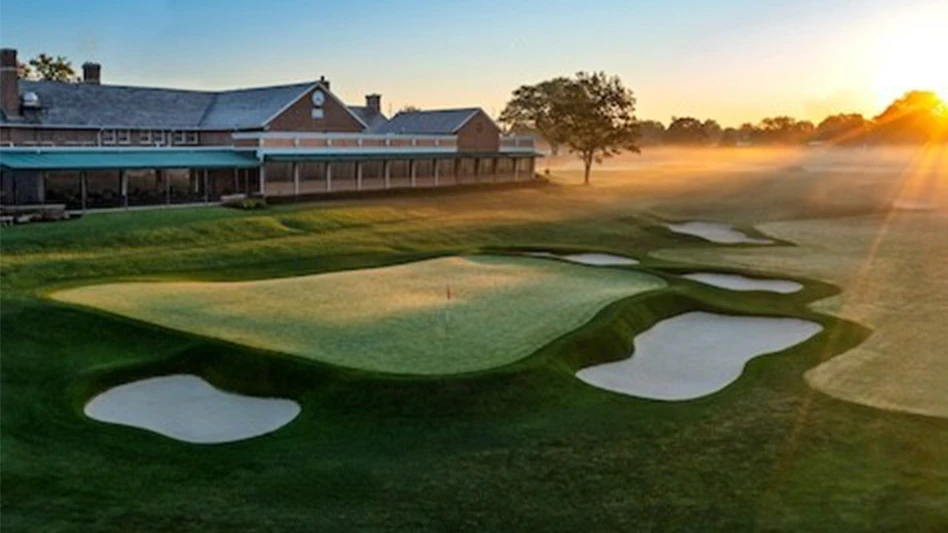
The clubhouse area, by definition, is probably the one area of the golf course that favors utility and function over aesthetics. However, a good golf course architect is also conversant in assisting the clubhouse architect at working out circulation patterns between the clubhouse and various elements of the golf course.
Golf course architects are concerned with views from the clubhouse to the surrounding greens and tees, and the overall aesthetic look. Several studies have shown that the golfer's first impression is created well before he starts on the first tee. Therefore, the aesthetics and landscaping around the clubhouse area should not be neglected.
Many of our clients have been surprised to find how focused some building architects are on the structure itself and its interior. The building architect may inadvertently neglect the approaches and area surrounding the clubhouse.
While he or she may have hired a landscape architect for assistance, the golf course architect is probably in better position to blend all aspects of circulation, aesthetics and views, which also promotes pro shop control of the first tee.
Some Other Considerations
Nothing will cost an owner more money than a contractor who falls behind schedule. Involve your golf course architect early on to plot an attainable construction schedule so that the golf course may open on time.
If the golf course is to be integrated into a real estate development, the golf course architect should be closely involved with the land planner. The two should work to develop routing plans and detail plans that create the best possible views and maximize the value of the surrounding lots.
Bunker placement, landscaping, contour mowing, and other elements of the designer's palate used to enhance aesthetics are critical in ensuring that the golf course properly elevates the surrounding land values.
Golf course architects can serve as a tremendous marketing tool to any project. If you retain an architect who has name recognition, by all means make the most of that. Some architects have a national following of players. With the proliferation of local and regional golf publications, many lesser-known architects are very popular among local players as well.
By pooling your resources with your architect, who is likely to have media contacts, you can build market awareness of your golf course as it is developed.
Conclusion
Golf course architects possess considerable expertise--expertise they freely share because of their concern with the ultimate success of the project. By utilizing this expertise in a multitude of ways, you not only get the most out of your golf course architect, you will also get the most out of your golf course for years to come.
Source: Ault, Clark & Associates