Providence, R.I. – With water usage a top concern for many golf course superintendents and the trend to return to an older, more natural look for golf courses, tall grass areas are gaining popularity on courses throughout the country. However, tall grass areas, even though they don’t need to be mowed as often as the more manicured parts of a course, don’t require less maintenance, according to Jim Skorulski, Green Section agronomist for the U.S. Golf Association. Skorulski spoke at the New England Regional Turfgrass Conference & Show in Providence, R.I., March 7-10.
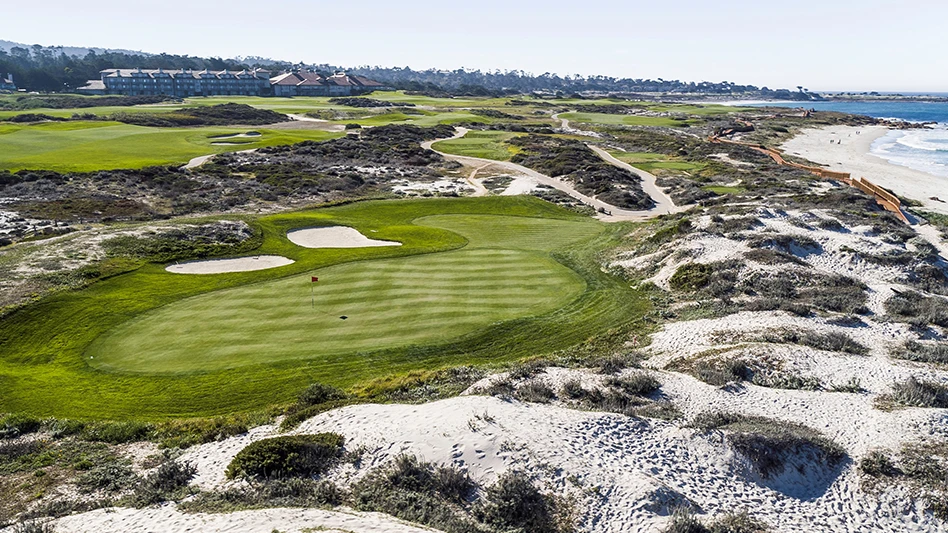
Tall grass areas are an integral part of golf courses, and they provide a sharp contrast to the manicured parts of a course. They’re commonly seen on seaside sites that have sandy soils. Because they slow play and the challenges they impose are reasons why they’re eliminated many times.
Tall grass areas are important for wildlife, can slow soil erosion and can be used as buffer strips to protect a water source. Ultimately, site selection makes or breaks these areas, according to Skorulski.
Playability is a big issue with these areas, so Skorulski suggests that if superintendents are going to implement these areas on their courses, they start on the far edges of the course and work their way in slowly to let members get use to it.
Additionally, tall grass areas aren’t dense, so balls will less likely be lost and will be playable. These areas want to be sparse, so when seeding, only 25 to 50 pounds per acre is needed, according to Skorulski.
The grass types that work best in these areas are fescues (predominately hard and sheep), bluegrass or a native rough seed mix. Chewing fescue could be used but not more than 10 percent of a mix, Skorulski says. Fescues are good for this type of area because they don’t need a lot of water, have good color and can tolerant a lot of traffic. Skorulski recommends superintendents avoid perennial ryegrass, however, annual ryegrass can be considered for erosion areas. Skorulski also recommends avoiding ornamental and non-native grasses. He says Switchgrass is aggressive so one should be careful about using it. GCN
Latest from Golf Course Industry
- Tartan Talks 116: Doug Smith
- Audubon International adds 127 golf courses to Monarchs in the Rough
- USGA’s GAP preps for fourth year
- Protect your vehicles from rodent damage
- VIDEO: Fun with fairways
- From the publisher’s pen: Humble giving
- Syngenta adds two to western U.S. team
- The Aquatrols Company introduces soil surfactant for Canada