Source: The Star Phoenix (Saskatoon, Saskatchewan)
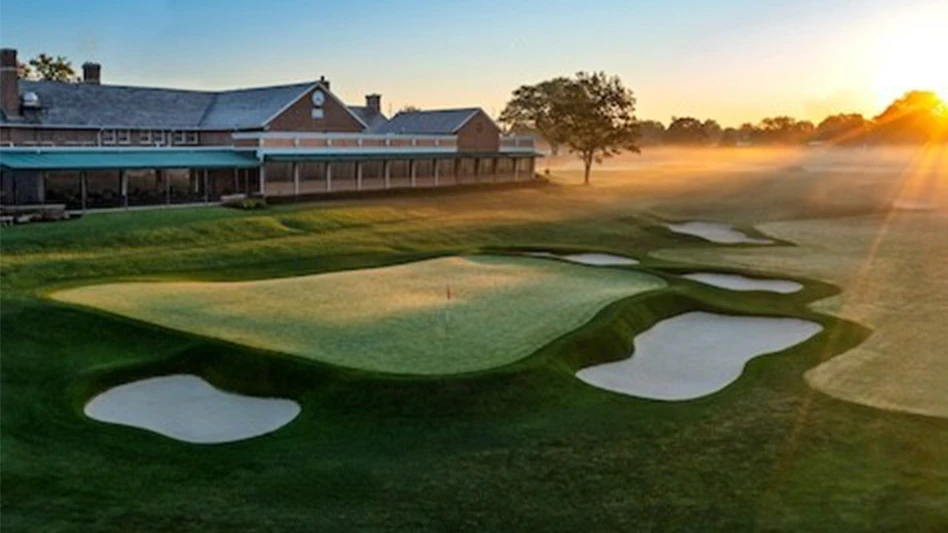
Whitecap Dakota Sioux First Nation - Looking down one of the fairways on the Dakota Dunes Golf Links, Chief Darcy Bear is more focused on his vision of the future than improving his golf handicap.
"Over there is where the hotel and casino complex will be. Guests will have great vistas of the beautiful countryside on one side and a superb view of the golf course from the other," he says.
The construction of a hotel and casino will be the latest development phase for the Whitecap Dakota Sioux First Nation. The $50-million project will piggyback on the success of Dakota Dunes Golf Links, a 7,300-yard golf course that was officially opened this past spring.
Set in a striking landscape of rolling countryside on the reserve, just 20 minutes south of Saskatoon, the $5-million golf development is a trigger for future tourism growth, says Bear While much of the course was left in natural prairie, the greens and fairways rely heavily on irrigation. Up to 1.8 million gallons of water a day are fed from the nearby South Saskatchewan River into the course's state-of-the-art computerized system.
The verdant green panorama provides a very different picture from when Bear was a youngster growing up on the reserve. The immaculate greens and fairways that now spread out in front of him were just pasture lands, and poor ones at that, he says. It was back in the late 1980s that a golf course project was first conceived as a means of generating economic activity from the band's land base. Those plans fell dormant until 1999, when the initial idea was given a fresh look.
Golf course consultants brought in by the band figured that the natural landscape set the perfect location to locate a new golf course. Rolling, sandy land that had not been viable for agriculture suddenly became a gold mine when looked at from behind the straight swing of a 3 iron.
"When they saw our natural dunes, the experts told us that we had an ideal setting. They said our location would provide a unique experience for Saskatoon and district golfers."
It was such a major project the band decided to look for partners to work with on the project, Bear says. By the time the development was ready to proceed, the band had formed crucial partnerships with other First Nations bands. The Prince Albert Grand Council, Kitsaki Development Corp. (owned by the Lac La Ronge Indian band) and the Muskeg Lake First Nation became part of the multi-million-dollar concept.
Remarkably, after its first full season, the golf course has turned a small profit. Even though the summer was wet and cool, the target of 22,000 rounds of golf was surpassed, says Bear.
"We've had about 24,000 rounds played at the links here, despite the unco-operative weather. Our sandy soil is perfect for drainage, and I think that has to help us in that kind of weather."
The course has received rave reviews from golf magazines, which has helped draw golfers from across Canada, says Bear. More importantly, the project has become a major employer. With a payroll of 44, 70 per cent of whom are aboriginal, the economic spinoff on the reserve has been dramatic. There is much more to come, Bear says.
Dakota Dunes will provide the anchor for future development that will include the construction of a new hotel, providing another 80 jobs, and the building of a major casino by the Saskatchewan Indian Gaming Authority (SIGA) that would add 500 more jobs, Bear explains.
The Whitecap First Nation is convinced the resort could become an integral part of a tourism corridor between Saskatoon and Lake Diefenbaker. He says Lake Diefenbaker, with its hundreds of kilometres of shoreline, is a sleeping giant as far as tourism is concerned.
"We are working with Saskatoon, RMs and rural towns in the region to develop the tourism potential. We're going to require major infrastructure improvements to handle all the extra traffic that the investment will generate," he said.
Bear beams with optimism when he talks about the future. Saskatchewan has a lot going for it, he says. The resort projects and spinoff developments offer tremendous potential for ongoing job creation that will benefit not just First Nations people.
"My grandfather had to get a pass to leave the reserve, or get permission if he wanted to sell livestock or his grain. They were injustices, but now we must look forward to a new future. If we are successful, all of Saskatchewan is successful."