Source: The Arizona Republic
The sparkling new ball on the tee box may be addressed by a Minnesota banker, a Canadian retiree visiting for a month or a business foursome networking its way through a best-ball charity tournament.
They may pull out the new PING G2 driver and later in the day house-hunt along fairways from Gilbert to Buckeye.
Their hobby supports the course crew, the course suppliers, area resorts, real estate development and the businesses that feed from them.
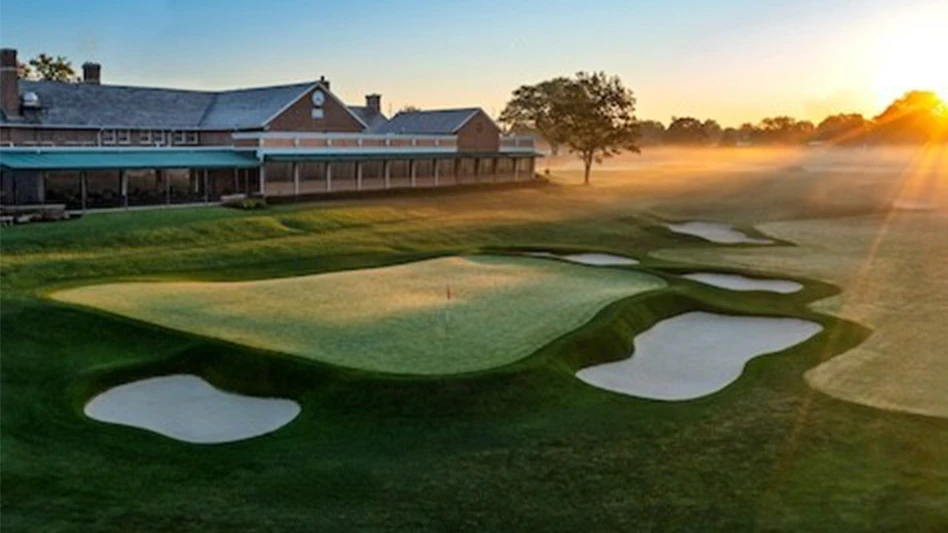
The green strips under the big sky and slashes of mountain are a postcard of the Arizona lifestyle marketed across the globe.
Even if you don't play, dropped the game after too many 8s on the scorecard or profess disdain for all things golf, the industry matters to you.
It's like the big brick factory in the old Midwestern town, a lifeblood to the Arizona economy. There's no belching smoke, just green islands in a sea of red-tile rooftops.
As golf moves past the boom of the late 1990s, past the slump of 2001 and into its future, the state's economic development and tourism experts are hoping to shore up the franchise, but diversify as well.
"I would say the majority of people, the average Joe on the street, may not have a clear understanding of how important that the golf industry is to Arizona," said Richard Grinage, director of the Professional Golf Management program at Arizona State University's Morrison School of Agribusiness and Resource Management.
The golf industry's impact reaches from the state's real estate markets to its jobs, tax revenues, tourism and environment.
A 1997 study estimated golf's economic impact in Arizona at roughly $1 billion, employing almost 17,000 people. The state's Golf Industry Association is commissioning a study this year to update those numbers, which some estimate could be $1.5 billion or more.
Golf dumps millions of tourism dollars into hotels, motels, restaurants, stores, rental cars, taxis and airlines. Airport baggage carousels dotted with golf bags attest to that. Less visible are taxes on golf visitors' spending that feed local and state governments.
Considering that golf uses about 5 percent of the state's water, its return to the state is impressive, said Ed Gowan, executive director of the Arizona Golf Association.
"Golf far and away drives more clean dollars into Arizona than anything else," Gowan said.
While courses are struggling to increase rounds and revenues, GIA's president doesn't fear what's to come. Efforts to grow the game of golf are just beginning, and Arizona's popularity isn't waning, said Shawn Connors.
"Growth will help our industry right-size," he said. "With as many people who want to live in the state of Arizona, that is a positive signal for golf."
Direct impact
In Scottsdale, which bills itself as "the world's finest golf destination," tax collections from golf courses amounted to about $1.3 million in fiscal 2002-03, according to a city study. Taxes are split among the city's general fund, public safety, transportation and open space.
The city's 23 golf facilities employ about 1,800 people full-time and nearly 1,000 part-time, the report noted.
They're people such as Polo Diaz, 35, golf course superintendent at Starfire at Scottsdale Country Club who came to the United States from Mexico 14 years ago and supports his wife and two children.
"It's a little bit hard, but it's good work," said Diaz, who supervises 27 employees. He acknowledges the hefty responsibility that comes with growing good grass year-round but calls it his best job ever.
They're retirees such as Jim States, 65, who works full time at Starfire for the love of golf and to supplement his income.
"For the first time in a long time, I'm having a lot of fun in my job," said States, who worked 42 years in the airlines and now supervises about 20 people. And they're young workers. Cherie Simpson, 20, a food server and beverage cart attendant at Starfire, enjoys being outside, the customer interaction and the good tips that pad her salary and benefits. Citing reports from friends with restaurant jobs, she said, "The money (there) is nothing compared to how it is here."
The industry's economic spin-offs are diverse. The construction business gets its share from building homes and courses in golf-course communities. Those developments yield property taxes. The retail industry gets a slice from golf equipment sales. Support services dot the landscape.
Then there's the cost of operations and upkeep. Courses maintain inventories of expensive mowers and equipment ranging from $350,000 to $1 million - that equipment is normally replaced every four or five years.
"To believe that you build a golf course and you open the door and to believe that you're through, you're not; it's a constant flow (of purchasing)," said Roger Maxwell, president of In Celebration of Golf, a Scottsdale-based course manager and golf retailer.
It feeds companies such as Simpson Norton Corp., a distributor of Toro irrigation and mowing equipment in Arizona, New Mexico and Las Vegas. President Tom Knecht estimates 90 percent of the company's business is golf-related. As golf goes, so goes Simpson Norton and its Phoenix workforce of about 50 .
"Our biggest issue is that people forget golf is a business in the state," said GIA's Connors, whose "real" job is vice president-golf for Horizon, a Phoenix distributor of irrigation equipment.
Maxwell's company reflects other impacts: About $2 million a year in local and state taxes and $8.4 million in wages.
Golf also is integral to many corporate meetings in Arizona, a valuable piece of business for many hotels and resorts. A top golf experience can help convince companies that this is the place to woo or thank clients, or reward top employees.
Troon Golf Chairman and CEO Dana Garmany said many of the region's visitors are attracted first and foremost by golf; lodging is secondary.
Terri Worthington, spokeswoman for the Camelback Inn, a JW Marriott Resort & Spa, knows many core golfers "come just to golf" and share rooms at cheaper hotels to save up for top-name courses.
Looking to the future, Garmany is bullish on Arizona's odds of continuing to be a prime magnet for the golf aficionados who are so important to courses' bottom lines. But he cautions that other markets are aggressively seeking those customers as well.
Thinking green
Industry proponents note that golf courses provide temperature-reducing green belts, wildlife habitats and landscaped open spaces in an increasingly developed environment. Other beneficiaries include local charities, which raise millions of dollars through benefit tournaments.
The Valley also is home to top golf-management companies, like In Celebration of Golf, Intrawest Golf, OB Sports and Troon Golf, employing professionals in finance, marketing and agronomy.
Karsten Manufacturing Corp., which makes PING clubs, is headquartered in Phoenix and employs about 800 in the Valley.
Engineers work secretly in its labs for the next advancement to help players hit the ball better and enjoy the game more. Success can mean big orders, ramped up production, overtime for employees or additional staffing.
Like Karsten, Troon also got its start here and employs about 1,600 people statewide, with 1,258 of those in the Valley -- from its corporate offices in Kierland Commons to courses such as Troon North and Talking Stick.
Scottsdale-based Gaylord Sports Management manages 33 professional golfers, including Phil Mickelson, and creates events like the Tommy Bahama Challenge.
Antigua Sportswear Inc. in Peoria is a top manufacturer of golf apparel.
And there's Mundus Institute's School of Golf Course Management, which also makes its home in the Valley. Program director Steven Leonard said enrollment in the 45-week class has remained constant at about 50 students a year looking for futures in the industry.
While the industry has faced challenges in recent years, Leonard said graduates are finding work through normal business employment cycles of attrition and transfer.
"It's a steady, slower process (of advancement) versus when there was so much growth," Leonard said.
He said that most courses have avoided staffing reductions, but they are getting smarter with their expenses. That means asking employees to do more and be well-rounded.
Add it all up and the game's impact stretches far beyond entertainment for a few.
"If golf isn't growing ... it could be a real issue for us 10 to 20 years down the road," said Brent DeRaad, vice president of marketing for the Scottsdale Convention & Visitors Bureau.