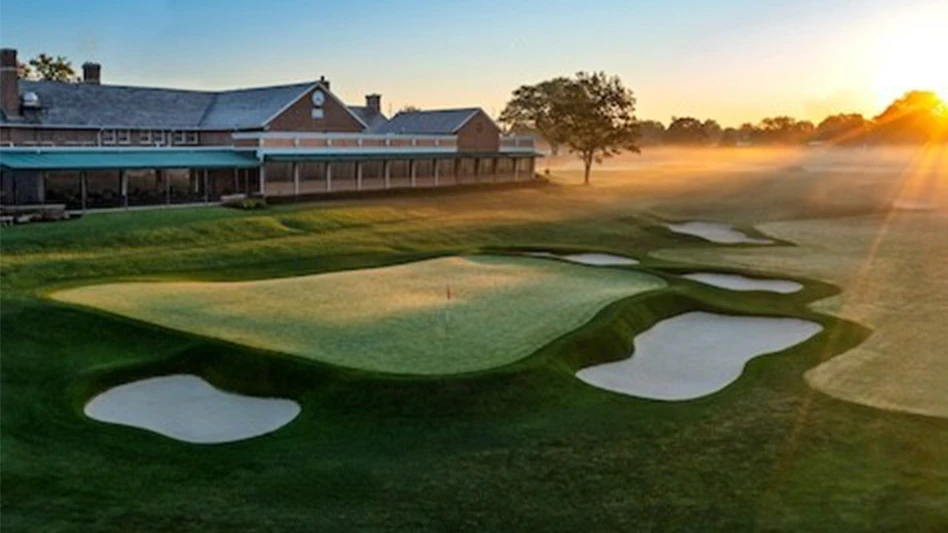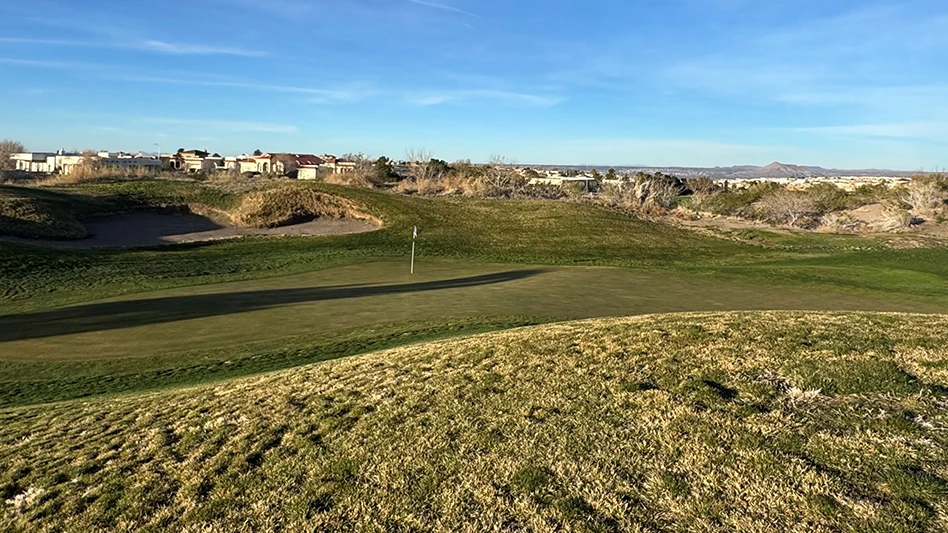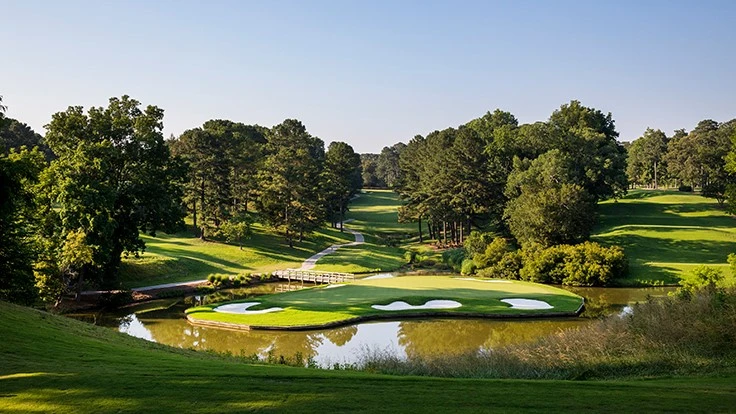
Golden Horseshoe Golf Club is a far different place than when it opened in 1963 and Robert Trent Jones Sr. called it his “finest design.” The original Gold Course no longer stands alone, of course, joined in 1991 by Rees Jones’ and Greg Muirhead’s complementary Green Course, then redesigned in 1998 and upgraded in 2016 by Jones and Muirhead. Balls are different now, too. So are woods, putters and every other club in the bag. The world outside its trees can feel like a different planet.
The club remains as beautiful and as playable today as it ever has, though, and in large thanks to superintendents Greg Galland and Jeremy Waddell, and Jason Pierce, the director of agronomy. Working under the KemperSports umbrella and its Green to a Tee initiative, they have helped bring the courses a little more up to environmental speed, most recently by converting about five more acres to no-mow property.
“It helps with the reduction of water resources, possible fertility reduction, possible chemical application use, things like that,” Pierce says. “We’re still continuing to look at areas where we can reduce the mow … It’s a continuing effort toward expanding and redefining those areas.”
Pierce joined the team at Golden Horseshoe in August after almost 18 years at Heron Glen Golf Course in New Jersey, which is also a part of KemperSports and recently fostered a honeybee habitat and is helping boost the local monarch butterfly population. His first year in Virginia has been sprinkled with parallel efforts.
“We’ve done some internal irrigation audits to continue water conservation, replacing nozzles and really matching what’s in the field,” Pierce says. “We’ve updated our satellite controls of the irrigation system in the field. We’ve updated the central control on the golf course to the most recent Toro Lynx. The upgrade in technology will help us to conserve and track usage and be able to manipulate water with conservation in mind. We also continue to use slow-release fertilizers and build and develop other programs as we go.
“So many things are already in place here because they’ve been successful in the past. It’s just taking those prior successes and enhancing them a little bit, and increasing our efforts here and there, making an overall impact on what’s already been started. There are always things to add, things to do.”
The conversion to more no-mow and even low-mow land has resulted in a noticeable reduction in labor hours, allowing crew members to allocate their time to other areas, Pierce said, though “I think we need probably a few more seasons to really calibrate the overall net effect.”
No course modifications are implemented, without first consulting with Jones and Muirfield. “Through time, the course kind of changes,” Pierce says. “But certainly with the support and approval of the architect first, so as not to compromise the original design intent.”
And no course modifications short of another redesign should be so noticeable that golfers stop and stare. The best thing, Pierce says, is that they not notice at all, at least at first. “Sometimes noticing change can have a negative impact on pace of play and making the course more challenging,” he says. “You can show or demonstrate that you’re doing these things to enhance other areas without negatively impacting a golfer’s round or anything like that. There’s an education component. You want to share the positives of what you’re doing.”
The positives — on this 50th annual Earth Day and every day — can be found in every sustainable decision that helps make the planet a little more different and a little better.
Matt LaWell is GCI’s managing editor.