Charles “Chip” Lafferty is going green – slowly.
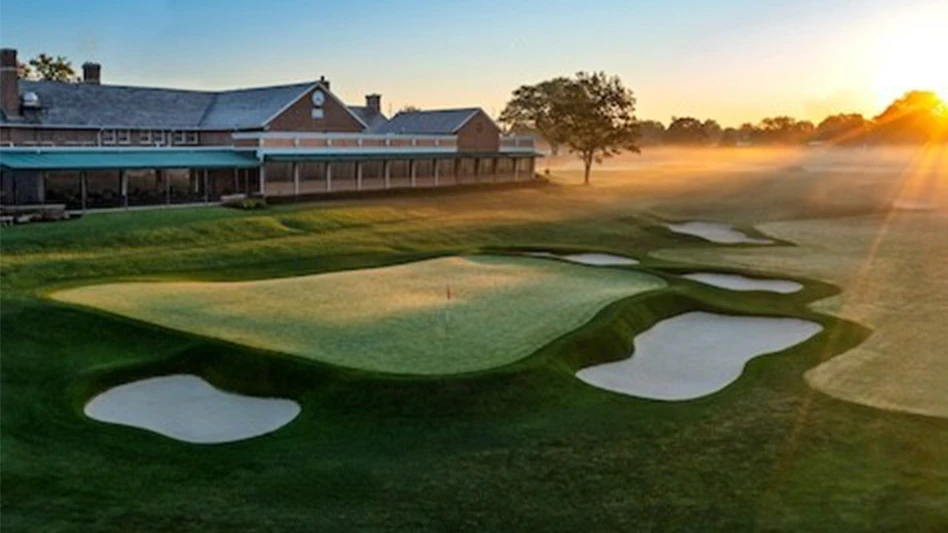
Lafferty, golf course superintendent at the private, 18-hole Rye Golf Club in New York, is mixing organic products into his fertilizer program, but that doesn’t mean he’s going to quit using synthetic fertilizers and pesticides altogether.
“It’s tricky with organics because you’re not measuring pounds of nitrogen, which superintendents have been trained to do,” Lafferty says. “You’re looking for organic matter, for microbes in the soil to stimulate nitrogen. However, it will take two to three years to see the benefits of organics.”
Lafferty, who has been at Rye for six seasons and has been a superintendent for eight years, operates with a maintenance budget is $1.1 million and a crew of 18 May through September. During the winter, the staff numbers four, including himself. Lafferty and his crew manage Poa annua/bentgrass greens, ryegrass/bentgrass fairways and low-cut bluegrass tees. The club, which generates 30,000 to 35,000 rounds a year, doesn’t host any special events – it’s strictly member play.
Lafferty spends between $16,000 and $18,000 on granular and liquid fertilizer annually. He also has a $20,000 micronutrient program, which is based on nitrogen, for the greens. He applies 3.5 to 4 pounds of nitrogen on the greens annually, applying a granular fertilizer three times a year and spoon-feeding the rest. The greens receive one-half pound every two weeks until a total of four pounds is applied. He applies 4.5 pounds of nitrogen annually on the fairways. A quarter pound is applied every third week. During the cool season, a one-pound application is made, followed by half-pound and quarter-pound applications. He applies six pounds on tees annually because of heavy divoting. He also applies granular fertilizer on the tees and fairways.
“Granular fertilizer is a lot cheaper than liquid fertilizer,” he says. “I can get soluble urea and ammonium sulfate extremely cheap. It’s more expensive for me to get on a spray rig and apply fertilizer than buying the granular material.”
Lafferty is just beginning to explore organic fertilizer. He did a dormant feed in late November/early December. He applied an organic fertilizer (8-2-8) on all greens, tees and fairways. The fertilizer is comprised of turkey manure, poultry manure and fish meal. He says urea is a good compliment to organics. He also uses food-grade fertilizers but isn’t sure if they’re organic.
“If it works out, I will switch to all organic fertilizer,” he says.
This year, Lafferty is adding compost teas - which enhance beneficial microbes in the soil - to the mix and will evaluate that as well. The food source from the compost teas for the microbes is leonardite.
Lafferty would like to spend $20,000 less on synthetic pesticides and spend that same amount on fertilizer, moving money from one line item in the budget to the other.
Overall, Lafferty says superintendents, in general, have been targeting the turfgrass plant and not the soil food. There are beneficial nematodes and protozoa that keep disease in check.
“We need to address physical properties of the soil,” he says.
Before Rye, when Lafferty was in Florida for about eight years, he and other area superintendents were always trying to get away from using a lot of pesticides.
“But there wasn’t enough research on compost teas, for example, and the rates were wrong,” he says. “It’s catching on in the landscape industry but not as much in golf because the first attempts were failures. They were done without pesticides. You need to mix organics with synthetics. The goal isn’t necessarily to save money but to apply fewer pesticides. If we can do that, we’re succeeding.” GCI