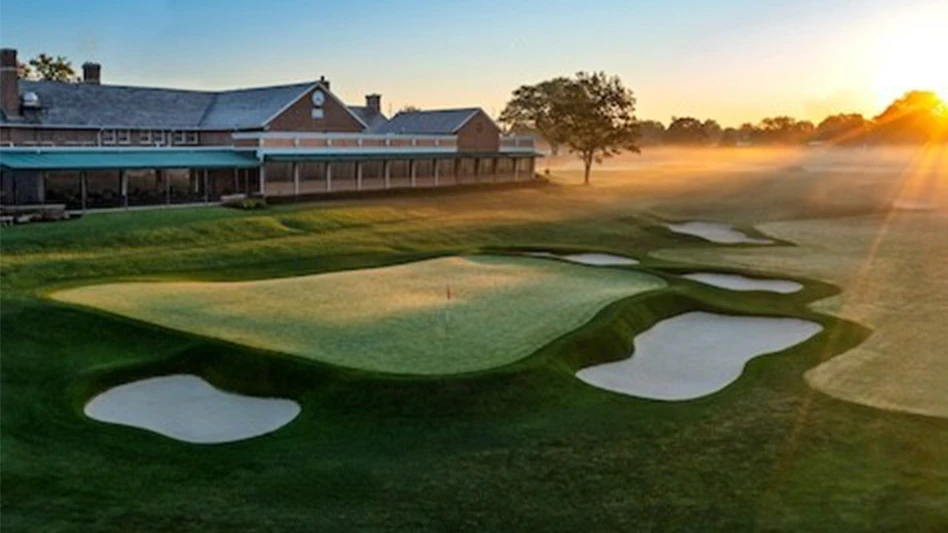
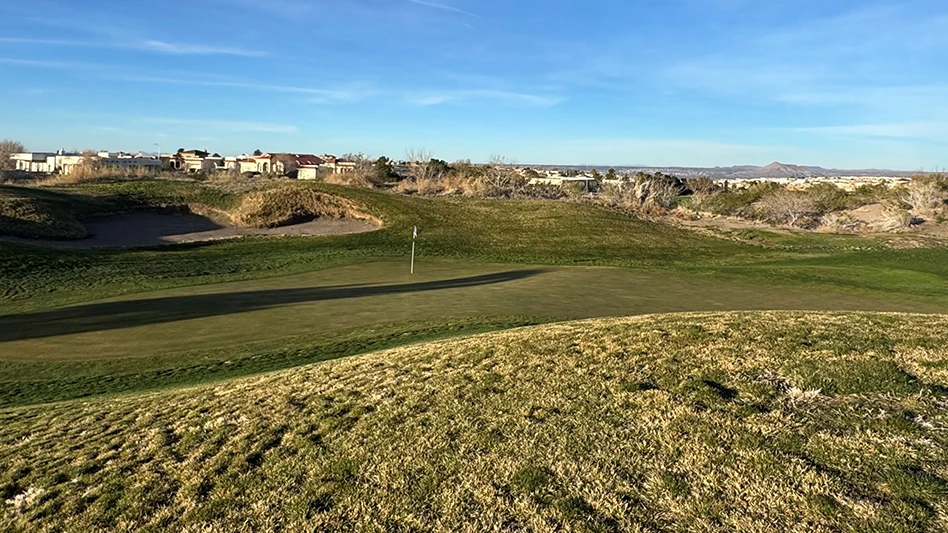
A Menlo Park golf course's proposal to remove 79 coast redwood trees has stirred only a whisper of protest compared to the outcry provoked weeks ago when the city allowed a resident to chop down a single redwood.
During an 18-day public comment period that ended Feb. 28, the city received seven letters expressing some degree of opposition to the Sharon Heights Golf & Country Club's plan to cut down the redwoods, along with two oaks and a pine tree. It also received two letters supporting the golf course.
According to a report by a club-commissioned arborist, the redwood trees aren't healthy because they have grown too close to each other. The cluster of trees also block much of the light and breezes needed to keep the greens in good shape. And their roots could do "future damage" to golf cart paths, the report states.
The course has more than 1,470 trees, mostly redwoods.
The report states that 34 of the 79 redwoods the golf course wants removed are in "fair" condition, though none are rated "good" or "very good."
"Heritage trees should only be cut down when they are dead or present a danger," Menlo Park resident Roxie Rorapaugh wrote in her letter. "Shading a golf course is not presenting a danger."
Gary Wimmer, manager of a land company with property adjacent to the golf course, wrote in support of removing the trees. He said his company also has problems with an abundance of "fast growing" coast redwoods.
"If the club is to retain the notoriety and reputation as a first-class facility, their motivation must simply be always to maintain and improve on their landscaping - it is the lifeblood of their club," Wimmer wrote.
Menlo Park's own arborist is looking at the trees, said Rebecca Fotu, the city's environmental programs manager. The city could approve or reject the golf course's request, or determine that some trees can be chopped down and others spared, she said. There is no deadline to decide, she said, noting that the review could take some time.
The public would have two weeks to appeal any decision announced, she said.
Last year, residents rallied to preserve a 70-foot-tall redwood on a residential property. A divided city council ruled in January that the homeowner could remove the tree to build a new house.
The city's heritage tree ordinance aims to retain oaks, significantly-sized trees and trees with "historical significance, special character or community benefit." Those trees can't be removed except in certain circumstances such as when they are in poor health, in danger of falling or in the way of certain improvements.