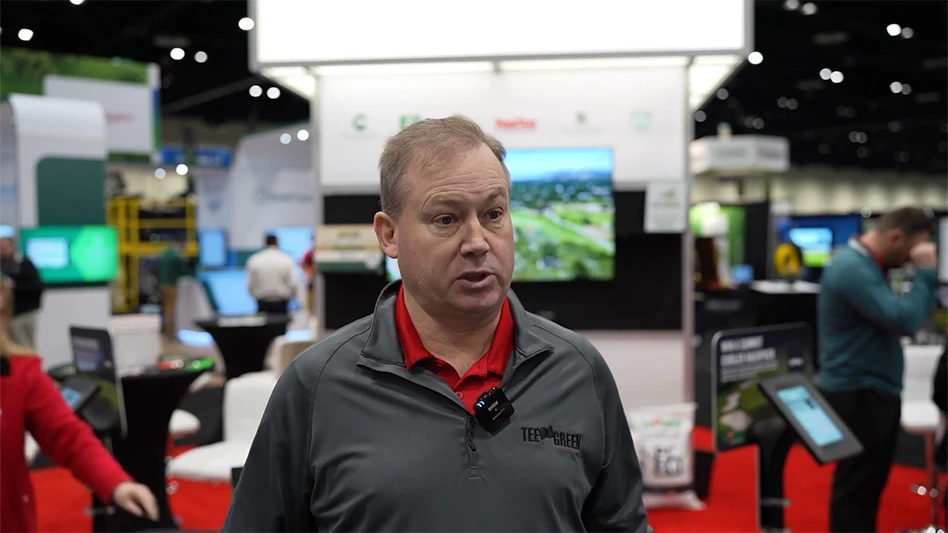
Syngenta is planning ahead at the 2011 GIS by previewing their Turf Carbon Calculator. The calculator, which has been tested at 10-15 courses throughout the country so far, is meant to develop benchmarks for courses that can be used to assess energy efficiencies on the course and around the club.
The calculator determines a course's carbon footprint to manage resources by tracking a club's costs during a year for power and resources and plotting the use of water, energy, plant protection products and fertilizer. But the goal isn't to remove the course's footprint entirely - just make it a little bit lighter, said Shawn Potter of Syngenta.
"The reality of it is that we're on this earth," he says, "we're going to make a carbon footprint."
Using statistics from the calculator, a course sets benchmarks for condensing and conserving where it makes the most sense to do so, and can use those numbers to compare usage to other courses to see where it falls in standard benchmarks.
"It's about trying to get that reality component, being able to say, 'Now I know where I am. What can I do about it?'" says Potter.
The service will also help superintendents encourage boards and members to support changes around the course by packaging information about wasted energy and resources in an easy to convey package, says Potter.
The calculator is currently being tested on 12 of Marriott Golf's courses worldwide, and those results will be grounds for continued testing on more courses through the next year, said Potter. The calculator's statistics are being taken to universities for study and validation.
Carbon calculator defines course footprint
Syngenta is planning ahead at the 2011 GIS by previewing their Turf Carbon Calculator.