What began in 1957 when the Soviet Union launched Sputnik into space has evolved into a golf innovation with endless boundaries.
The global positioning system can trace its origins to the 183-pound satellite, but it was in 1974 when the first GPS satellite was launched into orbit. There are now 28 GPS satellites orbiting the earth, providing accurate positioning 24 hours a day.
Golfers see GPS in golf carts, telling them exactly how far it is from their balls to the greens or in-depth information about the course. Superintendents have even more uses: They are using GPS to map their courses, chart elevations and set up irrigation.
Using three coordinates – longitude, latitude and altitude – along with an exact moment in time, GPS can chart a course within inches. This can spot areas of poor drainage, provide ammunition for course renovations or help when tree removal is meeting resistance.
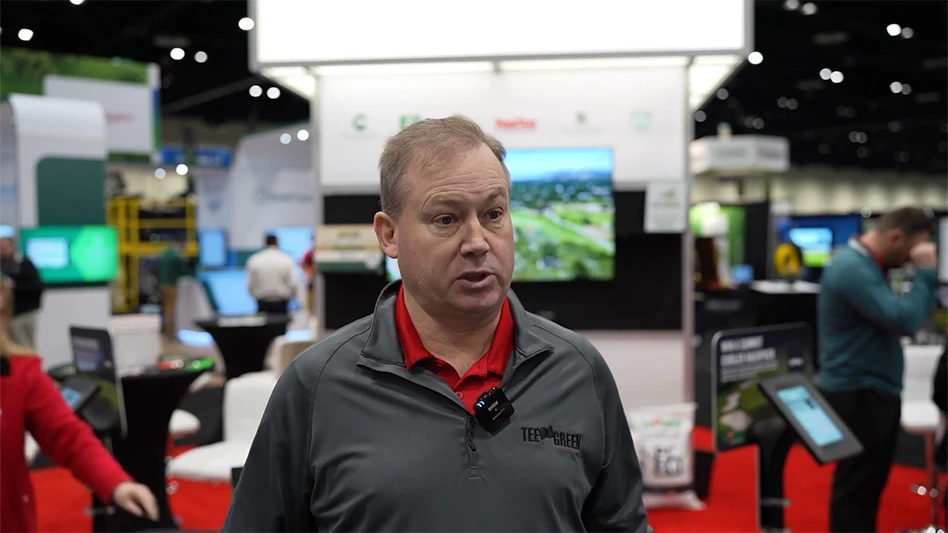
As for maintenance, Jason Bass of StataPoint, said the GPS can track heads, valves, quick couplers, satellite box’s and electrical wiring; identify head types and pipe size; track maintenance history; print maps for field use; train new employees; and generate end-of-year inventory reports. Having immediate access to the full inventory is essential for managing replacements and for overall maintenance of the irrigation system.
The Department of Defense originated the technology, but according to Bass, about 1.4 million civilian GPS receivers have been produced each year since 1997. Generally sold to hunters, campers or fishermen, person GPS units range from $180 to $450. These units generally are accurate to within 10 feet.
The next step up, which many golf courses are using, are the submeter GPS units. These range from $10,000 and $12,000 and are accurate to within six inches to a foot.
Professional-grade (survey-grade) GPS units generally cost between $45,000 and $65,000. These are accurate to a centimeter. There’s a $25,000 option at this level as well, but accuracy is a function of cost, Bass says.
A possibility down the road is using GPS to maintain a course at night when there are no golfers to interfere with. A system can be attached to lawn maintenance equipment and controlled via the satellites.
Bass says that’s a possibility. However, logistical obstacles must be overcome prior to superintendents allowing machines to rule the course through the evening hours.
Whether it’s two years away or two decades, Bass feels GPS will play a larger role in the day-to-day maintenance of America’s golf courses.