Lee Carr (2)
For two days at this historic gathering, celebrating 100 years of the GCSAA, there was a dizzying array of educational choices. There were interactive facility tours and sessions that lasted anywhere from one to four hours, some being offered in Spanish. A number of sessions required a fee and registration, but Power Hours were free and available.
Solo speakers gave presentations that captivated their audiences, and conference attendees seemed equally engaged with panels using a more casual and interactive Q&A format. More than once, speakers reminded audience members that they could submit proposals to hop behind the podium at next year’s conference in New Orleans. Several sessions were packed, standing room only.
Personally, I chose sessions that covered a variety of topics and that I knew would challenge my thinking. The event’s website made it easy to search by days or tracks (like agronomy, BMP or leadership), but you could also enter keywords or speaker names into the search bar. I learned a lot. These were my three biggest takeaways.
Equipment technicians are wired differently.
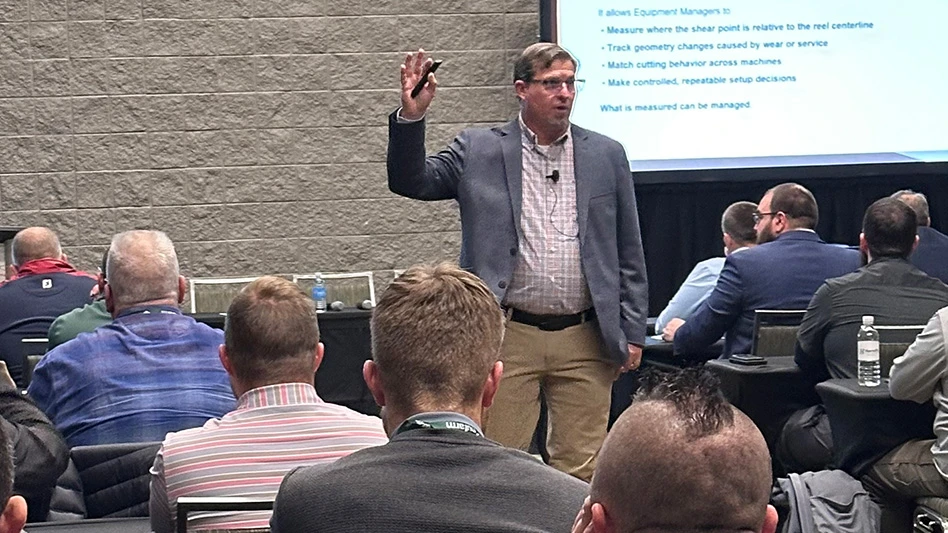
Early in his presentation “Mastering Reel Geometry: Advanced Setup for Cutting Performance,” Trent Manning referenced “the attitude of the bedknives” and for a heartbeat I thought, “Who offended the bedknives? Why are they showing attitude?” Then I remembered where I was and the different definitions of attitude.
I understand how quickly things can go awry without talented equipment managers, and why they are so often praised by superintendents, but this educational session enlightened me further. Constant awareness is a key aspect of maintenance, as is the recognition that what is measured can be managed.
There were other nuggets of information, and phones going up to take photos at different times indicated that Manning was addressing pain points. The conversation involved copious amounts of fractional numbers, often in rapid succession, and the more than 100 students weren’t phased by the terms behind center distance, behind center angle or geometry stack. I took the class to understand more about the equipment management side of maintenance and I was glad I did. Equipment managers, if you don’t already know this, you have my respect, awe and admiration.
One more thing really stood out to me here, and that is the amount of time it might take to learn to do the job well. It’s common sense, but recruit anyone you can, or develop staff members who show an aptitude to be trained in this discipline. Well, at least anyone with the right attitude.
Intentional choices are worth the time it takes to make them.
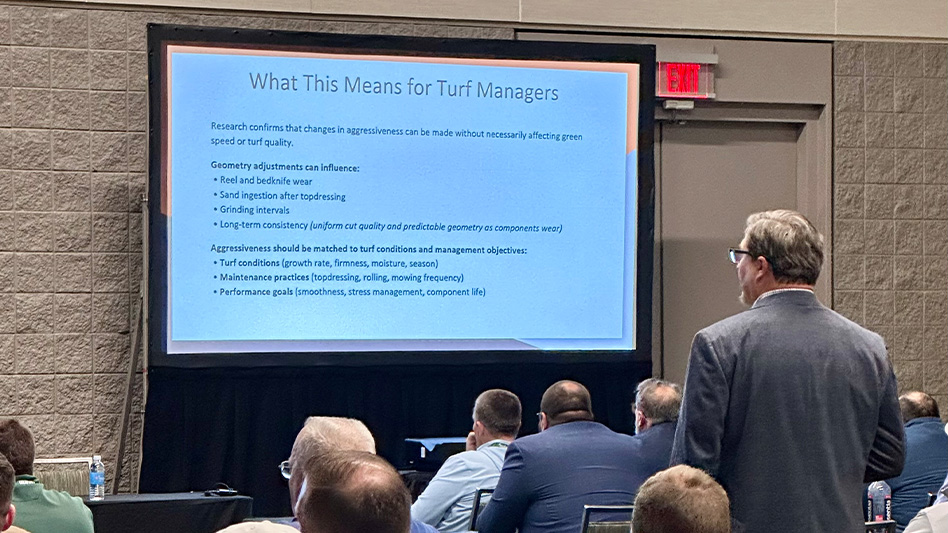
With around 100 sessions to choose from, where did I want to spend an hour? Two? Would four hours about one topic work? Rather than focus entirely on subject matter, maybe you want to select sessions to learn more from specific speakers, or to learn about the properties where they work. Maybe you want to be supportive of a friend or a new speaker, or maybe you have an idea to present for next year and you want to see how it’s done from someone who has experience. Maybe you and your buddy want to take a session together, or maybe sitting next to your buddy in class can only lead to mischief.
There are many ways to contemplate the educational options available, and for me, there wasn’t near enough time to see and hear all that I wanted to. However, I was really glad that I was able to go to the sessions that I did — they were all great, and I truly learned a lot. Whatever your motivation, take the time to consider what you want to learn and why. Intentional choices and a little planning will go a long way toward a return on your conference investment.
Education doesn’t change your problems, but it can change your mindset …
… and changing your mindset can lead to solutions. Education has always been a way to prosper. Not only can education help you become better at your profession and give you the confidence to grow, but quality education simply makes you a more well-rounded, more interesting person. Improving the way you think can arm you with the information and creativity you need to see the way forward.
During a presentation titled “What You Know, Why It Matters, and Who You Become,” Chris Hartwiger, Gina Rizzi and Dr. John Dempsey all shared some encouraging sentiments. Hartwiger covered the value of looking at data points over time and proactively communicating your historical record, while Rizzi commented on the importance of connecting through a sense of place.
Dempsey directly addressed advances in technology, noting that different generations have varying perspectives on the most significant advances to affect the industry. As those generations have experienced the industry in different ways at different times, that certainly makes sense. However, he also noted that one of the most significant advances for this industry (and so many others) is how technology has made attaining education more accessible than ever.
It’s easy to seek advice from your peers, an extremely relevant form of education, so check out social media platforms such as LinkedIn and TurfTwitter on X. Listen to a podcast. Search for associated reading material online, catch a video on YouTube, get a college degree remotely or in-person. Attend a conference. Even better is chatting with your peers about anything you discover, to gain additional context. Every piece of professional information that you absorb expands your mindset and improves your ability to evaluate situations and find solutions, and that’s worth knowing.
Lee Carr is a northeast Ohio-based writer and senior Golf Course Industry contributor.
Latest from Golf Course Industry
- Ecorobotix announces collaboration with GEO Sustainable Golf Foundation
- Textron E-Z-GO launches Labor Portal
- Short course coming to Lanier Islands Resort
- Texas club enters final stages of renovations
- Troon selected to manage Turtleback Mountain Golf & Resort
- Penn State captures 2026 Collegiate Turf Bowl title
- SiteOne expands LESCO golf portfolio
- John Deere introduces pair of new mechanical rakes