 |
As a roving reporter for Golf Course Industry and Golf Course Industry International I have the distinct pleasure of attending a variety of industry events. Some are further away from home than others. Late November took me to Shenzhen, China where the Asia Golf Show took place and then it was on to other nearby locations. A journey is more important than just the destination so I will report on the sights, sounds and happenings along the way that our readers will enjoy.
 |
PLANES, TRAINS, AUTOMOBILES…..ALONG WITH TAXIS, MOPEDS, FERRIES, BUSES AND SUBWAYS!
There are a variety of gateways to China and for pricing and dates the best choice was to fly from LA to Shenzhen through Beijing. Logistically it is about like going from LA to Boston and then connecting to Miami. After about a 12 hour flight across the Pacific it was refreshing to stretch my legs in Beijing airport and then take another 6 hour flight down to Shenzhen. It was plenty cold in Beijing and glad I did not have to leave the airport. It was below freezing in Beijing and the forecast was calling for snow. Cool season grasses are predominant in that region and it is not that far off from the Chicago or St. Louis climates.
Shenzhen was quite warmer and the general climate there is much like the southern US with mostly bermudagrass and paspalum golf course greens and also on the remainder of the golf course with a little zoysia thrown in. During my week in the area there was no frost but it was surely cool at night with daytime temps getting into the 60’s and 70’s. For those who have not spent much time in this part of the world one of the largest challenges is the lack of sunlight due to fog, overcast and pollution in the air.
My hosts in Shenzhen picked me up at the airport and got me to my hotel in short order. If you have not driven in China I suggest that you stick with that and either take taxis or hire a driver. The roads are very modern as most have been built in the last 20 years or so. There seem to be plenty of lanes to handle the traffic except for peak periods as in any city. But there are a variety of challenges that will test even the most accomplished of drivers.
As China is an emerging nation with the development of a new middle class there is a combination of the new and old standards for the country. In terms of transportation on the roadways this means a combination of pedestrians, bicycles, mopeds, motorcycles, scooters, cars, trucks and busses. Throw in a few 3 wheel bicycles with produce and you have quite a mish mash that makes up the users of the roadways. All of these vehicles seem to flow together but to think that anyone has the right of way is surely not a given. The painted lines that demarcate the separation of lanes apparently is only a suggestion as people weave in and out of one lane to the other with great frequency and rarely use a turn signal. I am told that it is important to be an aggressive driver in China and there is no doubt that the drivers in China make LA and Chicago look mild by comparison!
Taxis are not unlike the USA but be sure you have the name of where you are going in Chinese characters because few drivers understand English. I always take the business cards of the hotels I stay at and also have the front desk write out my destinations to avoid problems. Compared to the USA taxis are cheaper but the pricing is different depending on the color of the taxi you choose as I was informed by my hosts.
One day I decided to venture out and visit the town center for some shopping. Thanks to my guide/interpreter and friend, Annie, I was able to navigate the subway system of Shenzhen. Much to my surprise it is by far the finest mass transportation system I have experienced in the world. Figure that this system was built in the last 20 years and if the government wants to put in a couple of hundred miles of track they don’t need a lot of permits, approvals, voting by locals, etc. to get it done. As a rider I can tell you that this subway was a smooth ride, clean, fast, safe, efficient and affordable in cost. A one way ride is just over a dollar and logical to assume that more people are transported by subway than automobiles in Shenzhen.
I found out early that there are certain procedures that take place with the subway that differ from the USA. Lots of people move swiftly to position themselves for the queue to get on the subway cars. It is a combination of order and chaos all at the same time. When the subway car pulls up people exit and then the best way to describe the flow onto the subway train is like the flow of mercury. Heaven help you if you stumble as the flow keeps moving with or without you. Once you think the subway car is filled then it is likely another 20% more people will squeeze in. The concept of “personal space” is unknown during this procedure. You get to know your fellow subway riders in a manner you have never experienced before. I no longer think that the TAS pat down is as invasive as it can get.
Mopeds are another form of transportation for many. Rain or shine these are all over town and entrepreneurial types will tote you around for a fee. Both logic and my hosts indicated that this is not the safest form of transportation. However, when you are in outlying areas it might be one of the few choices. These vehicles are used to not only haul people but packages and food products some of which may be dead or alive. Imagine riding with a dead pig between you and the driver when coming back from the market. That is a special treat that most in the USA will never experience.
I also took a ferry from Shenzhen over to Hong Kong. It was a 30 minute boat ride and very efficient and clean. I landed at the airport there and it was a trip that I would do over again. Ferries and all other transportation tend to leave on time and arrive on time. Don’t be 5 minutes late or your mode of transportation will likely have departed. This is also the way the meetings and events take place as well as appointments. China is very punctual from my experience.
COMMUNICATION
 |
Another important factor when visiting China is to have the ability to communicate to be successful in your endeavors. My Mandarin is good enough for the words that mean hello and thank you. I doubt I would ever conquer the language unless I lived in China and then it would be one of my goals. So it is very important to have a host or someone that can interpret for you. Again I thank the various people at Shenzhen Longer Green Fertilizer for assisting me on this and other trips to China.
In another 10 years or so I think you will see a dramatic change in the number of people that speak English in China. Through the wisdom of the government and school system it is now a required subject to take English during the elementary school years so that will lead to a population that will be prepared and effective for the future global society and economy.
In the meantime I suggest that most of us bone up on our pantomime skills. Think of it as getting your point across as in “charades” with as few motions of sign language as possible. I stayed at a couple of hotels that were considered “western” on this trip. Yet I was the single English speaking person in the hotel except for maybe the assistant general manager of the hotel. Somehow I was able to communicate things like needing a new Ethernet cable for the internet and simple requests like writing a wakeup call time on a piece of paper and acting out the act of sleeping and then waking up all at the front desk.
I have seen some people that have some decent translation apps on their phones but I have not ventured down that road. The good news is that the people of China are very friendly and also very helpful and they want to assist you in any way then can.
ASIA GOLF SHOW IN SHENZHEN, CHINA
 |
Over the last several years there surely has been a slowdown in golf development in China. Some projects are in the construction stage but so many more are in the planning stage and on hold. Sources indicate that with incoming Chairman Xi there are hopeful changes on the horizon to allow for more growth in golf throughout China.
Most would think that the slowdown in golf development is based on a fragile economy as we have seen in the USA. Actually the GDP for China has been hovering at about the 7.7% rate for the last few years and is thought to reach 8.2% in 2013. That is pretty impressive compared to the USA these days. If you look at the cities I visited there are hundreds of construction cranes in place and operating to construct endless high rise housing units. Also, at several of the golf courses I visited there was a lot of home building going on around golf courses that had recently opened.
Locals have shared with me that in the last several decades there has been an emerging middle class in China and with the ability to plan, establish and run their own businesses it has resulted in a new wealth for the middle class allowing them to buy condominiums and join golf clubs.
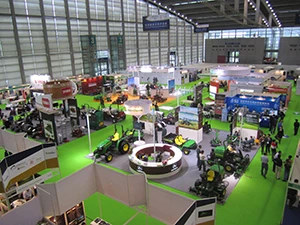
Knowing the status of the economy is important to the success of the Asia Golf Show. This show is put on in collaboration with Reed Guanghe Exhibitions, GCSAA, and the PGA World Alliance. Education was sponsored by GCSAA and Jacobsen. The shows in Asia are not just your typical GIS in a smaller format. The shows include both the turf side of the business as well as the development side including contractors, architects and some developers. This side of the show floor is separated by a wall from the other side which contained consumer goods predominantly. So you could do one stop shopping for not only your golf turf needs but also for golf balls, shoes, clubs, tourism, etc. With this type of a setup it is hard to gauge the total level of attendance as some people were there purely for the golf turf and others were there purely for the consumer side of the show.
In speaking to a variety of exhibitors on the golf turf side the overall response was that they were pleased with the traffic that they saw at their booths. It was not about volume but quality of the people at the show. Alan Prickett, who leads the initiatives for Jacobsen in Asia, indicated that Shenzhen had been the best venue in China for trade shows thus far. He said “our level of qualified buyers was excellent and we had a good volume of traffic showing interest in our product line for the entire show”. “The amount of interest in our product line was pleasing and our team felt that the interest was genuine.”
Jacobsen played a key role at the show as not only a cornerstone exhibitor but as a sponsor of the education component at the show. Partnering with GCSAA, Jacobsen provided several days of educational offerings. The first day of the conference had an outdoor experience titled the Turf Science Academy. Participants went to local Tycoon Golf Club and the afternoon was divided into 4 specific presentations.
Topics covered included:
- Frequency of Cut & Sprayer Calibration with Jacobsen
- Turf Inputs & Spray Nozzles with Syngenta
- Irrigation Efficiency with Hunter
- Grinding Techniques with Bernhard
The companies that made these presentations shared that they really liked the direct focus on their topics and the ability to subliminally support their companies during these presentations in the field. Attendees also commented that they enjoyed seeing things in practical application and a break from the typical classroom type presentation.
During the show there were 5 offerings for education. While attendance varied I could easily count as many as 60 people in the room with standing room only for several of the presentations. Due to language differences the seminars were simultaneously translated to Chinese and this clearly increased the attendance.
Educational conference speakers and topics included:
- Golf Course Irrigation by Dr. Tony Koski
- New Technology in Erosion Control and Grass Establishment on Golf Courses by Tamara Harney
- A panel discussion on Irrigation with several members of the GCBAA including: Nunzio DiChristopher from Leemco, Inc.; Bill Lakel from Watertronics; Jack McDonald from Lasco Fittings; Joe Di Rienzo from Paige Electric; Tony Cunzio from Flagstick Golf Course Construction Management; Stuart Hackwell from Rain Bird Irrigation;
- Typical Golf Course Environmental Design & Construction Principles for Projects in China by Rick Robbins, ASGCA Vice President
- Administrative Management for the Golf Course Superintendent by Pat Finlen, VP of the GCSAA
While I do not have a tally on the total floor space sold for the show I can tell you that it rivaled the likes of a regional trade show we are accustomed to in the USA. Those companies that were covering the largest space included Jacobsen, Toro, and John Deere. Golf car manufacturers were also on display with the well-known brands of EZ GO, Club Car and Yamaha. A variety of other booths had displays of fertilizers, fungicides, golf course accessories and such. In my opinion there may have been a bit less booth space than in Beijing but there were no booths that displayed copies of major manufacturers and that is a great move on the show organizers’ part.
On trips like this one I wear many hats and spent some time in the booth of a supplier of fertilizer products. They cover all of China with 6 sales people to cover the 500+ golf courses in the country. The booth was packed with both current customers and also some that expressed interest in making future purchases. In a 3 day show I would say that the first two days were super for making contacts but the last day was pretty bare. However, some people that stopped by were serious customers on that final day so it was worth the time and cost to display.
For anyone that is concerned about attending a show like this without an interpreter I would not worry about it. I was able to visit most every booth and do all my business in English. Those in the business world tend to speak English in China. Most of the attendees were Chinese of course but I would estimate the number of expats at about 10% of the show registrants.
If you took in the education then it would take a good 2 days to see and hear all that was offered in the trade show and seminars. A number of networking opportunities existed and be sure to bring our business cards to an event like this. I went through about 150 business cards on my first day of the show and had to reload back at the hotel.
I spent some time interviewing a variety of participants and while I will only list a few of their comments I think it is a representation of a much broader feel for both the show and the future of golf in China. My first stop was to the Jacobsen booth where a demonstration of the Eclipse 322 was creating quite a buzz. Part of the Jacobsen booth was set aside for show attendees to do more than just look and kick the tires of a piece of equipment. A small demo area was available for superintendents to drive this fine machine and get a feeling for the comfort, turning radius, and other technical factors on a piece of equipment that has wide spread interest in Asia and Australia. The Eclipse 322 is battery operated with a switch over from hydraulics to electrically driven power train, reel drive and steering. This machine seemed to be quite silent and then I asked the Jacobsen team to put the unit to the test by engaging the cutting units. Much to my surprise I could hear very little additional sound. I have to think that this technology will be the wave of the future with the increasing number of complaints from golfers and homeowners about noise on the golf course. It may actually be the best tool to avoid noise ordinances that so many cities have incorporated. An added bonus is that this mower and other hybrids in the Jacobsen fleet can provide a 50% fuel savings which can be significant over the life of any piece of equipment.
One of the dilemmas with equipment in China is the ability to get parts. I asked the people at Jacobsen how that process was going. They were happy to report that they have a 96.6% fill rate worldwide. China and all of Asia is a bit different for parts deliveries so manufacturer and distributor support is imperative. Shipping to foreign lands is not cheap and due to customs it does take a while to clear all items. Local superintendents had told me that it could take up to 6 weeks to get spare parts and that was from a variety of manufacturers. Ingenious superintendents find a way to solve problems and by working with manufacturers they have a good handle on the preventive maintenance parts that are necessary to keep the fleet operating at optimal levels.
The people from Jacobsen in Asia are committed to the region and have stepped up in the last year by adding more staff to support the end users. There are now 4 dealers in China as compared to 1 just a few years ago. The concepts that are endorsed by CEO David Withers put the customer first and reflect on the company being product and systems focused.
Steve Wilson, who handles all of the Asia business for Bernhard & Co., was very positive about the on-site demonstration at Tycoon Golf Club. It was well attended (60 People) and set up properly to show proper grinding techniques to keep mowers sharp for optimal turf health and superb playing surfaces. Steve shared that he had seen an overall slowdown in the golf industry for about 12 months but that things are showing an upward tick now. Each country is a bit different and while growth and spending in China has slowed he indicated that Thailand and the Philippines have both shown strong support for golf reflecting an increase in tourism.
Dave Dale, Principal of Golfplan, had a steady stream of traffic at his booth. He indicated that there were lots of prospects out there and the work is currently steady but hopefully will return to the levels that were more prosperous just a few years ago. My personal estimate is that 85% or more of current golf development is outside of North America and if you are an architect you have to be a player in the Asian market. Dave reported that he is optimistic about the future of golf in China.
Several of the organizations based in the USA were evident at the show. Side by side there were the booths of GCSAA, The Golf Course Builders Association of America, and the American Society of Golf Course Architects. At each of these booths there were staff members that handed out brochures and information about their organizations in hopes that more people in Asia would join and take part in the many educational offerings. There is a wide assortment of people working in the industry in terms of education and experience. By sharing information the industry can only become better and higher levels of professionalism the norm.
 |
The GCSAA team included Pat Finlen, Rhett Evans, and Eric Boedeker the Lead International Developer for GCSAA. It wasn’t easy to catch up with these guys as they were always on the go. Their time was used very efficiently with visits to local golf courses, meetings with GCSAA sponsors, providing educational offerings and seldom did they have a spare moment. These guys were operating with a lot of energy and I am proud to have them representing GCSAA around the globe!
So The Asia Golf Show was a success by all that I spoke to. Hopefully support and also participation will grow in the upcoming years. The show was well organized and managed and both prior Beijing and current Shenzhen shows have been at wonderful venues that are modern and professional venues. No doubt that the golf shows will continue to grow as golf expands in this region of the world.
Latest from Golf Course Industry
- Tartan Talks 116: Doug Smith
- Audubon International adds 127 golf courses to Monarchs in the Rough
- USGA’s GAP preps for fourth year
- Protect your vehicles from rodent damage
- VIDEO: Fun with fairways
- From the publisher’s pen: Humble giving
- Syngenta adds two to western U.S. team
- The Aquatrols Company introduces soil surfactant for Canada