.jpg) |
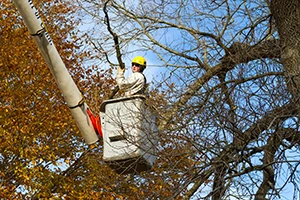
When it comes to tree care, some jobs are too big and too dangerous, or just need professional expertise to keep the tree healthy. STIHL spokesperson and certified arborist Mark Chisholm’s rule of thumb is this: Unless you can work with both feet on terra firma, you should hire a professional tree service.
Here are some tips from Chisholm.
Evaluate what you can handle and what's for a pro – anything not on the ground should be handled by a professional. Working with trees could be life-threatening, so it makes sense to spend the money if you're not absolutely confident in your skills, or if any of the below situations apply:
- Large limbs are broken or hanging or overhead chainsaw work is needed.
- If a tree is uprooted or downed, it can create an unnatural pattern of pressure points and tension.
- A chainsaw operator may be in severe danger if attempting to cut a tensioned limb or trunk (called a "springpole") – it may have an extremely violent, catapult-like reaction. If branches are too close or touching utility lines, report it immediately to your local utility company.
- Never attempt to move downed utility lines.
- If there is any task you have not been properly trained to handle or are uncomfortable undertaking.
You want to ensure the tree care company is properly insured and that you will not be liable for damage, accidents or injuries. Try to hire a company with an International Society of Arboriculture (ISA) certified arborist, a Tree Care Industry Association (TCIA) Accredited Business or one employing a Certified Tree Care Safety Professional (CTSP). If work is to be done in proximity to electrical conductors, you will need an Approved Line-Clearance Arborist.
A Key: Get written estimates from three equal companies to compare prices and understand the scope of the job.
John Torsiello is a Torrington, Conn.-based writer and frequent GCI contributor.