 There’s a long, if not always illustrious, tradition of being stranded aloft at Oakland Plantation near Wilmington, N.C.
During the Revolutionary War, plantation owner General Thomas Brown, spent several days camped in a magnolia tree to avoid a band of King’s loyalists passing through.
More recently, Justin Dove, a spray technician at Magnolia Greens Golf Plantation in Leland, N.C., refused to come down from his 30-foot high deer stand during a hunt at what is now Oakland Plantation Turf Farm.
It wasn’t because he was scared of the height. Or the dark for that matter.
Instead, Dove was stuck up high while a big brown bear and her cub lolled about below.
Maybe he’d seen too many “Messin’ with Sasquatch” ads. Anyhow, he simply waited out momma and babe.
Dove was one of about 25 hunters taking part in what is annual high point on the golf and turf industry calendar in the Carolinas.
 Each fall, general manager Rick Neisler III and the folks at Oakland Plantation Turf Farm stage several hunts for clients and other industry members across three tracts that make up the roughly 10,000-acre property.
Golf course superintendents in the Carolinas prize a place on the invitation-only hunts like they do a 70-degree day in August.
“I don’t even think for a second when my invitation arrives,” says Ray Avery, the veteran superintendent at Longview Club in Charlotte, N.C.
“I don’t bat an eyelid. I just pick up the phone and say ‘OK, I’m in.’ Then I worry about how I’m going to make it work”
It turns out that Avery is as sharp with a shotgun as he is as a superintendent.
Since his first Oakland hunt in the early ‘90s, he has fired his gun 19 times and brought in 18 deer.
But it’s the camaraderie, the stories traded around the bonfire and the simple fact of sharing an experience, that he values most of all.
“You can’t beat the fun you have there,” Avery says.
“Rick (Neisler) is the hunt master and he is very serious about every aspect of the hunt itself and taking care of the property, but once you’re done it’s all about relaxing and winding down.”
 When Dove was finally able to relax on terra firma back at the plantation house – built of bricks carried from England as ballast - he found that he hadn’t been alone in his plight.
Indeed, Grady Miller, a turfgrass professor at North Carolina State University, had done his own nail-biting just a few hundred yards away in the very next stand.
In Miller’s case, it was just one bear who flatly refused to give up the corn pile he or she was gorging on down below.
After considerable thought - that’s what professors do after all - Miller, took a few steps down his ladder and swinging by one arm, combined yelling and flashlight glare to, eventually, scare off the beast.
Later that night, hunters including Carolinas Golf Course Superintendents Association executive director, Tim Kreger, found themselves stranded in a different fashion – stuck on a conked out pontoon boat on the Cape Fear River.
“We were jugging for catfish when the engine gave out,” Kreger says.
“Fortunately we were one of two boats and the others found us and towed us in.
“There were a lot of jokes flying back and forth.
“It’s dark and cold and you’re not pulling in any fish but it’s great, you can’t buy laughs like that.”
For all the good humor, golf course superintendents rarely leave their work far behind.
For years now, Avery and fellow veteran, Butch Sheffield, CGCS from North Ridge Country Club in Raleigh, NC have made sure to bunk in the same cabin.
“I’ve got to admit there’s a lot of turf talk that goes on,” Avery says.
“In its own way it’s nearly as educational as some of the formal seminars and confrences out there.
“It’s a great environment to check in with guys about how their year has been, what they’ve tried, what’s worked and what hasn’t.”
The hunting’s not bad either.
In the tradition of his father and his grandfather, who bought the property in 1940, Neisler has worked hard and with the North Carolina Department of Wildlife Resources to nurture strong wildlife populations.
An average year yields about 150 deer. Sometimes they are big, certainly by Southern hunting standards.
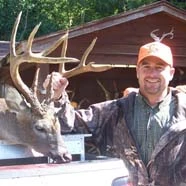
Several years ago, Brad Edens, golf course superintendent at Walnut Creek Country Club, landed a buck that scored 148 – a serious number for this part of the country.
Neisler says everyone was so excited they drove the deer into Whiteville about 30 minutes away just to show his father who was in a nursing home at the time.
“We brought him out in a wheelchair and he was thrilled,” Neisler says.
Edens was on the hunt again this fall and while he didn’t enjoy the same success, he was just glad to be putting some distance between his bentgrass greens and a record and wretched summer.
Bumping along in a packed mini-bus en route back to the plantation house, he grinned and said simply: “How good is this!”
Latest from Golf Course Industry
- Tartan Talks 116: Doug Smith
- Audubon International adds 127 golf courses to Monarchs in the Rough
- USGA’s GAP preps for fourth year
- Protect your vehicles from rodent damage
- VIDEO: Fun with fairways
- From the publisher’s pen: Humble giving
- Syngenta adds two to western U.S. team
- The Aquatrols Company introduces soil surfactant for Canada