.jpg) |
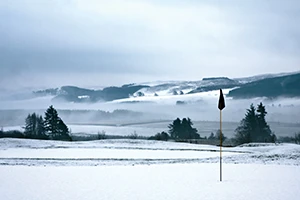
Preparing your course for winter means significantly different things and involves dramatically different agronomic and turf management processes depending upon where in the U.S. you’re located. Obviously, a superintendent north of the Mason-Dixon line has radically different concerns than a superintendent in the Deep South or the desert playgrounds of Arizona and Southern California who is gearing up for the annual onslaught of play from residents, snowbirds and visiting golf enthusiasts.
Some superintendents may have unique items on their winter prep to-do lists, such as preparing winter habitat for protected bird or animal species on their properties or even readying their properties for other outdoor activities such as cross-country skiing or ice skating. But we have selected some of the most common fall tasks facing superintendents preparing to shut-down or gear-up.
Equipment
If your course is in the northern climates and either closes for the winter or is open only for the sporadic warm spell, then late fall and early winter are good times to make sure all your equipment is in top condition for the spring reopening.
Mower blades and cutting tools should be re-ground, adjusted or replaced, and all maintenance machinery overhauled and tuned up, fluids replaced or added, batteries and bearings checked or replaced.
It is a good idea to review the number of hours you have on equipment like mowers, tractors, not only to determine if certain components should be replaced, but to ascertain whether it might be time to put a new one or two in next year’s budget. If the budget won’t stand the capital expense, and your crew is up to it, equipment often can be rebuilt during the winter downtime.
Tree care
Fall is an ideal time to do what Troon Golf senior vice president of agronomy Jeff Spangler refers to as “project enhancements.” That includes not only tree care and brush cleanup, but bunker repair or rebuilding and leveling of tees and other aesthetic and operational tasks.
With tree care, Jim Skorulski, head of the USGA Green Section for the Northeast Region, says after an assessment of sun angles and shade patterns throughout the course, superintendents should identify trees causing turf problems due to excessive shade. Those trees should be removed or cut back in the fall to eliminate future problems without disrupting play during the course’s busy season.
Trees should be examined for signs of disease, cracked or broken limbs or intrusive roots, and – no matter how iconic – removed if necessary.
Ken Nice, director of agronomy at the Mike Keiser-owned, KemperSports-operated Bandon Dunes Golf Resort on the Oregon coast, has nearly no trees to deal with, owing to the seaside links nature of the resort’s courses. He does, however, have plenty of gorse bushes and other brushy areas that trap wayward golf balls (and golfers) and need to be cut back in the fall months.
At another KemperSports-run property, Desert Willow in Palm Desert, Calif., it might seem unlikely a pair of desert courses would have significant vegetation issues other than cacti, but agronomist Mike Tellier says late in the year, his crew trims or removes up to 800 trees each.
As courses get ready to close, Spangler recommends blowing out irrigation lines to eliminate any remaining water that could freeze and damage lines.
Greens and tees
Every superintendent knows unplayable greens is the one unforgivable sin in the eyes of his golfing customers. As a veteran superintendent and principal of ASPIRE Golf Consulting, Tim Moraghan brutally, but factually, points out. “Fifty percent of the game is played on your putting greens,” he says. “If you don’t have healthy greens in the spring and start losing them in the summer, you’d probably better start getting your resume ready.”
Last year’s brutally cold winter may have come as a shock to superintendents who hadn’t been in the industry after the extreme winters of the mid-1990s. “Many of them hadn’t experienced a really cold, prolonged winter where they lost turfgrass,” Moraghan says. “They need to learn from what happened last year. If we don’t have a bad winter this year, the worst that can happen is that you have better turf in the spring.”
The best way to heighten the chances of greens surviving the winter, as well as turf for tee boxes, fairways and roughs, is a combination of timely fertilization, fungicide and moisture control. Contrary to what the general public might think, a heavy snow pack that lasts throughout the majority of the winter months is typically less harmful than intermittent thaws followed by frigid blasts and ice and then more snow. Turf that hasn’t been properly aerated to allow water to permeate, fertilized to promote carbohydrate storage and root growth, and treated with pesticides to prevent pink or gray snow mold is more likely to fail the snow-thaw-ice-snow test.
Last winter’s extreme weather, with heavy snowfall followed by a January thaw, and then more cold weather, was particularly hard on the Poa annua that populates many of the area’s greens, says Dave Groelle, superintendent of KemperSports’ Royal Melbourne Country Club in Long Grove, Ill.
“Last winter was extremely tough on grass around here,” Groelle says. “Courses with a high degree of Poa annua had a lot of damage in the spring. Several courses had such severe damage they decided to go ahead and renovate their greens. It wasn’t anyone’s fault – we had the third highest snowfall on record and the Poa just couldn’t handle it. Our bentgrass did OK, and we manually remove any Poa in the spring, so we were OK. We don’t cover, but some courses in the area did cover their greens, and the Poa still didn’t make it.”
Covers are always a point of discussion with Snow Belt superintendents. Snow cover systems become more prevalent the further north you go.
“They prevent or reduce a lot of cold temperature injury,” Skorulski says. “We wait as long as we can, but you have to buy the materials – both permeable and impermeable – ahead of time, and some use a layer of foam, straw and/or bubble wrap in the middle to help insulate. You want to keep the ground temperatures from not fluctuating as much as 30-35 degrees – avoid the roller coaster of multiple flash freezes. Annual bluegrass is especially vulnerable to that, but when you go further north, even courses with bentgrass are starting to cover.”
However, most Snow Belt superintendents don’t mind a long period of snow cover. As Troon’s Spangler points out, their Michigan courses, for instance, benefitted from a lengthy snow cover that essentially insulated the turf. Conversely, Spangler says, if winter brings cold and wind but not a great deal of snow cover, superintendents may be advised to turn the irrigation back on to prevent turf dehydration. “There is probably more turf loss through lack of irrigation and dehydration than disease or other causes,” he says.
Last winter’s alternating freezes and thaws cost Glens Falls Country Club in Queensbury, N.Y., some turf area. Superintendent of grounds Chris Frielinghaus says his club lost some turf on a few greens due to the alternating freezes and thaws. The ryegrass which the club uses on its practice tees and in the roughs was a total loss due to the weather variance. Frielinghaus covers the course’s tees and greens when the course closes in late November, after a final application of fertilizer and a heavy dose of potassium to promote cold tolerance and the final deep tine aeration and top dressing.
Fairways and roughs
In the northern regions where courses are still hoping to eke out some late rounds and revenues before winter arrives, superintendents are scheduling their final deep-tine aeration and fertilization applications for their fairway turf and roughs. In most areas, irrigation has been cut back as the summer heat wanes.
Eric Richardson, director of golf and grounds for the Essex County Club in Manchester-by-the-sea, Mass., makes weekly sprayable fertilizer applications on greens and tees, but raises the height of the mower cut on all surfaces throughout the course as fall proceeds. He also applies deep-tine aeration to promote water passage, and limits irrigation, saying, “The dryer the better.”
Moraghan advises superintendents to use this time to review history as far back as 20 years and assess how many acres of sod their course has lost. If that sod needs to be replaced in the coming years, he recommends reserving five acres of sod with their supplier to be sure it is available for replacements as needed.
In the winter golfing meccas of the Phoenix and Palm Springs areas, fall means overseeding. Winter ryegrass is overseeded to take over for native Bermudagrass and other grasses. Many of the desert courses close for up to a month in the early fall before the desert “high season” begins on roughly Dec. 1. Desert Willow’s Tellier says he’d finished his half-inch tine aeration in mid-September, and was applying growth regulators to slow down the existing Bermudagrass.
Bunkers
As northern courses begin to shut down, it’s a good time to carefully inspect bunkers and see what repairs, redesign and upgrades may be necessary in the coming season. Do some or all need new bunker liners? How are the sand levels and quality? How are the edges? Do some or all need to be rebuilt?
Regardless of which part of the country, if there have been some high wind events, or if they’re likely in the winter, precautions must be taken to prevent a wholesale sand replacement expense in the spring. At seaside courses like several of the Bandon Dunes courses and others along the Atlantic seaboard, fences need to be maintained or repaired to control the shifting or loss of sand dunes which may not be on the course, but border and affect it.
Bunker preservation is another reason many northern superintendents don’t mind a lengthy snow pack. Snow cover protects against sand loss, and courses need to take steps to protect their bunkers as much as possible regardless of what winter brings.
Collars and approaches
In northern regions, fall is an ideal time to clean up drainage problems on and around the greens caused by the buildup of “collar dams.” The USGA’s Skorulski says check the grades of the collar areas and, when necessary, lower that grade so water doesn’t flow into that area of the green or green surround, collect and then freeze in the cold, ruining the turf.
“You’ve got to get the water off the greens,” Skorulski says. “If you have a collar dam, get rid of it so water doesn’t collect on the sides of greens.”
At Glens Falls CC, Frielinghaus uses this time of year to correct any surface drainage issues, including removal of collar dams, and to get down fresh sod where necessary before winter arrives.
Jim Dunlap is a freelance writer based in Encinitas, Calif., and is a frequent GCI contributor.





