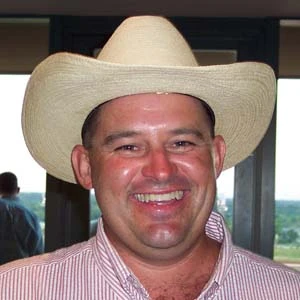
| Editor's note: This article, "My Journey with Skin Cancer" is authored by Stephen Best, and originally appeared in the Lone Start GCSA official publication, Lone Star Links. Between tournaments, daily turf management, and long-term maintenance planning, you may find that the last thing on your mind is … yourself. Before you think that this is another self-help lecture, take 2 minutes to read my story. Have you ever had the following thoughts: “I’ll remember to throw on some sunscreen – later.” “I have a family doctor – I don’t really need a dermatologist too, do I?” “I had the mole removed and I’m sure glad that’s finished. I’ll do my annual skin cancer screenings – some other year.” I am surviving Stage 4 melanoma - day by day and treatment by treatment – and I have made all of these comments at one time or another. Unfortunately, our time in the outdoors, which is one of the wonderful perks of our profession, brings a higher risk of skin cancer for us than for our office-dwelling friends and neighbors. In fact, skin cancer is the leading type of cancer. My Journey Three years ago, I had a cancerous mole removed from my back. There was no cancer found in the immediate area or in my lymph nodes. I did see a dermatologist every six months. I was given the option to seek further treatment with an Oncologist however; I chose not to pursue annual screenings for melanoma. I believed that I was clean so that was good with me. It was a mistake and I should have made an appointment with an oncologist for semi-annual (every 6 months) screenings. Melanoma is very aggressive and is prone to re-appear. It only takes one cell to get away and travel in your system. Would annual screenings have found the melanoma that later re-surfaced in my brain? Honestly, we’ll never know. I do know that even the slightest chance of avoiding the tumor that bled into my brain on February 5, 2010 would have been worth all of the follow-up screenings in the world. I experienced stabbing pain in my head and woke up 2 weeks later at Zale Lipshey Hospital in Dallas to learn that a malignant tumor had erupted in my brain. Follow-up tests indicated that the cancer had metastasized to 4 lesions on my left lung, one lesion on my adrenal gland, and one lesion on my liver. Since the excruciatingly painful eruption of the brain lesion, I have had 10 treatments of full brain radiation, two gamma knife radiation surgeries, and 6 cycles of chemotherapy (note: one cycle is a 4-day treatment of 3different chemos each day). My Inspiration You may be wondering whether I had any symptoms to alert me that something so sinister was lurking in my body. I don’t mind telling you that I was in the best physical shape of my life until that day last February. I was running 30 miles every week and had even completed the 2008 Austin Marathon in 4 hrs. 42 minutes. As a matter of fact, I have drawn a lot of strength from that accomplishment and keep my medal with me during my treatments as a reminder of the inner fortitude I’ll need to overcome a challenge like this one. I have had the good fortune to work for the owner of Sky Creek Ranch in Keller, Texas, for 13 years now. He and the Sky Creek Ranch maintenance team have risen to the challenge of my limitations – filling in the gaps and developing in expanded roles more quickly and deeply than I could have imagined. Ultimately, however, my faith has been the difference between despair and hopefulness. Prior to the rupture of the tumor in my brain, God had inspired my wife, Cheryle, and I to join a new congregation. The congregation of Northwood Church in Keller has supported our family through the trials associated with diagnosis, treatment, and my slow and unsteady recovery. I am inspired daily to share my faith with folks facing their own struggles and embrace the blessings of others in return. God gave me great tools to meet this challenge: a strong body, a vigorous faith, a supportive community, an awesome Sister, great brother and sister in laws, and last, but not least, my loving wife Cheryle, who is the rock that keeps everything going for our family. My Future While my original prognosis looked bleak, we have found hope at MD Anderson Cancer Center in Houston. As of this writing, the chemo and radiation are working on the lesions in my brain, lung, and liver. I work, jog, and stay as active as I can with my two children, Harrison (10) and Addyson (7). I have experienced setbacks, but my faith and my family do not let me face them alone. This article is one of my first steps to advocating for increased awareness of skin cancer and the proper steps to preventing it in high-risk groups, such as the Texas Turfgrass Association, Local Superintendent Associations, and through National GCSAA. Someday, I hope to look back at this experience with the same sense of accomplishment as I felt when I finished that 26.2-mile marathon in Austin. Your Future This is taken from the MD Anderson Skin Care Center: The two most common kinds of skin cancer: Basal cell carcinoma accounts for more than 90% of all skin cancers. It is a slow-growing cancer that seldom spreads to other parts of the body. However, if left untreated, it can spread to nearby areas and invade bone and other tissues under the skin. Squamous cell carcinoma is much less common than basal cell carcinoma. It can be more aggressive than basal cell carcinoma and is also more likely to grow deep below the skin and spread to distant parts of the body. These types of skin cancer are sometimes called nonmelanoma skin cancer. When they are found early, there is nearly a 100% chance for cure. Another type of cancer that occurs in the skin is melanoma, which begins in the cells that produce pigment in the skin. It is less common than basal or squamous cell skin cancers, but it is more dangerous than either and can be deadly. If caught early, there is nearly a 97% chance for cure. Symptoms of Skin Cancer Symptoms of skin cancer vary from person to person and may include a:
Tips from the Skin Cancer Foundation website:
Risk Factors The greatest risk for developing all types of skin cancers comes from sunburns. People with fair skin and those who tend to burn easily are more at risk. Other risk factors include: Age. The longer a person's skin is exposed to the sun over time, the higher the risk of developing skin cancer. Appearance. People who have red or blond hair, fair skin, freckles and blue or light-colored eyes are more at risk of developing skin cancer. Skin cancer occurs less often in Hispanics, Asians and African-Americans. However, darker-skinned people and those who tan easily can still develop skin cancer as well as suffer other long-term effects of exposure to ultraviolet light, like dry skin and premature aging. Climate. People who live in sunny climates are at an increased risk for skin cancer. Preventing Skin Cancer The main way to avoid skin cancer is to protect yourself from the sun's ultraviolet rays. There are several ways to do this. These include:
For further information please visit the MD Anderson Web Site on Skin Cancer. I recommend the following actions to take care of yourself and your family properly in the event of an unexpected medical emergency:
Skin cancer, if detected early, is very treatable. I encourage you to take my poor choices (lack of proper skin care in my early career and follow-up) and my good choices (faith, fellowship, and family) to heart. I am on a mission to spread the awareness of skin cancer not only to all of you but to a lot more. I am hoping to someday have a foundation that is as big as some of the others out there. It has become personal to me and I want and hope you all take this seriously. Consult your doctor and take a bit more time to take care of yourself. I want to thank Jane Smith from Keller for helping me write this Article as I had trouble getting what was on my heart on to paper. I would also like to thank all my family, my Owner, GM, co-workers, my friends at Northwood Church and my incredible wife for helping me get through this year. I could not have done it without you. I would list everyone but it would be another page. |





