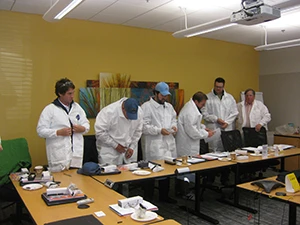
Lab coats, gloves, goggles and closed-toe footwear were the required attire at the FMC Red Carpet Tour.
The tour, held at the FMC Global Innovation Center in Ewing, N.J., gave eight interns from Baltusrol Golf Club in Springfield, N.J., director of grounds Mark Kuhns and assistant superintendent Chris Moffat a firsthand look at the pesticide research and development process.
After the required safety presentations – no photos or cellphone usage inside the lab, please – FMC Director of Product Development Robin Slatter introduced the company’s history, global profile and how products reach market. How does 10 years and $200 million sound? The process brings frustrations, including product eliminations and alterations, and lengthy waits for federal and state label approval.
The overview filtered into decisions superintendents make when purchasing pesticides. The interns, who hailed from Pennsylvania, New Jersey, Wisconsin and Canada, haven’t reached the purchasing stage. But Kuhns has spent nearly four decades making key decisions for prestigious golf courses and the tour might lead to changes in his own practices.
“I have been doing this for 38 years and you’re always learning something new,” he says. “I keep an open mind. There are things we saw here that we will try.”
 |
Inside the lab, interns received images of product testing. Outside the lab, they learned the value of establishing relationships with a company that develops products used on golf courses.
Adam Manwarren, FMC brand manager for turf and ornamental products, related many of the conversations to the golf industry. Before anybody entered the lab, Manwarren performed brief market research, asking the interns where they obtain information on pesticides. Trade publications, Twitter, blogs, distributors and field days such as the Red Carpet Tour were popular answers.
The college students working at Baltusrol are in fortuitous spots. Not only are they learning on two storied and plush golf courses maintained by a 75-worker crew, they take detours from manicuring and mowing to visit universities performing turfgrass research and companies developing products. “We had a lot of information that we gave them,” Slatter says. “They are going to obviously need to reflect and they may circle back. It’s part of a process of building up their knowledge base through these visits.”
The interns were required to dispose of gloves and return lab coats and goggles following the tour. Besides the attire, everything else about the field day represented the turfgrass version of red-carpet treatment.
“I think it was an excellent educational day for them,” Slatter says. “We’re happy to do it.”
Guy Cipriano is GCI's Assistant Editor.