 |
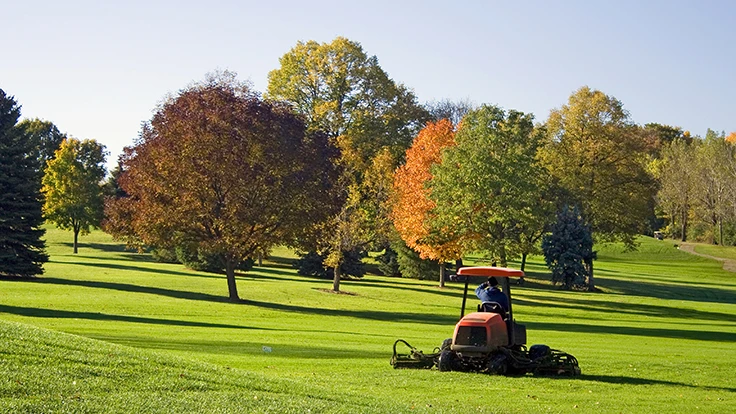
Summer has ended and fall has officially began. The leaves are turning orange and yellow in the northern climates while golf courses in warmer climates have begun their overseeding programs as they await the many snowbirds that will arrive soon at their winter destinations.
I reached out to some associates of mine from throughout the turf industry to learn a little bit more on how golf courses handle the changing of the seasons around the country, and especially how they handle their seasonal labor changes.
LAKE GENEVA COUNTRY CLUB
Lake Geneva CC is a very exclusive club with just over 100 members. It is located just north of the Illinois state line and on beautiful Lake Geneva in Wisconsin. Many of the members have summer homes in the area with their main residences are in the city and suburban areas of Chicago, Madison and Milwaukee. Superintendent Jeff Heaton, Golf Course Superintendent, says the golf course officially opens on May 15 and things slow down immensely by Nov. 1. At peak seasonal staffing, Heaton has 17 or 18 employees during the summer and only three or four in the months of November through April. Staffing reductions parallel the drop off in play. However, this change results in a lot of work for the reduced staff as they prepare the golf course for winter.
NORTHMOOR COUNTRY CLUB
Not far down the road from LGCC is Northmoor Country Club located in Highland Park, Ill. Tommy Witt, CGCS, is the director of golf course operations there and he oversees 27 manicured holes of golf. The members at Northmoor enjoy a longer season than at LGCC and first greens mowing takes place around March 15 with players not far behind coming out in early April. By the time fall hits many of the Northmoor members head to snow bird destinations like Florida, Arizona and Palm Springs. With some nice fall weather they may even play up until Thanksgiving, but the number of rounds drops off dramatically in October.
Tommy employs 35-36 people during the peak season and that reduces to 10 or less in the winter. November sees the staff preparing for the tough months of winter and all of the golf course accessories are brought in for refurbishment. This would include benches, tee markers, rakes, yardage signs, etc. Northmoor is somewhat unique in that all of their signs, markers, etc. are hand-made from wood and in the winter the staff preps them for varnish to have a crisp look each spring. Similarly, ball washers are given new coats of paint.
There is very little time during the summer months to take care of equipment rather than routine maintenance. Therefore the Northmoor staff works hard to break down each and every piece of equipment so they will run optimally in the high usage summer ahead.
.jpg) |
Northmoor CC has a variety of roads and parking areas that must be kept clean in the winter months from the dreaded snow. While most of the members are gone at this time there is a staff, a few members and of course deliveries and such so these areas must be maintained and in a safe condition. Fall brings lots of outside work on the golf course as well. That would include drainage installation, any golf course construction and tree maintenance.
Tommy say it is getting harder and harder to find golf course employees. He tries to keep as many people on in the winter as he can to help mitigate staffing problems. What once was a migrant workforce has now become men who want to live year around in the area and raise their families here in the US. Previously, it was a workforce that worked seven months and then went back to Central and/or South America. As an employer it is much more attractive to offer full-time and year-around work than a seasonal job. This creates some issues for superintendents in the north.
PINE GROVE SPRINGS COUNTRY CLUB
This sleepy little golf course is enjoyed by people in New Hampshire. Robert (Bob) Maibusch, CGCS MG, owns this course. It is situated in an area over resort homes and is located near an 800-acre lake. Similar to Lake Geneva Country Club it is highly populated in the summer with some splinter play in the spring and fall. Many of the players come from Connecticut, New York and Massachusetts. There are four months of peak play and overall it is a short season with the snow falling as early as Nov. 15.
The reality of being a superintendent and an owner brings on different challenges. Bob is very cognizant of cash flow and knows that when the rounds drop off he has to cut back significantly. However, when you have three people working on the nine-hole course the cutback of one person results in a 33 percent reduction in your staffing…..Ouch! Bob has been fortunate enough to have several local people that volunteer their time to help on the course so they can play golf, which helps immensely.
This fall the small crew is busy overseeding tees and undertaking some much needed cultural practices. Since this is Bob’s first year as an owner he shared that he thinks this fall aerification might just be the first time the greens have been aerified in 15 years. Bob is going back to the basics after a 37 year career at high end golf courses and he is loving every minute of it.
OLDE FLORIDA GOLF CLUB
This beautiful golf course is situated in Naples, Fla. And is tended to by superintendent Darren Davis, CGCS and GCSAA board member. No sooner than the northern courses start their slowdown for winter then it is time for Darren and his team to ramp it up for the incoming snowbirds that arrive by the end of the year from Chicago, Detroit, Cleveland and the northern east coast.
At Olde Florida Oct. 1 marks the start of the winter golf season. January, February and March are actually the high play months, but Darren has seen more members staying longer in the warm climate than they did a decade ago. As all superintendents know, you have to prepare the golf course each day, in the same way, whether there are 15 players or 150.
Unlike the north, the grass grows every day in the south. Bermudagrass is the crop for the summer months and the superintendents will all tell you that you make your money and reputation on the success of your overseed. Transitioning in and out of different grasses is an art and a science that comes with the changing of the seasons. Summer months are consumed with cultural practices to enhance the quality of the base grass of Bermuda. This would include weed control, fertilization, pest control, aerification, verticutting, etc. All construction work takes place during that period as well so as to not disturb the main play months.
Staffing remains fairly consistent as the grasses and seasons change. It is merely a different focus. Darren says while it is a bit less stressful during the summer months, it is very busy nonetheless.
PGA WEST
In LaQuinta, Calif., lies PGA West, a well-known golf complex with nine golf courses that is overseen by Director of Agronomy Jon Maddern, CGCS. Jon has worked in a variety of climates including Michigan Alabama and California. Juggling schedules and budgets for nine courses is a daunting task, and right now is the time in which critical decisions are made and implemented for the success of all of those golf courses for the incoming snowbirds. The clientele at PGA West come from Washington, Oregon, British Columbia and Alberta. There are also some that come from nearby San Diego, San Francisco and Los Angeles. Most own homes on the property and enjoy the desert lifestyle.
On Sept. 20th the first of nine courses was overseeded. At one time courses in the desert were overseeded wall to wall but now many have opted to just do tees, greens and fairways. Jon indicated that they will overseed one course a week until the end of October. That way they can share equipment and manpower to get things done quickly. The key to success is how quickly you can prep your golf course, get the seed down and add the water to get quick germination. Like Olde Florida, PGA West does not see much fluctuation in staffing numbers from one season to the next.
So as Indian Summer sets in across the northern parts of the US we see superintendents starting to wrap up their golf play and get their courses ready for winter. At the same time we see our southern Counterparts ramping up for their prime time during the winter season ahead. Don’t worry though the snowbirds will be back next spring and our golf courses and employees should be happy about that.