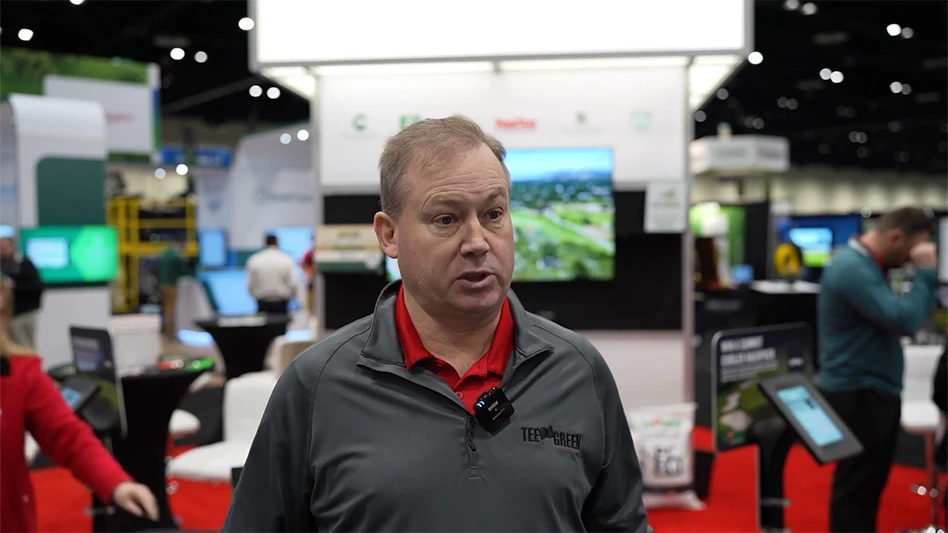
Golf industry professionals who have ever said “if I had the chance to design a golf course…” were able to do just that during a GCSAA education seminar at the Golf Industry Show in Orlando, Fla., this past January.
Bruce Charlton, president and chief design officer of Robert Trent Jones II golf course design firm and member of the American Society of Golf Course Architects board of governors, taught a crash course about everything golf course design-related and let participants try their hands at their own designs.
|
|

Charlton touched on the early years of golf course design, in the U.S. and abroad. Golf, in a rudimentary form, is thought to have ties back to the 1400s. Man-made alterations to land dates back to the mid-1700s, Charlton said. The earliest courses were mainly links-style – shaped mostly by nature – and they originated in Scotland. St. Andrews Golf Links is said to be the birthplace of golf while Allan Robertson, a clubmaker there, is the first recognized golf course designer, he said.
Courses started out very square and geometric in the 1800s, Charlton said. But that went away in the early 1900s when Heathlands era got under way in inland London, when aesthetics became more important in designs.
Courses were built in the U.S. soon after, and course design has evolved while the sport’s popularity has grown. In the 1960s, there were more than 5 million golfers and 400 new course openings per year, Charlton said. Environmental and economical factors challenge course designers today as they continue to work to build courses that can golfers of all levels can appreciate.
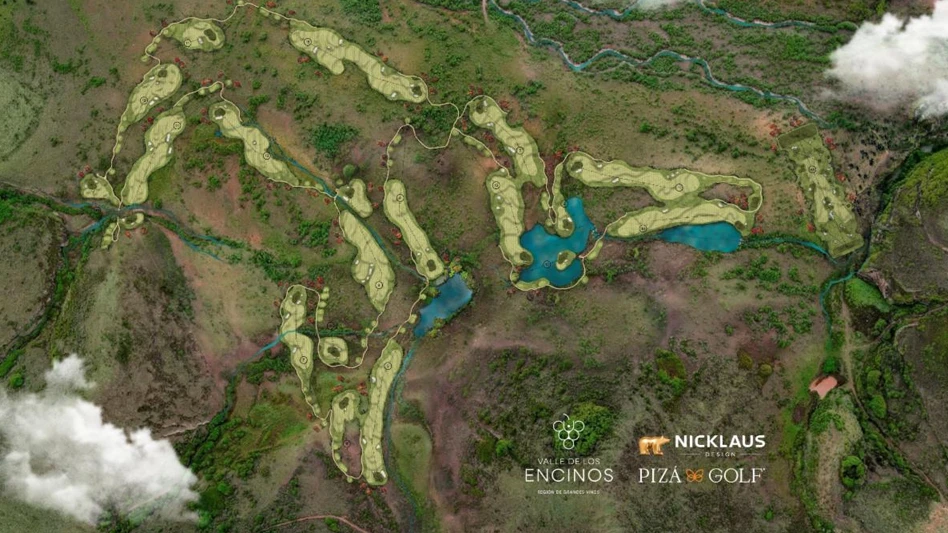
Charlton explained the elements involved in contemporary golf course design before assigning the participants to create their own courses on a provided topographic map. A course already had been designed for the site, but that plan wasn’t revealed until the end of the session.
Before letting participants loose to plan the course, he left them with many factors to consider. He started with the basics, including the elements of a golf hole (tees, fairway, green, rough and hazards) and moved on to other considerations that must be addressed on land that’s to become a golf course.
Keep maintenance in mind when designing the course, he added. Provide adequate drainage, minimize steep slopes and bunker faces and provide space for equipment access. Also, design for the incorporation of best management practices and an IPM plan.
These areas likely aren’t included in the designer’s area of expertise. This is where a consulting team comes in handy. Project consultants should include:
- Project manager;
- Golf industry consultants (architect, superintendent, irrigation system designer, golf course manager/operator);
- Engineer;
- Land planner: and
- Environmental consultants (botanist, hydrologist, soil scientist, archaeologist and wildlife specialist).
|
|

After establishing the type of course that will sit on the site (daily fee, private, real estate development), a site analysis will need to be performed to determine how the course can be accessed and how many useable acres there are. Also, be aware of other elements that can’t be changed.
“Consider sun angles and the prevailing wind,” Charlton said. “Hit a ball in each direction.”
Find out how or if the course will get sufficient irrigation water and how the topography and existing conditions will affect the design.
“You have to deal with whatever soils you get,” Charlton said.
These factors all lead to the creation of a preliminary, and then final, master plan. From there, a cost estimate can be established.
This is just the beginning of the design process, as the seminar participants learned. Charlton pointed out that while considering the previously mentioned criteria, the designer must also work to keep each hole memorable and different, which involves another detailed process.